From shuttered bazaars to collapsing purchasing power, Iran’s livelihood crisis reflects a society paralyzed by violence, fear, and structural economic decay under the ruling regime
A Society Alive, but No Longer Living
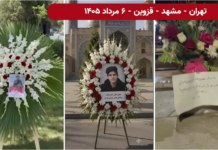
Historians of post–Black Death Europe wrote that cities were not silent, yet life no longer truly flowed through them. Shops opened, coins changed hands, but hope had vanished. Society mourned while the economy waited. This historical image now applies with unsettling precision to Iran today. Following the regime’s bloody suppression of the population, not only the streets but also livelihoods and markets have entered a state of collective mourning.
Economic activity continues in form, but not in substance. Transactions occur without confidence, production without expectation, and survival without horizon.
A Livelihood Crisis Beyond Classical Economics
Iran’s livelihood crisis has reached a point where conventional economic indicators are no longer sufficient to explain it. This is not merely inflation, recession, or mismanagement. It is the direct economic reflection of political violence and structural blockage imposed by the regime.
Just as repression has constrained social agency, livelihood pressure has eroded the capacity for economic life. Iran’s macroeconomy now stands at a standstill—lacking both the mechanisms for recovery and any credible path out of stagnation.
Gold as a Measure of Fear, Not Prosperity
One of the earliest and clearest indicators of this paralysis has been the unprecedented surge in gold and silver prices. This rise does not signal growth or investment confidence. It reflects mass fear and flight from the national currency.
In an environment of political instability and an unpredictable future under the regime, gold has become a social index of distrust—a blunt indicator of the public’s lack of faith in tomorrow’s economy.
Markets Under Siege
Following the outbreak of nationwide protests and the violent response of regime security forces, Iran’s markets have effectively slipped into semi-closure. Widespread shop shutdowns, the arrest or killing of some merchants, and pressure on families to reopen businesses under threat illustrate how the livelihood crisis has been securitized.
In such conditions, the market no longer responds to orders or directives. Coercion cannot substitute for confidence.
Selling Becomes a Risk
Even businesses forced to remain open face empty shops or deliberate restraint from selling. Extreme exchange-rate volatility and sudden price surges have turned routine sales into high-risk decisions.
The result is a dangerous freeze in monetary circulation and a deepening recession at the microeconomic level—one that transfers its full weight directly onto household tables.
Food Insecurity Spreads Across Society
Prices now tell the clearest story. The multi-fold increase in the cost of cooking oil, eggs, poultry, milk, and rice has not only eroded purchasing power but has begun to undermine food security for large segments of society.
This crisis is no longer confined to lower-income groups. Iran’s middle class is rapidly collapsing, absorbed into a widening zone of vulnerability created by the regime’s policies and priorities.
Digital and Private Sectors Strangled
At the same time, private firms and digital businesses have been hit with a second blow. Internet shutdowns, disruptions to financial communications, and halted documentation processes have rendered economic activity impossible across many sectors.
An economy that could have absorbed some pressure through services and technology has instead been locked down by the regime itself.
Structural Decline and Negative Growth
The direct consequence of this blockage is a collapse in production and a deepening negative growth trajectory. Estimates pointing to negative growth in 2026, alongside even bleaker forecasts for the following year, indicate that Iran’s livelihood crisis has entered a structural phase.
The World Bank has cited sanctions, declining oil exports, and severe energy imbalances as evidence that Iran’s growth engines are stalling—if not shutting down entirely.
Governance Paralysis at the Top
Iran regime supreme leader Ali Khamenei’s acknowledgment of the “difficulty of people’s livelihoods,” combined with the suspension of ministerial impeachments, reflects not accountability but paralysis. His direct intervention in executive matters signals the breakdown of formal economic and administrative order under the regime.
Such micromanagement from the apex of power is itself a symptom of systemic collapse.
Budget Deficits, Sanctions, and Vanishing Currency
A massive budget deficit, acute foreign currency shortages, and intensifying external pressure have pushed the economy into a fragile state. A 25 percent U.S. tariff affecting Iran-related trade partners, alongside secondary sanctions, has sharply increased the cost of economic interaction with Iran, further draining already scarce foreign exchange resources.
Managing Poverty, Not Livelihoods
Domestically, the removal or weakening of critical subsidies for bread and medicine has shifted the burden of crisis directly onto society. Rising bread prices, shortages of specialized medicines, and the expansion of black markets are only the earliest manifestations of this process.
What the regime presents as “livelihood management” is, in practice, the management of poverty.
An Economy Captured by Security and Rent-Seeking
Within this structure, Iran’s livelihood crisis is not a temporary malfunction but the natural outcome of an economy dominated by security institutions and rent-seeking networks. The entrenched role of regime-affiliated structures, particularly those linked to the IRGC, has transformed corruption from deviation into system.
The costs of this system are paid directly from the lives of ordinary people.
A Nation in Mourning and Waiting
Iran’s economy today exists in a state of mourning and anticipation. Markets are frozen, society is angry, and the political structure is incapable of producing even minimal stability.
This waiting is not neutral. The accumulation of economic exhaustion and social resentment is laying the groundwork for deeper transformations—ones that cannot be understood through economics alone, and cannot be separated from the fate of the regime itself.