From collapsing reservoir levels in Tehran to growing drinking water restrictions across major cities, Iran’s deepening water crisis has become a national threat driven by decades of environmental mismanagement and structural corruption.
Iran’s water crisis has entered a dangerous new phase.
Officials within the country’s water sector now acknowledge that vast regions of Iran continue to suffer from declining rainfall, shrinking reservoir levels, and worsening pressure on drinking water supplies. At the center of the crisis stands Tehran — Iran’s most populous province — which has now become the country’s primary hotspot for “water stress.”
At the same time, millions of citizens across multiple provinces are already experiencing drinking water restrictions and severe reductions in accessible water resources, exposing the depth of an environmental and infrastructural collapse that has been building for years.
Tehran at the Center of the Crisis
According to Isa Bozorgzadeh, spokesperson for Iran’s water industry, Tehran has now entered its sixth consecutive year of drought conditions. He stated that 11 provinces across the country are still experiencing rainfall declines exceeding 10 percent, with Tehran facing some of the worst conditions.
Although officials describe overall national rainfall levels as “normal,” the reality beneath the statistics paints a far more alarming picture. Bozorgzadeh himself admitted that nearly two-thirds of Iran continues to face precipitation shortages and that the country has not entered a genuine wet cycle capable of reversing the crisis.
Most strikingly, he acknowledged that approximately 35 million Iranians are currently living in areas affected by water scarcity.
Tehran, Alborz Province, and Mashhad were identified as the regions facing the most severe drinking water tensions.
Tehran’s Reservoirs Are Rapidly Declining
Official figures regarding Tehran’s reservoirs reveal the severity of the situation.
Iran’s Water Resources Management Company previously reported that the storage volume of the Lar Dam has fallen by 59 percent compared to the previous year. The Taleqan Dam has also experienced a dramatic 54 percent decline in reserves.
Perhaps most alarming, only 18 percent of Tehran’s total dam capacity is currently filled.
This figure reflects a deepening crisis in the capital’s water supply infrastructure — one that appears to worsen year after year. Even the Amir Kabir Dam, despite slight improvements in water levels, remains only 32 percent full.
Experts warn that if current trends continue, Tehran’s residents could face an exceptionally difficult summer marked by broader restrictions and increasing instability in access to drinking water.
Water Stress Expands Across Major Cities
The crisis is no longer limited to Tehran.
Reports indicate that provinces including Isfahan, Razavi Khorasan, Qom, Zanjan, and Markazi are also experiencing critical declines in water reserves. Major urban centers such as Tehran, Karaj, Mashhad, Arak, Qom, Isfahan, and Yazd are already facing restrictions in drinking water supply.
Meanwhile, reservoir conditions across the country continue to deteriorate.
Approximately 45 percent of Iran’s dam capacity now stands empty, while provinces such as Qom and Markazi have recorded some of the worst rainfall conditions in recent years.
The expanding scale of the crisis reveals that Iran is no longer confronting isolated drought conditions. The country is facing a systemic breakdown in water sustainability.
Decades of Mismanagement
Environmental experts warned for years that Iran was moving toward severe water stress. Yet instead of implementing sustainable reforms, authorities pursued policies that accelerated depletion and ecological destruction.
Excessive dam construction, unsustainable water transfer projects, overextraction of groundwater, destruction of aquifers, and the absence of long-term environmental planning have pushed the country toward a critical threshold.
Today, many regions of Iran are experiencing land subsidence, drying underground water sources, collapsing agricultural capacity, and severe reductions in dam reserves.
What was once considered an environmental issue has now become a direct social and economic threat affecting millions of people.
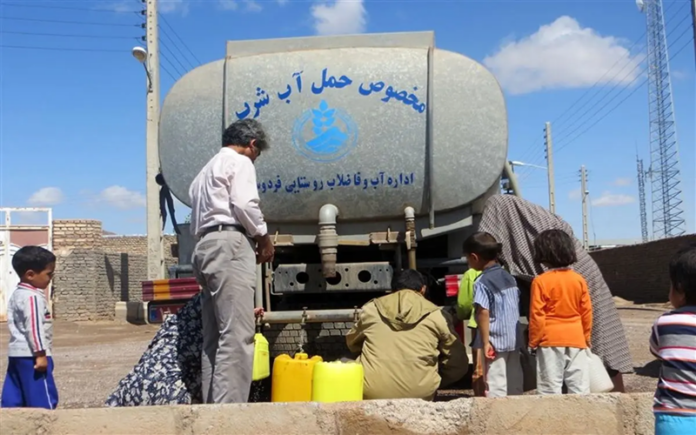
Citizens in major cities increasingly experience the consequences in their daily lives — from declining water pressure and supply interruptions to rising fears over future access to clean drinking water.
A National Crisis Beyond the Environment
Iran’s water crisis is no longer simply about climate conditions or reduced rainfall.
It is the result of decades of structural corruption, failed governance, resource mismanagement, and environmental neglect. The current situation reflects a broader pattern visible across multiple sectors of Iranian society: infrastructure deteriorates while authorities prioritize political survival over sustainable development.
The danger extends far beyond environmental damage.
Water scarcity now threatens public health, food production, economic stability, internal migration, and social cohesion. As pressure intensifies, the crisis risks fueling broader unrest and deepening inequalities between regions and social classes.
For millions of Iranians, water insecurity is no longer a distant warning. It has become part of daily existence.
The drying reservoirs of Tehran and the growing lines for drinking water across the country are not isolated events. They are symptoms of a state struggling under the accumulated weight of decades of environmental destruction and institutional failure.
Today, Iran’s water crisis stands as one of the clearest indicators of how deeply the country’s governing structure has failed to protect the most basic resources necessary for human survival.