


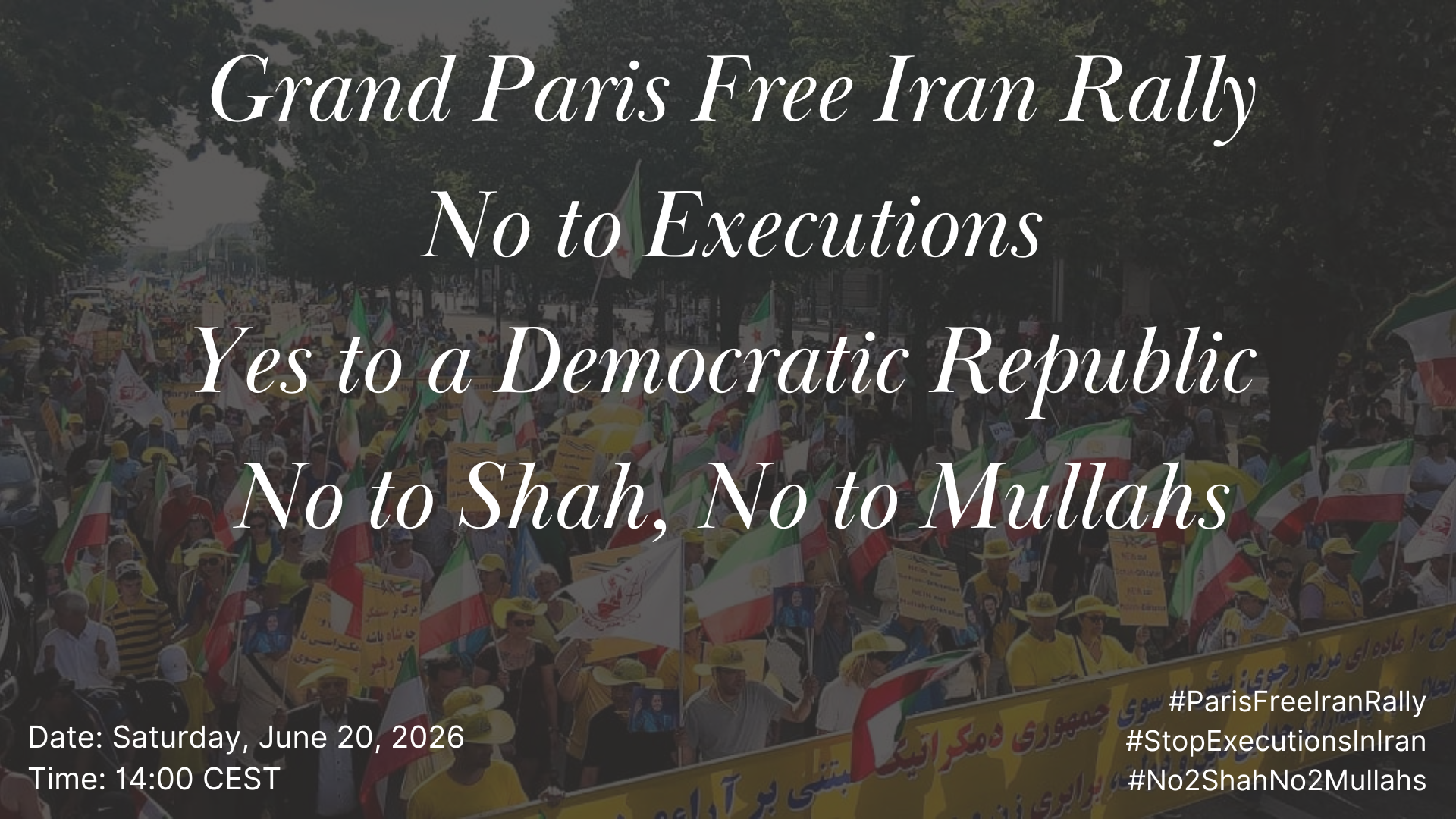

As Iran’s regime struggles with internal instability, economic collapse, and mounting social unrest, the upcoming gathering of the Iranian Resistance in Paris is emerging as a powerful political message of democratic change and organized resistance.
With less than six weeks remaining before one of the largest annual gatherings organized by the Iranian Resistance in Paris, this year’s event carries significance far beyond a traditional political demonstration.
The rally comes at a moment when Iran’s regime is confronting one of the most dangerous periods in its history — a convergence of political deadlock, economic collapse, growing social anger, and intensified internal repression. At the same time, resistance activities inside Iran continue to expand, particularly through the operations attributed to the so-called “Resistance Units” affiliated with the People’s Mojahedin Organization of Iran.
For supporters of the Iranian Resistance, the Paris gathering is not merely symbolic. It is intended as a declaration that despite decades of executions, imprisonment, demonization campaigns, and international pressure, the movement remains politically active, internationally connected, and deeply engaged with developments inside Iran.
A Regime Trapped Between Crisis and Escalation
In the aftermath of recent military confrontations and regional tensions, Iran’s leadership appears increasingly dependent on external conflict and domestic militarization to maintain control.
According to critics of the regime, the ruling establishment understands that any period of sustained calm inside the country could quickly reignite public protests over worsening living conditions, corruption, repression, unemployment, inflation, water shortages, and the absence of political freedoms.
This fear explains the intensifying atmosphere of securitization throughout Iran.
Over recent months, reports of arrests, executions, pressure on political prisoners, and expanded crackdowns against dissent have continued to grow. Opposition voices argue that the regime seeks to prolong instability and external confrontation as a mechanism to suppress internal unrest and delay the possibility of broader anti-government mobilization.
The strategy is rooted in historical precedent. During the Iran-Iraq war, the Iranian regime used the atmosphere of war to consolidate power, eliminate political opposition, and intensify repression against democratic movements and dissidents.
Many Iranian opposition figures warn that elements within the current leadership are attempting to recreate similar conditions today — using regional tensions and national security rhetoric to justify deeper authoritarian control.
The Fear of Social Explosion
At the core of the regime’s anxiety lies the reality of an increasingly volatile society.
Iran continues to face severe economic deterioration, widespread poverty, currency devaluation, industrial stagnation, unemployment, and deep social frustration. Beneath the surface of daily life, many observers describe a society marked by anger, exhaustion, and growing distrust toward the ruling system.
At the same time, anti-regime protests over recent years have demonstrated the persistence of organized dissent despite heavy repression.
For the Iranian Resistance, this combination of economic crisis and political dissatisfaction represents evidence that the regime has entered a structural dead end.
Supporters of the opposition point in particular to the growing activities of Resistance Units inside Iran, which they portray as a sign that organized opposition networks remain active despite arrests and executions.
This, they argue, explains the regime’s increasingly harsh response: expanded executions, sweeping arrests, intensified propaganda campaigns, and public intimidation tactics aimed at preventing renewed uprisings.
Paris as a Political Message
In this context, the upcoming Paris gathering takes on strategic importance.
For many participants, the rally represents a direct political message to the Iranian people — especially political prisoners, grieving families, and those inside Iran facing repression.
The message is one of persistence and refusal to surrender.
Supporters of the event describe it as an affirmation of the slogan “Never Bow Down,” emphasizing continued resistance against authoritarian rule and support for a democratic republic in Iran’s future.
The gathering is also expected to showcase the international dimension of the Iranian Resistance movement, which has survived years of political pressure, terrorist threats, blacklisting campaigns, and attempts to marginalize it diplomatically.
Organizers argue that the movement’s endurance reflects its ability to maintain both international support and internal organizational cohesion despite decades of repression.
The Role of Maryam Rajavi’s Democratic Platform
A central focus of the event will likely remain the political platform presented by Maryam Rajavi, particularly her widely discussed Ten-Point Plan for a future Iran.
The proposal advocates principles including:
- democratic elections,
- separation of religion and state,
- gender equality,
- abolition of the death penalty,
- judicial independence,
- ethnic and religious equality,
- and a non-nuclear Iran.
Supporters of the Resistance increasingly frame the plan as a democratic alternative to both the current theocratic system and any return to authoritarian monarchy.
This distinction has become particularly important amid ongoing debates over Iran’s political future and competing opposition visions.
Beyond Borders
The Iranian Resistance today presents itself not as an exile movement detached from events inside Iran, but as a transnational political network tied to domestic activism and organized resistance.
For supporters preparing to attend the Paris gathering, participation is described not only as a political act, but also as a gesture of solidarity with political prisoners, victims of repression, executed dissidents, and families who continue to seek justice.
The rally therefore aims to project a broader narrative: that despite repression, executions, and decades of political violence, the demand for freedom, democratic governance, and popular sovereignty in Iran remains alive.
As Iran enters another period of uncertainty and tension, the demonstration in Paris is expected to serve as both a show of opposition strength abroad and a symbolic message directed toward the unfolding struggle inside the country itself.