



Tehran’s resistance to peace agreements reflects its priority to preserve influence over fostering stability
Recent developments in the South Caucasus and Lebanon have been hailed by many observers as important steps toward reducing tensions and promoting stability in two volatile regions. Yet, as has often been the case, the Iranian regime has taken the opposite stance, reacting with frustration and hostility.
According to regime officials, Tehran’s opposition goes beyond immediate security concerns. It is rooted in a broader strategy aimed at preserving its regional influence—an influence that has been severely eroded over the past two years.
Peace in the South Caucasus—Met with Tehran’s Hostility
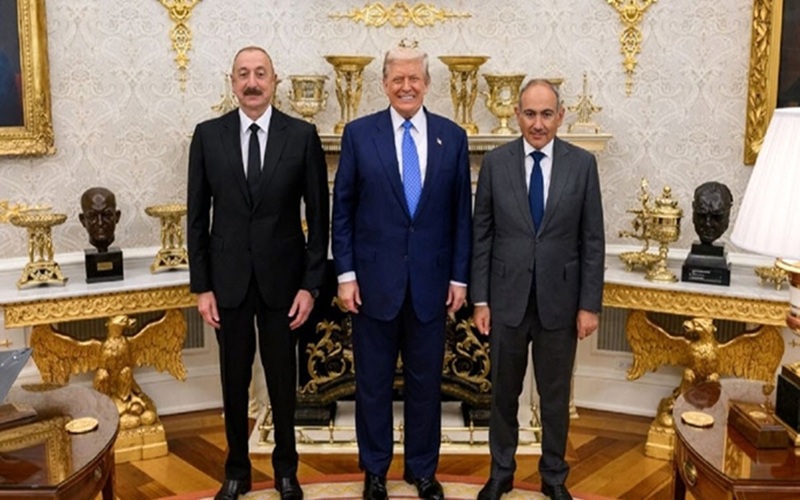
In a landmark development mediated by the United States and personally supported by US President Donald Trump, Azerbaijan and Armenia signed a peace agreement at the White House, ending decades of conflict over Karabakh and their disputed borders. The agreement commits both countries to cease hostilities, open trade and travel routes, and respect each other’s sovereignty and territorial integrity.
A centerpiece of the deal is a 99-year U.S. lease of the Zangezur Corridor, a strategic route connecting Azerbaijan to Nakhchivan through Armenian territory. Dubbed the “Trump Route for International Peace and Prosperity” (TRIPP), the corridor is seen as a vital economic and geopolitical link that could help stabilize the South Caucasus.
Tehran, however, reacted sharply. Ali Akbar Velayati, senior adviser to regime supreme leader Ali Khamenei, denounced the agreement as a “conspiracy” and warned that the Zangezur Corridor would become “a graveyard for Trump’s mercenaries.” He claimed it would alter Iran’s borders and restrict its access to Turkey. The regime’s Foreign Ministry also issued a statement warning of the “negative consequences of any foreign intervention near Iran’s borders.”
Kayhan newspaper, a mouthpiece for Khamenei’s office, labeled the corridor project “great treason” and urged decisive retaliation, including banning U.S. and Israeli-affiliated vessels from the Strait of Hormuz under the Geneva and Jamaica conventions.
Analysts note that Tehran views the agreement not as a path to stability but as a threat to its waning influence and its role in the South Caucasus security equation.
Lebanese Peace Plan Draws Similar Resistance
Meanwhile, the Lebanese government has endorsed a U.S.-backed plan aimed at disarming Hezbollah, ending Israeli military operations in Lebanon, and ensuring the withdrawal of Israeli forces from southern positions. Many experts believe the plan could both reduce border tensions and reinforce the sovereignty of Lebanon’s central government.
But for the Iranian regime—whose regional strategy heavily depends on Hezbollah as a proxy force—the plan is unacceptable. Regime Foreign Minister Abbas Araghchi declared that Hezbollah “will not lay down its weapons.” Velayati echoed this, insisting that “the dream of disarming Hezbollah will not be realized,” and alleging the initiative was orchestrated by the United States and Israel.
Lebanon’s Foreign Ministry rebuked these remarks as “interference in internal affairs” and an “attack on sovereignty,” stressing that the country’s security and political decisions are made exclusively in line with its constitution and the will of the Lebanese people.
A Consistent Pattern: Influence Over Peace
Observers point out that the regime’s stance in both cases follows the same pattern—rejecting peace and stability measures when they reduce Tehran’s influence in regional power dynamics.
In the South Caucasus, Iran’s exclusion from the mediation process and the expanded U.S. role have weakened its strategic position. In Lebanon, disarming Hezbollah would dismantle one of Tehran’s main levers of destabilization, used for over four decades to advance its expansionist goals.
Ultimately, these reactions reveal that the Iranian regime’s foreign policy is less about fostering collective regional security and more about safeguarding its role in the “influence game,” even at the expense of peace, development, and the well-being of neighboring nations.