


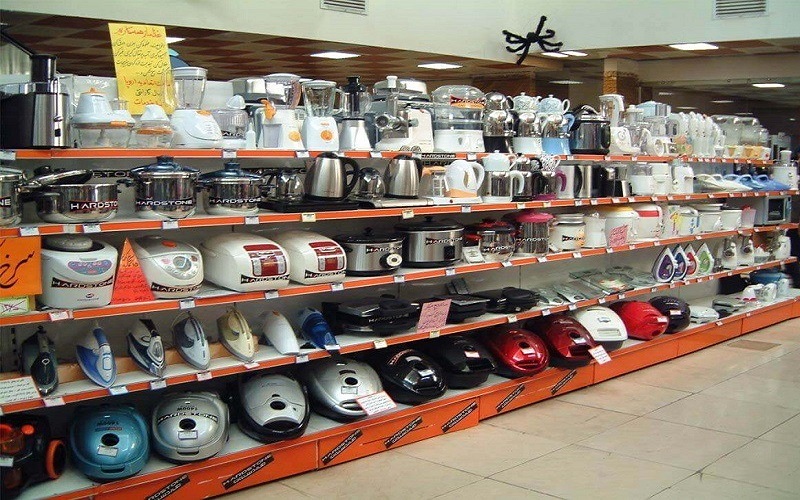

Smuggling has long plagued Iran’s economy, undermining domestic production, employment, and overall economic stability. Among the many sectors affected, the home appliance market has emerged as one of the most prominent and problematic arenas for illicit trade.
Import Bans: A Catalyst for the Smuggling Boom
In recent years, Iran’s ban on the import of household appliances—enforced at the behest of regime Supreme Leader Ali Khamenei and intended to protect domestic production—has inadvertently fueled an underground market. Rather than bolstering Iranian manufacturing, the policy has intensified smuggling, often with the complicity of government-linked institutions and powerful industrial groups.
According to the Headquarters for Combating Smuggling of Goods and Currency, the volume of smuggled home appliances in 2023 alone was estimated at around $2 billion. Independent reports suggest that at least one-third of all home appliances in the Iranian market were smuggled in through unofficial channels.
Monopoly, Corruption, and Declining Quality
Experts argue that the import ban has backfired. Instead of strengthening local manufacturers, it has fostered monopolistic conditions that degrade product quality and allow foreign goods to be illegally imported and sold under the guise of domestic brands. These operations are not isolated efforts by individual smugglers; they are coordinated, large-scale networks that could not function without the support—or at least the tolerance—of parts of the government, regulatory bodies, and customs authorities.
Evidence of this collusion is abundant. The unusually high volume of intercepted smuggled appliances, frequently reported by state media, suggests these goods are not entering through unofficial routes but rather via official customs checkpoints.
Warehouse Discoveries: A Glimpse into a Larger Network
Since the beginning of 2025, several major discoveries have brought public attention to the scale of the issue. For instance, a warehouse worth 10 billion tomans in Babol, another in Islamshahr, and the seizure of 4,000 smuggled appliances in southern Tehran are just a few examples. These cases represent only a fraction of the real volume—most smuggled goods likely go undetected.
Even as some domestic production increases, the market remains saturated with illegal imports, indicating collusion between some manufacturers and smuggling networks. During a time of economic recession and reduced consumer demand, this influx suggests that low-quality imported goods are being repackaged and sold as local products—a practice made possible by the monopoly created through the import ban.
Lawmakers and Experts Sound the Alarm
Hossein Samsami, a member of the regime’s parliamentary Economic Commission, criticized the extent of smuggling during a speech on May 15. He revealed that $20 billion of Iran’s $50 billion in non-oil exports from the previous year never returned to the country, and he questioned the effectiveness of customs oversight. Samsami also highlighted that part of the foreign currency used for smuggled imports likely originates from these unreturned export revenues, hinting at a hidden, state-supported financial structure.
Economist and appliance industry expert Ehsan Fadaei echoed similar concerns in February 2025, stating that 35% of Iran’s home appliance market consists of smuggled goods. He pointed out that these items are often brought in under the pretense of other imports, using subsidized government currency, while essential goods like fuel and medicine are smuggled out of the country.
The Role of Major Manufacturers
One of the most controversial actors in this ongoing crisis is Entekhab Industrial Group, one of Iran’s largest appliance manufacturers. The company has been repeatedly linked to smuggling scandals. In the mid-2010s, 52 containers labeled as “refrigerator parts” were seized at Hormozgan customs and linked to Entekhab through a subsidiary, Mobin Taha. In more recent years, hundreds of containers of appliances have been discovered smuggled under the label of “industrial parts,” again implicating powerful companies and possibly military-affiliated institutions.
One of the most glaring examples occurred in 2020, when 426 containers of Bosch-brand appliances were seized due to forged customs documentation. These containers, initially impounded, were ultimately transferred to the government’s Assets Management Organization in 2022—an outcome that raised even more questions about corruption within official channels.
The Hidden Cost to Consumers
The smuggling crisis has had devastating consequences for small businesses and consumers alike. Small appliance manufacturers and producers often cannot compete with the prices and networks of larger firms involved in smuggling. Many have been driven out of business, unable to access the same rent-seeking privileges or bypass customs like their more powerful competitors.
For ordinary Iranians, the result is a paradox: in the name of protecting local industry, they are forced to purchase low-quality, overpriced, and often smuggled products—with no warranty or consumer protection. The original aim of supporting national production has been undermined by a system riddled with corruption, monopoly, and rent-seeking.
Conclusion
The smuggling of household appliances in Iran is more than an economic issue; it is a symptom of systemic dysfunction, where policies ostensibly meant to protect national interests are weaponized for private gain. As long as large companies and state-affiliated institutions continue to benefit from this corrupt ecosystem, the true goals of economic independence and industrial development will remain out of reach. The Iranian people, as always, bear the cost.