


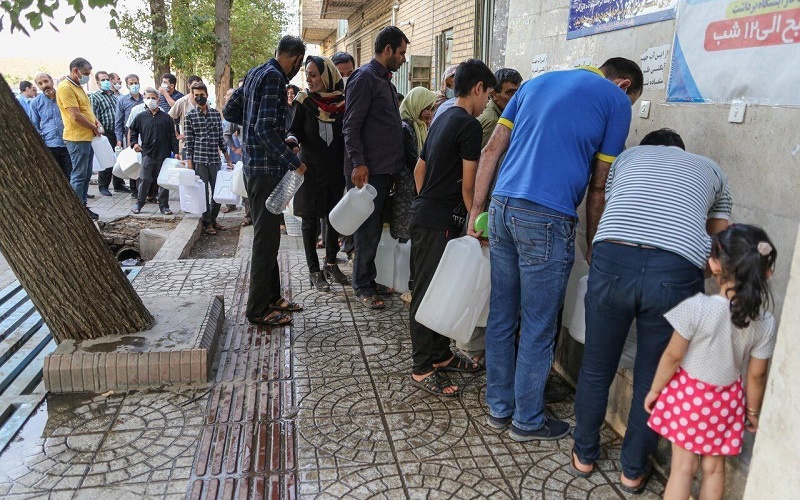

Iran is once again grappling with widespread power outages that are disrupting daily life across the country—affecting not only electricity access but also water supply and internet connectivity. The crisis mirrors similar patterns from previous years, highlighting long-standing infrastructure vulnerabilities and governmental mismanagement.
While the National Water and Wastewater Engineering Company (ABFA) urges residents of upper-floor apartments to use electric pumps to maintain water pressure, frequent blackouts render this advice impractical. The contradiction is not lost on citizens: without electricity, the pumps needed to access water simply don’t work.
Social media users have expressed frustration at the compounded hardships. One citizen likened water cuts in major cities to “stopping a patient’s breathing on a hospital bed.” Another reported that even living on the first floor offers no protection from water loss during a blackout.
The technical limitations are officially acknowledged. In March 2025, following complaints of low water pressure in Tehran, Hesam Khosravi, Deputy Director of Water Operations at Tehran Water Company, admitted that the utility is only responsible for supplying water pressure up to the second floor. Residents above that level are expected to install private pumps and storage tanks—a solution that places additional financial strain on already burdened urban households.
But even those investments are rendered useless during power outages, cutting off water access for nearly all multi-story dwellers. This issue has persisted for years, despite repeated warnings from experts and officials.
As early as March 2024, forecasts had already indicated looming water and electricity shortages. Nevertheless, no substantial preventive measures appear to have been taken.
On March 1, 2025, Energy Minister Abbas Aliabadi confirmed that five provinces were facing serious water supply challenges. Two weeks later, President Masoud Pezeshkian warned that continued low rainfall could push Tehran into a major water crisis if not properly managed.
The crisis extends beyond homes. According to a report by ISNA news agency on May 21, 2025, power outages have impacted essential services including hospitals, ATMs, internet networks, elevators, and residential water systems.
Hamid Najaf, an economic analyst, told ISNA that unauthorized cryptocurrency mining operations are contributing significantly to power shortages. Many of these mining farms, he claimed, are operated by “powerful centers” that the government lacks the will or ability to confront. Instead, electricity is cut off to residential neighborhoods and industrial facilities.
Although Energy Minister Aliabadi stated on May 9 that the Ministry has the capability to track unauthorized mining activity, he also noted a rise in “secret” operations, describing them as thefts that must be addressed. However, enforcement remains inconsistent.
The most high-profile case emerged in October 2021, when a cryptocurrency mining farm was discovered in the basement of Iran’s Stock Exchange Organization—a state-owned entity. Despite official vows to crack down on such activities, enforcement has largely focused on private miners. Government-linked operations have rarely been penalized.
One such rare incident occurred in November 2024, when 11 mining devices were discovered in a government department’s warehouse in Lasht-e-Nesha, Rasht Province.
The cumulative effect of mismanagement, illicit mining, and environmental stress is creating a dangerous and unsustainable situation for millions of Iranians. The country’s energy and water infrastructure is under immense strain—yet the government continues to respond with piecemeal solutions and conflicting policies.
As the summer months approach, Iranians are bracing for further hardship. Unless structural reforms are implemented and political will is summoned to tackle the root causes, the cycle of blackout and breakdown is unlikely to end.