


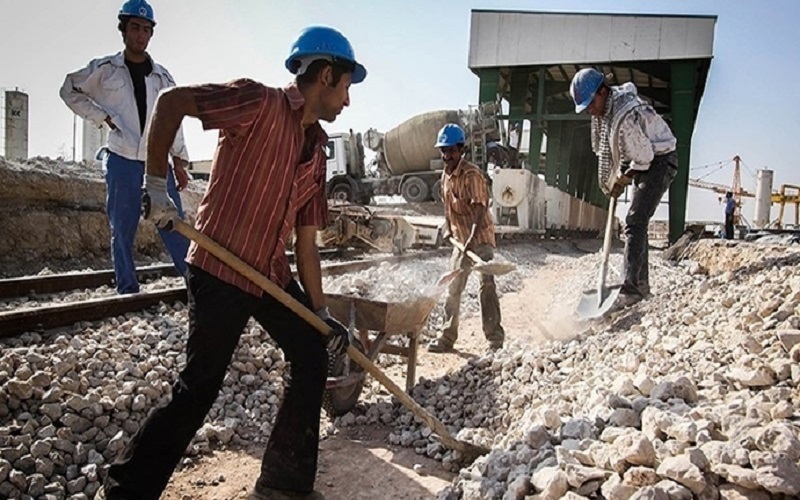

The livelihoods of Iranian workers have long been plagued by systemic social and economic issues, rooted in the rent-seeking nature of Iran’s regime. Among these challenges, the stark and widening gap between living costs and workers’ salaries stands out as one of the most alarming. Systemic corruption and inefficiencies in decision-making processes have driven the backbone of Iran’s economy—its workers—into an increasingly dire situation.
A Growing Disparity Between Wages and Living Costs
One of the most pressing issues for Iranian workers is the mismatch between their salaries and the escalating costs of daily living. Even those earning above the legally mandated minimum wage struggle to make ends meet. This disparity has forced many workers to seek informal employment, such as becoming drivers for ride-hailing services like SNAP, which often provide higher income with less time investment compared to formal jobs.
Wages Undermined by Government Influence and Inflation
Iranian workers’ wages not only fail to cover basic necessities, but the process of wage determination is heavily influenced by the government. Experts have consistently pointed out that the Supreme Labor Council—the body responsible for setting minimum wages—operates under significant governmental pressure. In 2024, the minimum wage covered only half the cost of the subsistence basket, and with inflation soaring, this figure has now plummeted to just one-quarter. This steep decline underscores the dramatic erosion of workers’ purchasing power and living standards.
During the winter of 2024, inflation accelerated sharply, further eroding the purchasing power of the working class. Essential goods and services saw significant price hikes, with medicine rising by 5%, basic food items by at least 2%, and intercity bus fares surging by 25%. Such price increases disproportionately impact workers, driving them further into economic hardship.
A Flawed Wage-Setting Mechanism
The Supreme Labor Council, the official authority for determining workers’ minimum wages, has proven ineffective in addressing these challenges. Hossein Habibi, a member of the board of directors of the High Council of Islamic Councils, has acknowledged that the council lacks both the capacity and the political will to advocate for workers’ interests.
Habibi highlights that the government, which plays a dominant role in the council, acts as both the primary driver of inflation and a key ally of employers. “The government is the main guardian of inflation and an accomplice of employers in the Supreme Labor Council, pursuing its own interests rather than those of the workers,” he stated. Habibi also pointed out that many workers governed by labor laws are employed by government or semi-government entities, making the government effectively a “super-employer” with vested interests in keeping wages low.
Inflation: A Deliberate Policy?
The current inflationary trends in Iran appear to be more than a failure of economic management; many experts argue they are deliberately engineered by the government to serve specific interests. This persistent inflation has rendered wage increases largely ineffective. Even a hypothetical 100% increase in the minimum wage would fail to address the crisis, as soaring prices would quickly outpace any nominal salary adjustment.
Habibi emphasized this point, stating: “Given the astronomical gap between workers’ wages and inflation, and the reality that prices continue to rise daily, even a 100% increase in the minimum wage would not be enough. The government’s inability—or unwillingness—to control inflation makes wage hikes futile.”
A Call for Collective Action
In light of these grim realities, the only viable path to improving workers’ living conditions appears to lie in the creation of a unified and determined collective movement. Workers must exert continuous pressure on both the government and employers to address their grievances. Without such collective will, the hardships facing Iran’s working class are likely to persist under the current anti-worker regime.
The struggle for fair wages and livable conditions is a critical battle for the dignity and survival of Iran’s workers. Addressing this crisis requires systemic reform and a shift in priorities that place the well-being of workers at the forefront of economic and political decision-making.