


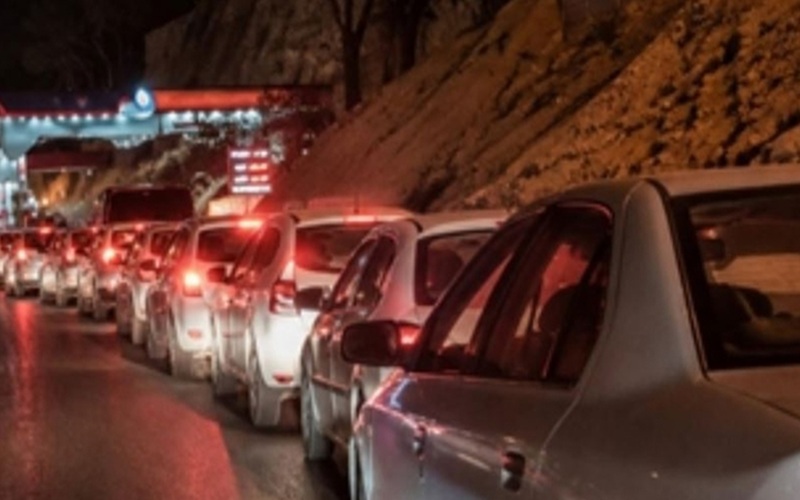

Lawmakers warn that any increase in gasoline prices could trigger widespread public anger amid mounting inflation, shrinking household incomes, and growing distrust of the government. A heated parliamentary session exposes deep divisions within the regime over the risk of renewed unrest.
Iran’s parliament became the scene of unusually heated exchanges on November 15, 2026, as lawmakers openly acknowledged the severity of the country’s economic crisis and warned against changes to gasoline prices and distribution. The November 24, 1405, session exposed growing friction between government officials and parliamentarians, with several lawmakers expressing concern that contradictory statements about fuel policy could provoke public anger in an already volatile social environment.
At the center of the confrontation was a concern extending beyond economic policy: the possibility that another increase in the cost of living could ignite widespread protests.
The debate unfolded against a backdrop of runaway inflation, declining purchasing power, and mounting pressure on ordinary households. Recent statements by government officials about possible changes to gasoline pricing had already generated uncertainty and anxiety. Lawmakers responded by sharply criticizing the government’s economic team and warning that decisions affecting fuel prices could have serious social and political consequences.
One of the strongest interventions came from Aliabadi, a member of parliament, who described the population’s economic circumstances as increasingly unbearable.
“Inflation has crushed the people. First it was meat, chicken, and medicine, and now there is the gasoline issue. Why don’t some people understand that people are literally struggling to keep up appearances?” he said.
He then issued a direct warning against manipulating fuel prices:
“Don’t play games with gasoline. By God, this gasoline issue will set the country on fire. Why don’t you understand?”
Aliabadi also pointed to the withdrawal of livelihood subsidies, declining real incomes among salaried workers, and rising water and electricity tariffs. With household budgets already severely strained, he argued, further pressure through fuel-price changes would only deepen public frustration.
“People’s tables have already become smaller. Now we have this gasoline uproar as well. Let go of the people’s throats and allow them to breathe,” he said.
He also criticized a deputy to President Masoud Pezeshkian for advising citizens to plan their trips three months in advance. Aliabadi contrasted that recommendation with the reality facing ordinary Iranians, for whom buying a home has become practically impossible and purchasing a car an increasingly distant aspiration. Under such conditions, he argued, many people cannot even plan their lives a week ahead.
Qalibaf warns government against fueling public anxiety
Parliament Speaker Mohammad Bagher Qalibaf also addressed the controversy in his opening remarks, acknowledging that repeated statements about gasoline had generated widespread concern. He called for an end to the contradictory public commentary surrounding fuel policy.
His concerns were echoed by Deputy Speaker Hamidreza Haji-Babaei, who warned that premature announcements were further eroding public trust.
“We ask the government not to talk about something until it has been approved, whether by the government or parliament in accordance with the law. Everyone makes a statement, confusing people’s minds and unsettling society. They get on people’s nerves, and then nothing happens. Who is going to pay the price for all this distrust?” he said.
The remarks reflected the growing sensitivity within the regime’s institutions to public reactions over economic decisions. Rather than presenting a clear policy, government officials had created an atmosphere of uncertainty that lawmakers feared could further undermine already fragile public confidence.
Lawmakers target government spokesperson and officials over gasoline statements
Several parliamentarians directed their criticism at specific members of the government, accusing them of aggravating public anxiety through poorly coordinated statements.
Ruholamini criticized what he described as the creation of unnecessary tension over gasoline and livelihood subsidies. He characterized recent remarks by a presidential deputy as evidence of poor judgment in communicating sensitive issues and called on Pezeshkian to take action against officials whose public statements were worsening the situation.
Aliabadi went further, directly addressing the government spokesperson and an official identified as Saghab, demanding that they stop making statements that could intensify public frustration.
“Some officials, if they do not work, leave people better off. If they do not speak, the country is calmer. Madam Spokesperson, please stop speaking. Mr. Saghab, don’t talk. Why are you getting on people’s nerves? If you have nothing meaningful to say, at least remain silent,” he said.
Another lawmaker, Bashiri, also described government officials’ comments on gasoline as unprofessional and called for an end to the escalating controversy.
Gasoline dispute exposes regime’s fear of renewed unrest
The November 15 parliamentary confrontation revealed that gasoline pricing has become much more than a technical question of subsidies, energy management, or government finances. It has turned into a politically sensitive issue exposing divisions within the ruling establishment and its concerns about the consequences of further economic pressure on an increasingly impoverished population.
The timing is particularly significant. The debate took place as Iran approached the anniversary of the November 2019 uprising, when a sudden increase in gasoline prices triggered nationwide protests. The demonstrations spread to 165 cities and were met with a violent crackdown by security forces, leaving a lasting mark on the country’s political landscape.
The current warnings from lawmakers demonstrate that the memory of that uprising continues to influence decision-making within the regime. Their repeated references to public anger, social instability, and the erosion of trust indicate how acutely the authorities recognize the risks associated with another shock to household finances.
The government faces mounting financial pressures and difficulties managing energy resources, while parliamentarians appear increasingly concerned about being held responsible for decisions that could provoke another wave of protests.
The parliamentary debate offered no clear resolution to the gasoline controversy. Instead, it exposed a ruling establishment struggling to reconcile its economic difficulties with the political consequences of imposing additional costs on a population already facing severe hardship.
The central issue is no longer simply how the regime intends to price and distribute gasoline. It is how much additional economic pressure Iranian society can endure before public anger once again spills into the streets. The November 2019 uprising remains a powerful reminder within the regime’s own institutions of how quickly a seemingly economic decision can develop into a nationwide political confrontation.