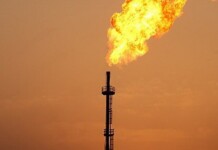
State television of Iran’s regime has announced and confirmed the death of Supreme Leader Ali Khamenei and new wave of air and missile strikes targeting multiple regime affiliated locations across the country. According to official and semi-official outlets, several explosions were heard in central Tehran, with reports of thick smoke rising from parts of the capital and additional blasts in the north and east of the city.
Military-affiliated news agencies of Iran’s regime have reported missile impacts in central Tehran and claimed casualties among Islamic Revolutionary Guard Corps (IRGC) personnel, while other sources have spoken of wider disruption, including communication outages, the closure of Iranian airspace, and increased traffic as residents attempt to leave the capital. Concurrently, regional and international media have described the operation as a large-scale attack which, according to Israeli defense officials, was “preemptive” in nature and conducted in coordination with the United States.
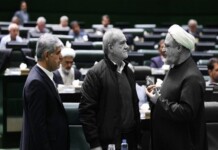
Following the reports of Khamenei’s death, a number of outlets inside Iran’s regime have carried reactions from senior figures. Tasnim, a news agency close to the IRGC, quoted conservative politician Gholam-Ali Haddad-Adel as saying he was “devastated” by the news. The regime’s judiciary chief, Gholam-Hossein Mohseni-Eje’i, vowed a tougher stance against what he called “the infidels of the present era.” In a formal statement, the regime’s President Masoud Pezeshkian condemned the killing as a “great crime” and said it would not go unanswered.
Iran’s regime has also announced the activation of interim constitutional arrangements for leadership succession. Until a successor to Khamenei is named, a council consisting of the president, the head of the judiciary, and one cleric from the Guardian Council, selected by the Expediency Discernment Council, is to assume the leader’s duties on a temporary basis.
Reports attributed to domestic and foreign media state that several senior security and military officials of Iran’s regime, including IRGC commander Mohammad Pakpour and former top security official Ali Shamkhani, were also killed. Some outlets further report that Khamenei’s daughter, son-in-law, daughter-in-law, and a grandchild died in the same strikes, though independent confirmation of all casualties remains limited.
In response, the IRGC has issued multiple statements promising to continue Khamenei’s path and to resist “internal and external conspiracies.” The Guards have announced that what they describe as the “most severe” offensive operations against Israel and US bases in the region will begin shortly. Iran-aligned proxy groups in Iraq have claimed drone attacks on US facilities in Erbil, framing them as part of a broader retaliation on behalf of Iran’s regime.
On the regional front, IRGC naval forces have declared the Strait of Hormuz closed and warned all vessels to leave the area immediately. At the same time, the US Department of Transportation has advised commercial shipping to avoid the Persian Gulf region due to heightened security risks. Iran’s regime has also announced that all schools nationwide will remain closed until further notice, and the cabinet has declared 40 days of public mourning and seven days of general shutdown.
International reaction has been swift. The United Nations Security Council convened an emergency session to discuss the rapidly escalating situation. UN Secretary-General António Guterres condemned the military escalation in the Middle East and urged all parties to return immediately to negotiations. The US representative stated that American operations are directed at specific strategic targets intended to degrade Iran’s missile capabilities and to ensure that Iran’s regime can never threaten the world with nuclear weapons. The US envoy also accused Iran’s regime of unprecedented killings of innocent civilians and argued that its presence on the Security Council undermines the body’s credibility.
The French representative warned that the current escalation is dangerous for all parties and must cease immediately, strongly condemning Iran’s regime for its attacks across the region and expressing deep concern for the suffering of the Iranian population amid what was described as long-term systematic and brutal repression. The United Kingdom’s representative said there are “no illusions” about the nature of Iran’s regime, accusing it of killing thousands of citizens for exercising basic rights. China’s representative expressed deep concern over US and Israeli strikes on Iran and called for restraint.
US President Donald Trump, posting on Truth Social, called Khamenei “one of the most evil people in history” and stated that “heavy and precise bombardments” would continue as long as necessary to achieve what he described as peace throughout the Middle East and the world. He also said that “most” senior leaders of Iran’s regime are “gone” and claimed that those who made key decisions for the system had largely been eliminated.
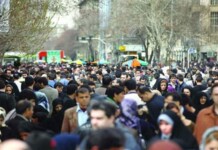
On the ground, reports from various parts of Iran mention civilian casualties, including at least 15 people killed in an airstrike on a sports hall in the southern city of Lamerd. At the same time, there are indications of both fear and anger among the population: accounts speak of people seeking safety, as well as of calls for retribution from supporters of Iran’s regime and expressions of relief or celebration from some of its critics.
Given the fluid nature of the situation, casualty figures, operational details, and the political consequences for Iran’s regime and the wider region are expected to evolve in the coming hours and days.