


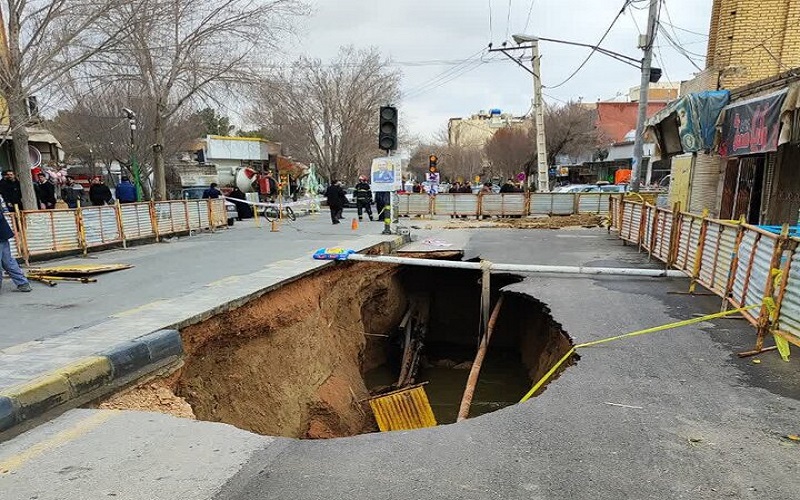

The Director General of Education in Isfahan province, Mohammadreza Ebrahimi, has raised alarm over the structural integrity of schools in the region. He revealed that approximately 150 schools in Isfahan are at risk of collapse due to land subsidence, with 42 already evacuated. This growing crisis is part of a broader national problem linked to environmental mismanagement and overuse of groundwater resources.
A National Crisis: Land Subsidence Across Iran
Mehdi Zareh, a seismologist and professor at Iran’s Seismology Research Institute, stated on November 17 that an estimated 39 million Iranians live in areas prone to land subsidence. About 25% of urban areas in the country face varying degrees of this phenomenon. The Geological Organization of Iran has similarly warned that 500 out of the country’s 609 plains—many critical for fresh water—are experiencing land subsidence. Isfahan province stands out as particularly vulnerable, with its situation described as “more dangerous” than other regions.
Isfahan’s Accelerating Crisis
The subsidence crisis in Isfahan intensified in 2018 following the interruption of the permanent flow of the Zayandeh Rud river. This disruption, combined with over-extraction of groundwater for agriculture and unchecked well drilling, has led to a steady annual decline of one meter in groundwater levels.
Ebrahimi emphasized that Isfahan province faces both high intensity and frequency of subsidence, impacting schools and other structures. “Schools that haven’t been evacuated are not safe either,” he warned. Most of the evacuated schools are located in northern Isfahan and urban areas four and five, with additional closures in Barkhar and Shahinshahr cities.
A Decade of Inaction
Despite the growing threat, authorities have failed to implement meaningful measures to address subsidence in central, northern, and southern Iran. Ali Baitollahi, head of the Seismological Department at the Iran Road Research Center, noted that 11 provinces experience subsidence rates exceeding 10 cm annually—an alarming rate from an engineering perspective. Yet, this issue continues to be neglected.
Environmental activist Mohammad Darwish highlighted that over the past 30 years, Iran has consumed two-thirds of its thousand-year water reserves, tripling the rate of land subsidence in just five years.
The National Scope of Land Subsidence
According to Zareh, land subsidence is a nationwide problem, sparing only Gilan province. He attributes it primarily to over-extraction of groundwater and human activities. Notably, 30% of Iran’s landmass consists of plains, where most urban development has occurred. Consequently, 25% of urban areas are vulnerable to land subsidence, with 5% of Iran’s total land area experiencing severe subsidence.
In Tehran and Fars provinces, subsidence rates exceed 40 cm annually, endangering educational facilities and historical structures alike. In Isfahan alone, 385 educational centers and 280 mosques, many of historical significance, are under threat.
Dire Warnings for Isfahan’s Future
Mehdi Taghiani, Isfahan’s representative in parliament, issued a stark warning on March 28: “If this problem isn’t addressed in the next few years, residents will be forced to leave Isfahan. The city will no longer be habitable within seven to eight years.”
Conclusion
Iran’s land subsidence crisis is a pressing environmental and infrastructural issue. Isfahan’s plight exemplifies the devastating consequences of decades of water mismanagement and environmental neglect. Without immediate intervention, the damage to schools, historical sites, and urban areas will continue to escalate, threatening the livelihoods and safety of millions.