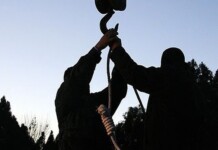
At the European Parliament’s Human Rights Day conference, lawmakers and former prime ministers declared that the EU must recognize the Iranian people’s right to resist and adopt a principled, democratic policy toward Iran.
Europe Acknowledges a Turning Point
On December 10, 2025, in Brussels, senior members of the European Parliament, former prime ministers, and human rights leaders convened to mark Human Rights Day with an unambiguous message: Europe must replace decades of failed appeasement with a principled policy that recognizes the Iranian people’s right to resist a violent, theocratic dictatorship.
Opening the conference, Milan Zver set the tone by underlining Europe’s responsibility. He reminded the audience that “the systematic repression of women, students, journalists, and minorities… makes the Iranian regime a central source of not only regional insecurity but also global instability.” Europe, he warned, “must do better” and must abandon illusions that the regime could ever moderate. Praising the Iranian opposition, he called Maryam Rajavi’s courage “a true inspiration to all who believe in freedom.”
Accountability Is No Longer Optional
For many speakers, the central demand was immediate international accountability for the regime’s ongoing crimes.
Petras Auštrevičius warned that Tehran is “paving the way to repeat past atrocity crimes, as evidenced by the recent death sentences against 17 political prisoners for supporting the PMOI,” echoing the 1988 massacre. He stressed: “The time for decisive action is now.” The EU, he said, must support Rajavi’s call to refer crimes against humanity to the UN Security Council and to recognize the NCRI as the democratic alternative.
Francisco Assis echoed this alarm, describing the executions of Behrouz Ehsani and Mehdi Hassani as “a heartbreaking reminder of persistent human rights violations and… the beginning of a potential new massacre.” Europe, he argued, must ensure that “there will be no diplomatic relations or dialogue until UN experts are authorized to travel to Iran and… a verifiable halt to executions.”
He urged EU states to recognize the 1988 massacre as a crime against humanity—a step many speakers supported.
The Case for a Democratic Alternative
Speakers repeatedly emphasized the organized, long-standing alternative represented by the NCRI and PMOI, and the role of women at its forefront.
Former Palermo mayor Leoluca Orlando highlighted that “an organized resistance exists despite decades of repression” and that women-led leadership “stands as a powerful counter to the regime’s tyranny and misogyny.” He underlined that the NCRI’s consistent message—that the regime cannot reform and that its export of extremism is inseparable from its domestic repression—had been ignored to the detriment of global security.
Similarly, Andrey Kovatchev praised the opposition’s growing recognition in Europe: “Your democratic alternative is increasingly recognized across party lines in this parliament.” He called on Rajavi to continue unifying Iranian democratic forces.
Crimes Against Humanity—and the Right to Resist
Legal experts stressed that the situation in Iran is not a matter of poor governance but a sustained, systematic attack on civilians.
Former Lithuanian Constitutional Court President Dainius Žalimas stated plainly: “The deeds of the Iranian regime should be assessed as crimes against humanity under international law and probably also with genocidal intent.” Citing UN findings, he emphasized systematic discrimination against women and a “worrying crisis of executions in violation of international law.” The Iranian people, he noted, retain under the Universal Declaration “the right to rebel against tyranny and oppression.”
The Regime’s Weakness and the Rise of Organized Resistance
Speakers also stressed that Iran stands at an inflection point—marked by the regime’s fragility and the opposition’s growing momentum.
Finnish general and MP Pekka Toveri declared: “This is not a government in control. It’s a regime in crisis.” He underlined the environmental, economic, and social collapse inside Iran and the rapid expansion of the PMOI Resistance Units, calling them “disciplined networks operating under unimaginable surveillance and lethal risks.”
Toveri argued forcefully that neither foreign military intervention nor appeasement can bring change: “Iran will not be liberated by foreign armies nor by trade deals.” The only viable path, he said, is “the Iranian people and the organized resistance… the third option.”
Europe Must End Appeasement
The clearest challenge to EU leaders came from former Belgian Prime Minister Guy Verhofstadt, who urged an immediate reversal of EU policy.
He recalled the staggering scale of executions: “In the month of November, there were more than 330 prisoners… since the beginning of December, 60 people have been executed… more than 2,600 people have been killed in sixteen months.”
His conclusion was blunt: “The strategy of appeasement has solved nothing… It is the moment now to increase pressure on our own leaders.” Verhofstadt demanded recognition of the IRGC as a terrorist organization, a sanction-escalation mechanism tied to executions, and official recognition of Rajavi and the NCRI as the legitimate democratic representatives of the Iranian people.
“I have a dream… that on the next International Human Rights Day, we could be invited by you in Tehran.”
“This Is the Moment of Weakness for the Regime”
Former Italian Prime Minister Matteo Renzi called the current period “the most incredible period for the Iranian regime… the weakness of the Iranian regime is incredible today.” He rejected both bombing and political correctness as ineffective: “Both are not good ways.”
Renzi argued that change in Iran is now the decisive factor for regional and global stability. Calling the NCRI a credible force for democratic transition, he said: “This is the time to act and call to action.” He ended with a message of hope, drawing on the example of Alcide De Gasperi: “You can come back to light after decades of darkness.”
A Collective Responsibility
Polish MEP Ryszard Czarnecki warned that appeasement empowers dictatorships: “Our history teaches us that dictatorships grow bolder when the free world remains silent.” He highlighted that “this year alone, the regime has executed around 1,800 prisoners… 161 people in just two weeks.” Despite this, he said, the Resistance Units prove that “the Iranian people will not surrender.”
He expressed confidence in victory: “I believe that we will see Madam Maryam Rajavi walking freely through the streets of Tehran.”
Sanctions and Justice
Former MEP Paulo Casaca urged a global sanctions regime targeting regime officials: “These judges, these prosecutors… They are criminals against humanity. They should be targeted everywhere.” He argued that accountability is essential to supporting the Iranian struggle for freedom.
“Fight Before It’s Too Late”
Lithuanian MEP Rasa Juknevičienė concluded with a warning based on Europe’s experience with authoritarianism. Dictatorships are rising globally, she said, and democracies must not retreat: “They lost US support… and now we are witnessing a mistaken approach to make deals with dictatorships.”
Her message was both cautionary and resolute: “At the end, we will win… but we have no other possibility than to stay on the right side of history and fight before it’s too late.”
The End of Illusions
Across political groups and national backgrounds, the message was unified.
Europe’s leaders—lawmakers, generals, jurists, and former prime ministers—now regard the Iranian regime not as a partner to be moderated but as a central threat to human rights, global security, and the future of democracy.
The conference delivered a clear consensus:
- Accountability must begin now, including referral to the UN Security Council.
- Appeasement has failed and must be replaced by a policy of pressure and principled engagement with the democratic opposition.
- The NCRI and Maryam Rajavi represent a viable democratic alternative grounded in universal human rights.
- Change in Iran is both necessary and inevitable—and its engine is the Iranian people themselves.
In Brussels, speakers agreed on one final point: Europe must choose a side.
And on Human Rights Day 2025, for the first time in years, that choice was stated without ambiguity.