


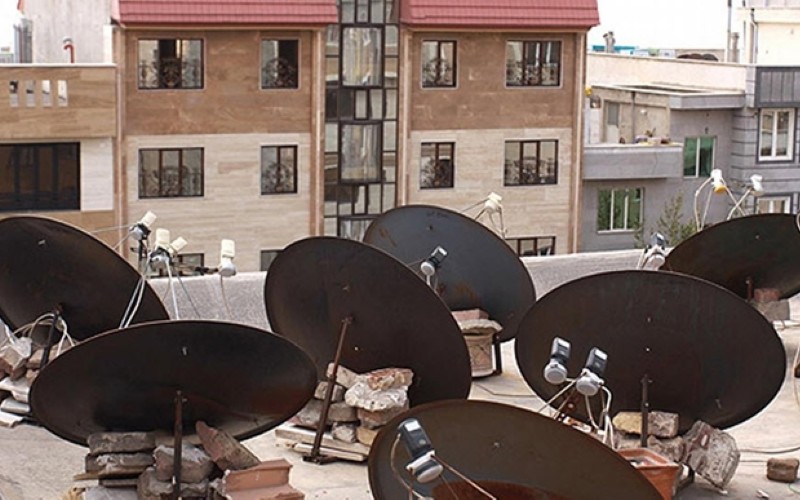

Satellite dishes and Starlink equipment targeted amid prolonged internet blackout
A Coordinated Campaign Against Information Access
As the Iranian regime authorities grow increasingly alarmed by citizens’ access to uncensored information, field reports from across the country indicate the start of a new wave of organized raids on residential buildings. The objective is clear: confiscation and destruction of satellite television dishes and the identification of Starlink satellite internet equipment, which has become a critical tool for bypassing state censorship.
According to multiple reports received on Tuesday, January 13, 2026, security forces entered residential buildings without presenting legal warrants, forcing their way onto rooftops to dismantle or seize satellite dishes. In several cases, equipment associated with Starlink internet access was also targeted.
Tehran and Beyond: Raids Without Warrants
A resident of Tehran reported that these operations were carried out extensively in neighborhoods such as Gisha, Heravi, and Marzdaran. According to the witness, regime agents entered buildings abruptly, removed satellite dishes by force, or confiscated them outright—without showing any judicial authorization.
Similar reports have emerged from northern Iran. A citizen from Shahsavar (Tonekabon) in Mazandaran Province stated that the campaign is not limited to the capital and has expanded to cities such as Chamestan. In some cases, agents reportedly gained access to homes by posing as utility workers from gas, electricity, or municipal services.
According to this witness, the purpose of these tactics is explicit: to sever the population’s connection with the outside world.
Nationwide Pattern of Escalation
In Qazvin, residents reported house-to-house raids around 8:00 p.m. on the same day, with security forces searching for satellite dishes and Starlink equipment.
In Karaj, particularly in Manzariyeh Township and areas surrounding Banafsheh Township, residents described violent confrontations. Witnesses reported that security forces beat residents, stormed rooftops, destroyed satellite dishes, and threw them down from buildings. At the same time, security controls and surveillance along routes between Tehran and Karaj were noticeably intensified, indicating a broader security operation rather than isolated incidents.
Information Control as a Pillar of Repression
These actions are taking place while access to free internet and independent media has become one of the population’s most critical tools—for communication, documentation, and resistance against censorship and state violence.
The timing is significant. Iran is currently experiencing one of its longest internet blackouts, aimed at suppressing information flow during a period of widespread unrest and reported mass casualties.
The internet monitoring organization NetBlocks confirmed that Iran has remained offline for more than 132 consecutive hours, warning that the absence of connectivity continues to obscure the true scale of the violence. Early reports suggest thousands of casualties, but the full extent remains unknown precisely because of the digital blackout.
⚠️ Update: Metrics show #Iran remains offline as the country wakes to another day of digital darkness.
With the internet blackout now past its 132nd hour, early reports indicate thousands of casualties. The true extent of the killings is obscured by the absence of connectivity. pic.twitter.com/KVNqOTH848
— NetBlocks (@netblocks) January 14, 2026
Isolation as State Strategy
The systematic confiscation of satellite dishes and Starlink equipment reflects a deliberate strategy: information isolation as a method of governance. By cutting off external communication channels while enforcing prolonged internet shutdowns, the regime authorities aim to control narratives, suppress evidence, and prevent Iranian citizens from reaching international audiences who seek to provide evidences of the regime’s crimes and human rights violations in the recent protests. They also seek to prevent the people to continue their protests.
However, these measures also underscore a deeper reality. A regime that must raid homes, disguise agents as utility workers, and destroy communication tools to maintain control is one that no longer governs through consent, but through fear and enforced silence.
As Iran’s digital darkness continues, the intensification of these raids signals not strength, but growing anxiety within the ruling system—an acknowledgment that access to information has become one of the most powerful forms of resistance.