As political prisoners and athletes face death sentences, Tehran’s escalating use of executions reflects growing fears of social unrest rather than the pursuit of justice.
Executions Are Not Justice—They Are a Political Strategy
In Iran, executions have long ceased to function as instruments of criminal justice. Instead, they have become a central pillar of the regime’s political survival strategy. The latest death sentences handed down to political prisoners in Khuzestan, alongside growing threats against prominent athletes, demonstrate a familiar pattern: whenever the ruling establishment perceives a rise in public anger and social instability, the gallows become a tool of intimidation.
Recent developments suggest that Tehran is once again attempting to exploit regional crises and international distractions as cover for an intensified campaign of domestic repression. While global attention remains focused on conflict and diplomacy, the regime appears determined to eliminate perceived sources of opposition at home.
The Ahvaz Prisoners and the Reality of Political Justice
Reports from Sheiban Prison in Ahvaz indicate that five political prisoners—Masoud Jamei, Alireza Mardasi, Farshad Etemadifar, Reza Abdali, and Hassan Mosallavi—face the imminent risk of execution.
Their convictions were reportedly based on charges frequently used against political dissidents, including “enmity against God,” “collusion against national security,” and “propaganda against the state.” Such accusations have become standard tools within Iran’s revolutionary court system, where political cases are often prosecuted under broadly defined security laws.
The central question is not merely whether these individuals received fair trials, but whether the judicial process itself operates independently when political considerations are involved. For decades, human rights organizations have documented concerns regarding due process, access to legal representation, and the use of coerced confessions in politically sensitive cases.
Prison Conditions as a Form of Punishment
The conditions inside Sheiban Prison further underscore the human rights concerns surrounding these cases.
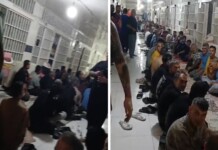
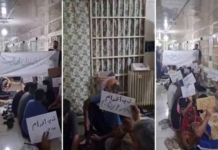
Widely described by former inmates and rights groups as overcrowded and severely under-resourced, the prison has become symbolic of a broader penal system that places political prisoners under extreme psychological and physical pressure. Reports of inadequate sanitation, poor water quality, and chronic shortages of basic necessities suggest that punishment often begins long before any execution order is carried out.
For prisoners awaiting possible execution, such conditions represent not only imprisonment but prolonged uncertainty and psychological torment.
Why the Regime Is Escalating Repression
The timing of this latest wave of death sentences is significant.
Iran faces mounting economic pressures, deep social dissatisfaction, widespread labor unrest, and a continuing crisis of legitimacy. Under such circumstances, the regime’s security apparatus appears increasingly focused on deterrence.
The objective is clear: create an atmosphere of fear powerful enough to discourage political activism before it can evolve into organized resistance.
This interpretation was reflected in the remarks of Maryam Rajavi, who argued that the authorities are attempting to prevent future uprisings through executions and intimidation. Whether one agrees with her political perspective or not, the broader observation resonates with a growing body of evidence: repression tends to intensify when governments feel vulnerable.
Athletes Become Targets of Political Fear
The regime’s execution campaign extends beyond political prisoners and increasingly touches one of the country’s most visible social groups: athletes.
Iran’s modern history contains numerous examples of athletes who faced severe consequences because of their political views or perceived affiliations. The execution of wrestler Navid Afkari became an international symbol of this phenomenon, generating condemnation from sports organizations and governments worldwide.
Today, concerns have intensified over the fate of boxer and coach Mohammad Javad Vafaei Sani, whose case has attracted significant international attention.
The targeting of athletes carries particular significance because sports figures often command public respect that transcends political divisions. When a government views national champions as potential threats, it reveals the depth of its insecurity.
A Message Meant for Society
The execution of political prisoners serves one purpose. The targeting of athletes serves another. Together, however, they communicate the same message.
The regime seeks to demonstrate that no sector of society is beyond its reach—not students, not workers, not teachers, not activists, and not even celebrated national sports figures.
By extending repression across different segments of society, authorities hope to weaken solidarity and discourage collective action. Fear becomes a governing mechanism.
Yet history repeatedly shows that repression can produce unintended consequences. Rather than eliminating grievances, it often deepens them.
The International Community Cannot Look Away
The growing number of death sentences and reports of political executions place renewed responsibility on international institutions, human rights organizations, and democratic governments.
Silence in the face of politically motivated executions risks normalizing practices that violate fundamental human rights principles. International pressure has played a decisive role in delaying or preventing executions in previous cases, demonstrating that external scrutiny can save lives.
The cases of the prisoners in Ahvaz and the athletes currently facing severe punishment should therefore not be viewed as isolated incidents. They are part of a broader pattern that reflects the regime’s reliance on coercion at a moment of profound internal vulnerability.
The real issue confronting Iran today is not merely the fate of individual prisoners. It is the growing confrontation between a society demanding greater freedoms and a ruling establishment increasingly dependent on repression to maintain control.
Every new execution order serves as a reminder that this struggle remains unresolved—and that the cost of international indifference may ultimately be measured in human lives.