Authorities cut communications for female political prisoners in Evin Prison while detainees arrested during the 2026 uprising face harsh conditions, medical neglect, and overcrowding in Qezel Hesar.
Iranian regime authorities have intensified restrictions on female political prisoners held in Evin Prison while reports from Qezel Hesar Prison point to worsening conditions for detainees arrested during the nationwide protests and uprising. Human rights advocates warn that the latest measures reflect a broader pattern of pressure, isolation, and mistreatment targeting political prisoners across the country.
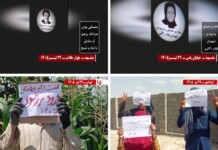
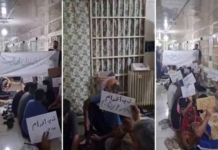
According to reports from inside Evin Prison, authorities have cut telephone communications for several female political prisoners, including Shiva Esmaeili, Marzieh Farsi, Forough Taghipour, Zahra Safaei, Elaheh Fooladi, Golrokh Iraee, and Sakineh Parvaneh.
The restrictions have further isolated the prisoners from their families and legal support networks, raising concerns about their welfare and treatment inside the prison.
Shiva Esmaeili, 60, was arrested in Tehran in March 2023 and sentenced to ten years and six months in prison. Marzieh Farsi, 59, was arrested in August 2023 and received a six-year prison sentence. Forough Taghipour, 32, was arrested for a second time in August 2023 and was also sentenced to six years in prison.
Golrokh Iraee, a prominent political prisoner, was arrested in October 2022 and sentenced to six years in prison. She had previously spent six years behind bars after her arrest in 2016 and was detained again shortly after her release.
Sakineh Parvaneh was arrested in April 2023 and sentenced to six years in prison. She had previously been imprisoned for three years following her arrest in 2020.
Zahra Safaei, 63, was arrested in September 2023 and sentenced to five years in prison. This is her third imprisonment. During the 1980s, she spent eight years in prison because of her support for the Iranian opposition.
Elaheh Fooladi was arrested in December 2023 and sentenced to five years in prison.
Harsh Conditions for Uprising Detainees in Qezel Hesar
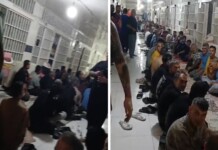
At the same time, reports from Qezel Hesar Prison indicate that detainees arrested during the January 2026 uprising are being held under severe conditions in Wards 35 and 37 of Unit 3.
Many prisoners reportedly suffer from untreated injuries, including broken limbs, facial injuries, and dental damage sustained during arrest or detention. Despite these conditions, they are allegedly being held in overcrowded wards with limited access to medical care, sanitation facilities, and basic living necessities.
Ward 37, which reportedly houses around 200 prisoners, lacks any effective cooling system despite extreme summer temperatures. Prisoners also face frequent water shortages, with running water reportedly unavailable for much of the day.
According to reports, prison authorities have pressured detainees to pay for water delivered by tanker trucks, shifting the financial burden of basic necessities onto the prisoners themselves.
Human rights advocates have warned that such conditions pose serious risks to prisoners’ health and safety, particularly for those already suffering from injuries or medical complications.
Concerns Over the Fate of Former Political Prisoner
In a separate development, authorities have reportedly arrested 32-year-old former political prisoner Milad Sajadian in Shiraz.
Following his arrest, Sajadian launched a hunger strike in protest. After seven days, he was hospitalized and subsequently transferred to Adelabad Prison in Shiraz. Reports indicate that prison authorities recently moved him from Adelabad Prison to an undisclosed location.
His family and supporters have reportedly received no information regarding his whereabouts or condition, raising concerns about the possibility of enforced disappearance and incommunicado detention.
Sajadian had previously been arrested in January 2022 and again in September 2023. He spent three years in prison on charges related to support for the Iranian opposition movement.
Calls for International Investigation
The latest reports have prompted renewed calls from Iranian opposition groups and human rights advocates for increased international scrutiny of Iran’s prison system.
They have urged the international community and relevant human rights mechanisms to seek access to Iranian prisons, conduct independent investigations, and meet directly with political prisoners, particularly women detainees and those arrested during recent protests.
Observers note that the reported restrictions, deteriorating prison conditions, and lack of transparency regarding detainees’ whereabouts highlight continuing concerns over the treatment of political prisoners in Iran and the broader human rights situation in the country.