


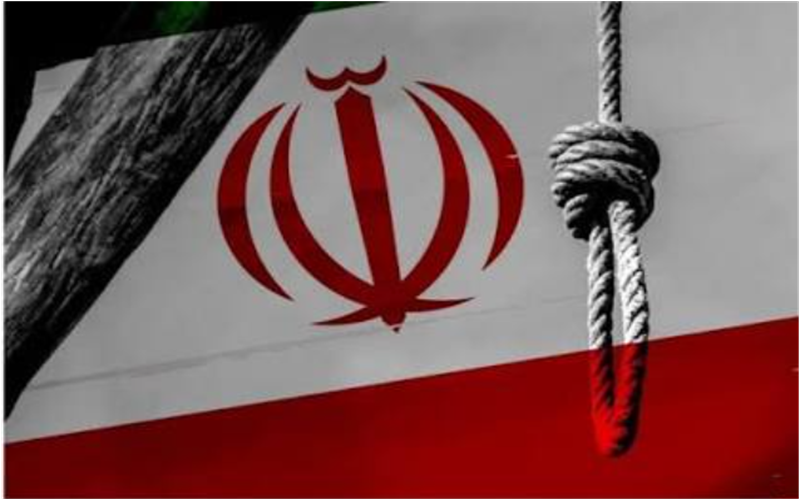

Iran’s mounting political, economic, and social crises are not isolated failures. They are symptoms of an irreconcilable conflict between the regime and a society it can no longer govern through consent.
A Crisis That Begins at the Top
Iran in August 2026 is confronted by a convergence of political, economic, social, and international crises. The important question, however, is not simply why these crises exist, but where they originate and how they are transmitted into Iranian society.
In any political system, the condition of society is inseparable from the nature and performance of its governing institutions. Economic hardship, political repression, social unrest, and international confrontation do not emerge independently of the state. They are shaped, intensified, or mitigated by the policies of those who hold power.
In Iran, this points directly to the structure of the regime itself.
The central institution of the ruling system has always been the doctrine and institution of velayat-e faqih, or absolute clerical rule. From the beginning, there has been a fundamental contradiction between the interests of this ruling structure and the interests of Iranian society.
For decades, the regime has resolved that contradiction by prioritizing its own survival over the needs and demands of the population.
What was once a persistent political contradiction has now developed into something much deeper: an apparently irreconcilable structural conflict between the regime and society.
When the Crisis Inside Society Enters the Regime
Political contradictions do not remain permanently confined to the relationship between government and population. When they intensify over decades, they inevitably penetrate the institutions of power themselves.
That appears to be the stage Iran has reached.
The regime’s structural crisis is now visible across virtually every dimension of governance—political, economic, ideological, social, professional, and cultural. Internal factional disputes, economic paralysis, widespread social grievances, and the regime’s continuing reliance on coercion all point toward the same underlying problem: the ruling structure increasingly lacks a viable mechanism for reconciling its own survival requirements with the demands of Iranian society.
The regime therefore faces a dilemma with no easy institutional solution.
Reform threatens the structures on which its survival depends. Continued repression, meanwhile, deepens the very social hostility that makes reform increasingly unavoidable.
This is the essence of a structural deadlock.
War Abroad and Executions at Home
Faced with this deadlock, the regime has increasingly relied on two instruments: external conflict and internal repression.
These should not be viewed merely as temporary tactics. From the regime’s perspective, they have become mechanisms of survival.
External confrontation allows the authorities to invoke national security, mobilize supporters, suppress dissent, and divert public attention from domestic failures. At home, executions and systematic repression serve as instruments of intimidation, particularly when the authorities fear that economic and political grievances could converge into nationwide unrest.
The danger for the regime is that abandoning either instrument could expose the depth of its internal vulnerability.
If external confrontation is reduced, the regime risks losing one of its principal tools for mobilization and diversion.
If repression is substantially relaxed, grievances accumulated over years could find greater space for organization and expression.
This helps explain why the regime repeatedly returns to the same policies even when their costs are evident.
The Assembly of Experts Reveals the Deadlock
A statement read on Iranian state television on August 3, 2026, by the Assembly of Experts provides a revealing example of this mentality.
According to the statement, the body emphasized the continuation of what it called the “global resistance front” and urged continued public mobilization in support of the leadership.
The statement praised nighttime gatherings and called for continued street presence for as long as the leadership deemed necessary.
This language is significant.
Rather than presenting a program for addressing inflation, unemployment, poverty, corruption, declining living standards, or political grievances, the regime’s institutional response emphasizes mobilization and confrontation.
The message effectively confirms that the leadership sees its future not through opening political space to society, but through maintaining a state of permanent mobilization.
The statement’s call for the continuation of the “global resistance front” also signals that the regime continues to regard its regional network and external projection of power as integral to its strategic posture.
In other words, the costs of the regime’s regional ambitions continue to be transferred onto Iranian society.
Executions: Repression That Risks Producing the Opposite Result
The second pillar is the accelerating use of capital punishment.
The regime has repeatedly relied on executions to intimidate society and deter political opposition. Yet even voices within Iran’s own political and legal establishment have acknowledged that this strategy can produce precisely the opposite result.
A commentary published by the regime-affiliated Didar website on August 3 quoted lawyer Ali Mojtahadzadeh warning that executions imposed for the purpose of preserving the political system could ultimately work against it.
He argued that political considerations were influencing death sentences and cited the case of protester Mohsen Shekari as an example of what he described as politically driven judicial decisions.
The significance of such criticism lies not simply in the individual case. It demonstrates that the regime’s reliance on executions has generated concern even among figures operating within its own political environment.
The fundamental contradiction is clear: executions may temporarily intimidate individuals, but they can simultaneously deepen collective anger and transform victims into symbols of resistance.
Every politically motivated execution risks creating another grievance that cannot easily be erased.
The Regime’s Three Branches and the Crisis of Legitimacy
The problem therefore extends beyond individual officials or isolated judicial abuses.
When political authority, the judiciary, and legislative institutions operate under the ultimate control of the same unelected power structure, the separation between law and political expediency becomes increasingly blurred.
The result is a system in which law can become an instrument of political control rather than a protection against it.
This helps explain why public distrust has become so deeply rooted.
Iranian society has experienced decades of executions, arbitrary arrests, corruption, economic mismanagement, discrimination, and political repression. Each new crisis is therefore interpreted against the accumulated experience of previous decades.
The conflict between society and the regime is not the product of one election, one economic downturn, or one wave of protests.
It is the product of historical accumulation.
The Real Question Is No Longer Whether There Is a Crisis
The central question facing Iran is no longer whether the regime is experiencing a crisis.
The evidence is visible across the country’s political and social landscape.
The deeper question is whether a system whose principal mechanisms of survival are repression at home and confrontation abroad can resolve the structural conflict that has produced these crises in the first place.
The answer increasingly appears negative.
A government cannot permanently resolve a crisis of legitimacy through executions. It cannot resolve economic grievances through propaganda. It cannot resolve social demands through coercion. And it cannot indefinitely substitute external confrontation for domestic governance.
At some point, the contradictions accumulate beyond the capacity of repression to contain them.
This is why the current situation in Iran should not be understood as a collection of separate crises. The economic crisis, political crisis, social unrest, human rights violations, and international confrontation are interconnected expressions of a deeper structural deadlock.
The regime’s own responses reveal the problem.
Rather than opening a path toward political participation, economic accountability, and respect for fundamental rights, it continues to rely on the very mechanisms that have produced the conflict.
For Iranian society, this leaves the fundamental political question unresolved: whether a system built around absolute clerical authority can coexist with a population increasingly demanding freedom, accountability, and political self-determination.
The growing confrontation between those two forces is becoming the defining political reality of Iran.
And as long as the regime continues to treat repression and confrontation as solutions, it risks turning the very instruments designed to preserve it into forces accelerating its eventual collapse.