



Tehran’s official narrative praises past mass killings as a “successful experience” as arrests and executions intensify
Three weeks after the end of the 12-day Iran-Israel war, Iran’s state-affiliated Fars News Agency published a disturbing opinion piece advocating for a repeat of one of the darkest chapters in the Iranian regime’s history: the mass executions of political prisoners in 1988.
In a note titled “Why Should the Experience of the Executions of ’88 Be Repeated?”, Fars claims, “Today is the time to repeat this successful historical experience.” This declaration has alarmed human rights observers and political analysts, especially as warnings mount over a new wave of arrests and executions targeting individuals accused of espionage and collaboration with foreign powers.
The article, published by an outlet closely aligned with Iran’s military-security apparatus, laments alleged efforts to “question” what it calls one of the regime’s “brilliant records in the fight against terrorism,” referring to the 1988 mass executions. It asserts that “today is the time to repeat this successful historical experience,” portraying it as a legitimate and effective tool of governance.
Regime Propaganda Revives Khomeini’s 1988 Fatwa
The Fars editorial draws a direct line between recent events and the aftermath of Forough-e Javidan (Eternal Light), the 1988 military operation by the People’s Mojahedin Organization of Iran (PMOI/MEK). It states that following that operation, a “widespread demand” emerged within Iranian society for the regime to act decisively against MEK members, prompting then-leaders to abandon all tolerance and pursue mass executions.
The piece justifies the current push for executions by listing charges such as “transferring information to the Zionist enemy,” “arms smuggling,” and “laying the groundwork for the martyrdom of hundreds of Iranian citizens,” concluding that such individuals “deserve execution in the manner of 1988.”
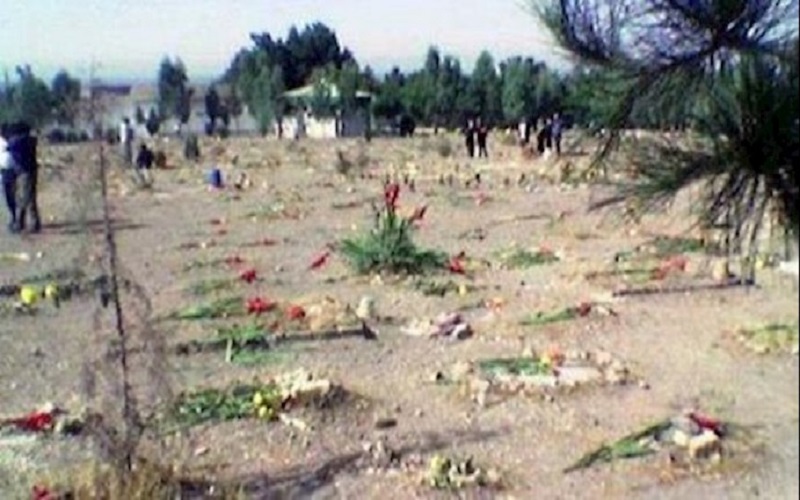
The 1988 executions, carried out under a secret fatwa issued by Ruhollah Khomeini, led to the killing of thousands of political prisoners—many of whom had already served part or all of their prison terms. The majority were MEK members, but the purge extended in a second wave to include leftist and communist prisoners, many of whom had no connection to the MEK or any armed resistance. These prisoners were executed in secret and buried in mass graves.
While the regime refers to Khomeini’s order as a “religious fatwa,” this claim has been challenged in court. During the 2022 trial of Hamid Nouri—a former assistant prosecutor in Gohardasht Prison convicted of war crimes by a Swedish court—his defense argued that Khomeini’s orders were not formal fatwas. Nouri was sentenced to life in prison for his role in the executions, in what human rights groups hailed as a landmark ruling.
Amnesty International, in a comprehensive 2018 report, accused the Iranian regime of engaging in a systematic cover-up of the killings, labeling them as “enforced disappearances on a large scale,” amounting to “crimes against humanity.” The report named high-ranking officials involved in the death commissions, including Ebrahim Raisi—former president of the regime—as well as Mostafa Pourmohammadi and Hossein-Ali Nayeri.
Escalating Crackdown After War
The Fars article comes amid a sharp increase in political repression following the Iran-Israel war. Numerous individuals have been arrested on charges of espionage and collaboration with “hostile governments,” and several executions have already taken place. On June 23, Iran regime’s parliament approved a bill increasing penalties for espionage-related crimes, including “cooperation with Israel and the United States,” which could now lead to the death penalty.
The bill was sent to the Guardian Council for approval but was returned to parliament due to ambiguities. The Council questioned the vagueness of terms such as “hostile states,” “creating division,” “threatening national security,” and “corruption on earth”—terms often used by the regime to criminalize dissent.
Alarmingly, the legislation is designed to be retroactive, allowing for the prosecution of actions committed before the law’s approval—unless the accused turn themselves in within three days of its enactment.
This legislative push follows what Iranian regime intelligence officials describe as “widespread infiltration” within the country, exposed during the war. Some former regime insiders have previously warned of deep operational penetration within the highest echelons of the Islamic Republic’s institutions.
A Chilling Echo of the Past
The regime’s open embrace of the 1988 mass executions as a “successful historical experience” signals an increasingly hardline posture. Human rights organizations and international observers fear a new phase of violent repression that could mirror the horrors of that year, this time under the cover of national security and anti-espionage rhetoric.
By invoking Khomeini’s fatwa and glorifying mass killings, the regime appears to be laying ideological groundwork for further purges, not just of political dissidents, but anyone it deems a threat to its survival in the volatile post-war landscape.