



Why the terrorist designation of the IRGC is cutting into the regime’s core—and accelerating internal rupture
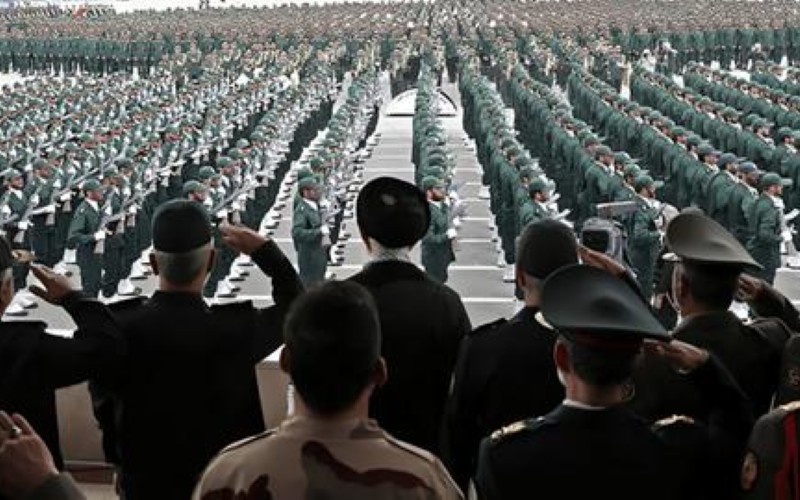
Nearly two weeks have passed since the Islamic Revolutionary Guard Corps (IRGC) was formally designated as a terrorist organization by the EU. With some distance from the initial political reactions, the true significance of this historic decision is now becoming clearer. What took place was not a symbolic move or a diplomatic gesture—it was a structural strike against the backbone of Iran’s regime.
This designation was the culmination of more than three decades of systematic exposure by the Iranian Resistance and a direct international response to the IRGC’s central role in the bloody suppression of the January uprising. For the first time, the regime’s most powerful institution was not merely condemned—but operationally constrained.
The IRGC: More Than a Military Force
For over four decades, the IRGC has functioned as far more than a security apparatus. Even regime insiders and defectors openly admit that it operates as a multi-layered mafia: controlling vast economic empires, laundering money, trafficking oil, currency, and raw materials, running front companies, and managing terrorist networks in Europe while fueling regional wars.
The IRGC was the economic, security, and regional pillar of the doctrine of Velayat-e Faqih. Cutting into it means cutting into the regime’s ability to survive.
The terrorist designation has done exactly that.
Financial Suffocation and Strategic Paralysis
With the IRGC now listed, its networks can no longer operate normally. Bank accounts are frozen. Front companies are exposed. Financial transfers face systemic blockage. The movement of funds, weapons, and logistical support hits dead ends. Every potential business partner becomes a liability—and a suspect.
This is not pressure at the margins; it is the severing of vital arteries.
More critically, the Office of the Supreme Leader—long sustained financially and operationally through the IRGC—begins to hollow out. The blow is not merely to the regime’s arm, but to its command center. When the IRGC weakens, the authority of Ali Khamenei weakens with it.
An Unthinkable Debate Breaks the Taboo
It is precisely at this point that cracks begin to surface from within. The regime-affiliated newspaper Jomhouri Eslami has suddenly raised an issue that, until recently, would have been considered political heresy: the integration of the IRGC into the regular army.
Wrapped in legalistic language about “institutional division of labor” and “returning to the constitution,” the meaning is unmistakable. This is a proposal for the gradual stripping of the IRGC’s political, economic, and internal security role.
Such a debate does not emerge in a position of strength. It emerges when an institution is already wounded and when its continued existence as an autonomous power center becomes a liability.
Fars News and the Fear of Losing the Regime’s Shield
The reaction from Fars News Agency—the IRGC’s own media organ—only underscores the seriousness of the moment. Warning that such changes would disrupt the regime’s “security balance,” Fars reveals the truth it tries to conceal.
That “balance” refers to the regime’s dependence on a force operating above the law: a repressive arm designed to crush dissent and preserve power at any cost. The fear is simple and stark—without the IRGC’s unchecked role, the regime is exposed.
Today, that force is under global pressure, domestically hated, internationally isolated, and increasingly immobilized.
When the Pillar Weakens, the System Trembles
As the IRGC—the regime’s main instrument of repression, war-making, and financial oligarchy—loses ground, the legitimacy of the entire system is called into question. It is no coincidence that regime loyalists now speak openly and without restraint, admitting that no change should be expected from Khamenei himself, but that his powers must be “delegated.”
Such statements are not reformist ideas; they are signals of decay. They reflect an elite grappling with the reality that the system’s central pillar is cracking—and that the regime built around it cannot remain intact.
The terrorist designation of the IRGC has not merely isolated an institution. It has accelerated a process of internal rupture that the regime can no longer fully suppress or conceal.