



European leaders warn that Tehran’s repression, regional aggression, and nuclear ambitions threaten global security while affirming the Iranian people’s right to freedom and democratic change.
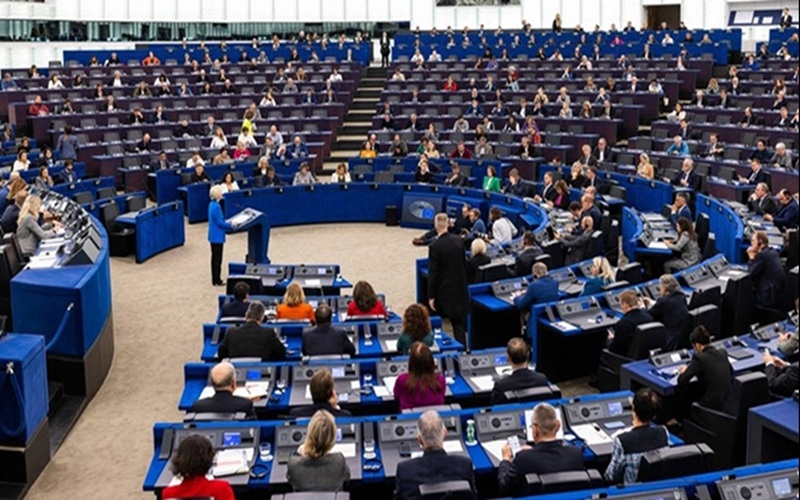
As tensions and conflict intensify across the Middle East, the chamber of the European Parliament became a stage for strong international condemnation of the Iranian regime—long associated with repression at home, terrorism abroad, and regional destabilization.
The parliamentary session, held in Strasbourg on Thursday, March 12, took place against the backdrop of mounting regional instability and growing fears that Tehran could further escalate the conflict. Iranian regime officials have continued issuing inflammatory threats, including warnings that the regime could block the Strait of Hormuz and demand “compensation” from neighboring countries while threatening retaliation against them. Such rhetoric has been widely interpreted by observers as an attempt by a crisis-ridden regime to export its internal turmoil through confrontation abroad.
At the same time, speaking at a human rights conference organized by the United Nations in Geneva, Maryam Rajavi, the President-elect of the National Council of Resistance of Iran, warned that the current escalation was the predictable outcome of years of Western appeasement toward Tehran. She argued that accommodating the regime had encouraged aggression and ultimately paved the way for wider conflict, stressing that ordinary Iranians have paid the highest price for these policies.
During the parliamentary debate, Ursula von der Leyen, President of the European Commission, described the Iranian government as a system built on repression at home and the export of terrorism abroad, including operations targeting Europe. She emphasized that the Iranian people deserve freedom, dignity, and the ability to determine their own political future.
Representing the rotating presidency of the European Union, Cypriot Deputy Minister for European Affairs Marilena Raouna warned that the escalating cycle of attacks and counter-attacks threatens both regional stability and global security. She condemned Tehran’s military actions across the region and stressed the urgency of preventing Iran from acquiring nuclear weapons, while also calling for stronger efforts to contain the regime’s ballistic missile and drone programs.
Members of Parliament from several political groups also delivered sharp criticism of Tehran’s domestic repression. Jeroen Lenaers of the European People’s Party pointed to the regime’s violent crackdown on its own population, noting that Iranian security forces have repeatedly used lethal force against young demonstrators protesting in the streets.
From the Progressive Alliance of Socialists and Democrats, Spanish lawmaker Iratxe García Pérez stated that no supporter of democracy would mourn the survival of a system that represses its citizens—particularly women—and fuels instability throughout the region.
Meanwhile, Terry Reintke of the European Greens highlighted the courage of Iranian protesters who have risen against the ruling clerical establishment despite severe repression. She warned that the hopes of many Iranians for political change are now being overshadowed by the growing storm of regional conflict.
Taken together, the statements in the European Parliament reflect an increasingly unified international view: the Iranian regime faces deepening crises both domestically and abroad. While Tehran continues to rely on repression, intimidation, and external confrontation to maintain control, mounting internal unrest and global isolation are placing unprecedented pressure on the foundations of the ruling system.