



Why the future of Iran hinges on a democratic republic rooted in the will of the people—not inherited power or imposed authority
Modern Iranian history is defined by a persistent and unequal struggle between popular sovereignty and entrenched structures of power. From the Persian Constitutional Revolution to the present day, the Iranian people have consistently sought one fundamental right: self-determination. Yet, this right has repeatedly been usurped—either by charismatic strongmen or by traditional institutions claiming legitimacy beyond the will of the people.
At its core, Iran’s current deadlock stems from the confrontation between two fundamentally undemocratic models: one rooted in religious absolutism, embodied by the doctrine of Velayat-e Faqih, and the other in hereditary monarchy, represented by the legacy of the Pahlavi dynasty. Despite their apparent differences, both systems share a common foundation: the denial of the people’s sovereignty.
The Democratic Alternative: Sovereignty of the People
A genuine democratic alternative stands in direct opposition to both models. The sovereignty of the Iranian people is neither a divine grant nor a hereditary entitlement—it is a right exercised through the ballot box and grounded in a modern social contract.
Any claim to rule—whether by a cleric invoking divine authority or a monarch asserting dynastic privilege—is, in essence, an appropriation of a collective national right. Such claims violate not only democratic norms but the very principle of human dignity.
A Roadmap for Structural Change
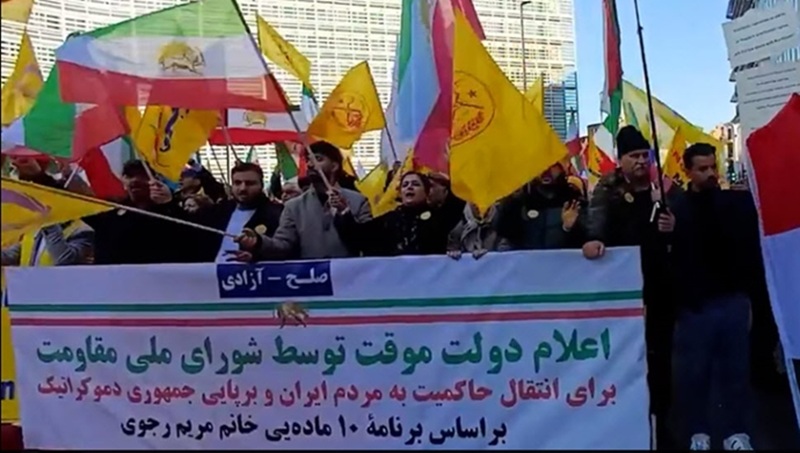
The political platform advanced by Maryam Rajavi, the president-elect of the National Council of Resistance of Iran (NCRI), commonly known as the Ten-Point Plan, represents more than a list of demands. It is a structural blueprint for rebuilding Iran. By emphasizing the separation of religion and state, gender equality, and the protection of minority rights, it directly addresses the historical fault lines that have long obstructed democratic development.
Within this framework, the concept of a transitional government of peace and freedom emerges as a critical mechanism—not merely administrative, but symbolic of the end of ideological repression and internal conflict. Peace, in this context, is not simply the absence of war; it is the presence of justice, national reconciliation, and equal citizenship.
The Threat of Political Opportunism
One of the most persistent dangers facing any liberation movement is the infiltration of opportunists—actors who adopt new rhetoric while preserving authoritarian mindsets. Tyranny is not defined solely by instruments of repression; it is equally manifested in the theft of popular will.
Those who position themselves as guardians of the people—whether through lineage, ideology, or supposed historical entitlement—are, in effect, claiming ownership over a sovereignty that belongs to the nation as a whole.
A Non-Negotiable Red Line
Decades of political struggle have come at immense cost for the Iranian people. This experience has produced a clear and uncompromising red line: independence and freedom. Any attempt to dilute or negotiate these principles represents a regression to pre-modern political systems.
Tomorrow’s Iran cannot be a field for geopolitical bargaining, nor a stage for the revival of obsolete authoritarian models. Political independence demands the rejection of all forms of foreign interference, while freedom requires the absolute supremacy of laws derived from the will of the people.
One Reality, Two Faces of Authoritarianism
Whether expressed through religious dogma or ultra-nationalist monarchism, authoritarianism shares a single essence: the elevation of power above the الفرد and the sanctification of ruling institutions.
Resistance to both forms is not optional—it is the only viable path toward a democratic republic in which power resides not in a select elite, but in an elected parliament representing the people.
A Historic Turning Point
Iran stands at the threshold of a profound historical transformation. The fall of religious dictatorship must not result in a fall into the trap of restored monarchy. The message of resistance is unequivocal:
Popular sovereignty is not a commodity to be negotiated.
A democratic republic remains the only coherent response to the accumulated demands of the Iranian people—one where peace is the result of justice, and freedom the outcome of collective awareness.
Those who seek to appropriate power—whether in the name of religion or monarchy—should recognize that the era of domination is drawing to a close. The Iranian people, shaped by decades of struggle, are no longer willing to trade their freedom for promises, illusions, or a return to the past.
This is not merely a political contest. It is a decisive struggle over the very existence and future of a nation—and its ultimate victor will be the sovereign will of the people.