After decades of repression, sanctions, and defiance, Iran’s longest-ruling leader faces an existential choice: retreat and unravel, or escalate and accelerate collapse.
Ali Khamenei, the Supreme Leader of Iran’s ruling theocracy, has reached a point of complete strategic paralysis. As the longest-serving leader in the Middle East, he now confronts an existential choice—one that determines not only his own survival, but the fate of a reactionary system that has ruled Iran for nearly half a century.
Khamenei has endured decades of intense external pressure, repeated nationwide uprisings, and crippling economic sanctions, all while refusing to abandon uranium enrichment or the development of advanced missile capabilities. Today, even if his security forces manage to suppress the latest wave of protests, his room for political maneuver has all but vanished.
Without compromise, he faces an inevitable future of renewed nationwide unrest and profound political change driven by popular uprising. The situation resembles a compressed spring: with every shock, pressure builds further, making an explosive release unavoidable.
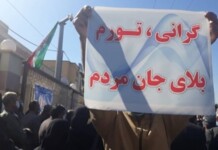
The protests that erupted in late December 2025 represent one of the most serious threats to Khamenei’s rule since its inception. Although a brutal crackdown—leaving thousands dead—has plunged cities across Iran into mourning, renewed unrest is not a question of if, but when. The medieval scale of repression has only deepened public rage. Reports indicate that in some cities, there is scarcely a family that has not lost a loved one—killed, arrested, or disappeared.
The regime’s only viable path to economic stabilization lies in the reduction of international sanctions—the very sanctions that have fueled public anger. Achieving this would require Khamenei to abandon core pillars of his strategy, particularly Iran’s nuclear program. For decades, he has insisted that Iran’s nuclear ambitions are purely civilian. Yet the accumulated evidence has rendered that claim indefensible.
Meaningful sanctions relief would also demand concessions on Iran’s missile program and an end to the IRGC’s extraterritorial operations that sustain a network of proxy militias across the region. At this stage, the rupture between the Iranian people and the ruling system is irreversible.
The decision now facing Khamenei mirrors the historic dilemma confronted by his predecessor, Ruhollah Khomeini. Khomeini once described accepting a ceasefire with Iraq as “drinking a poisoned chalice,” yet he had no alternative but to end an eight-year war of attrition in 1988. To secure his grip on power, he then ordered the massacre of 30,000 political prisoners in the same year. Khamenei now stands at a similar crossroads—one in which any choice he makes will only intensify public fury.
Throughout its history, the regime has rarely responded to protests with genuine policy reform. The population, exhausted by decades of deception, no longer believes in the possibility of internal change. The state itself no longer possesses the economic, political, or moral resources required to confront society. This is the defining tragedy of non-democratic systems: they consume the very foundations needed for their own survival.
Iran’s economic deterioration—accelerated by years of sanctions aimed at curbing Tehran’s nuclear ambitions—has been a primary catalyst for unrest. A government deprived of foreign currency, trade, and investment has failed to contain inflation or prevent the collapse of the national currency. A banking system sustained by money printing has only worsened inflationary pressures and now teeters on the brink of collapse.
For years, the regime believed that its proxy wars abroad would serve as a firewall against domestic uprising. That illusion has now shattered. The system is unraveling, and the ruling establishment stands at the edge of collapse.