


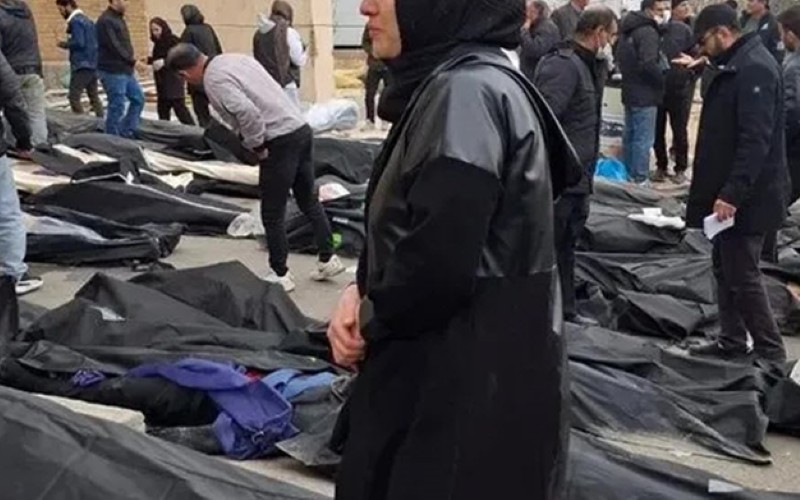

As nationwide protests continue, Iranian security forces expand repression beyond the streets—targeting hospitals, medical treatment, and even the bodies of those killed.
Reports received from inside Iran indicate that the suppression of protesters has entered a new and highly organized phase—one in which repression no longer ends in the streets. Hospitals, medical treatment for the wounded, and even the delivery and burial of victims’ bodies are now under the direct control of security forces.
Eyewitness accounts from multiple cities describe widespread use of live ammunition, the encirclement of protesters, the imposition of de facto martial law, and systematic pressure exerted on families of the injured and the dead.
Hospitals Under Siege and Blood Banks Seized
One of the most alarming developments is the direct intervention of security forces inside medical facilities.
A physician in Rasht reported that after wounded protesters were transferred to Poursina Hospital, security agents entered the premises and removed the injured individuals. According to the same source, agents also emptied the hospital’s entire blood bank, transferring all supplies to the Army’s Vali-Asr Hospital.
Similar reports have emerged from Khorramabad and Arak, where large-scale transfers of bodies, overcrowded morgues, and the constant presence of security forces around hospitals have been documented.
Families say that in some cases, authorities have demanded exorbitant payments—amounting to hundreds of millions of tomans—in exchange for the release of bodies or even basic information about burial locations.
According to citizens, these measures have effectively disrupted medical treatment for the wounded and eliminated any possibility of proper medical documentation of those killed.
Live Fire and Mass Casualties
Reports from Rasht and surrounding towns—including Lushan, Rudbar, Manjil, Rostamabad, and Bandar Anzali—confirm direct fire with military-grade weapons against protesters.
Messages from residents describe a high number of civilian deaths, including children.
In Karaj, particularly in the Kianmehr district, eyewitnesses report that security forces carried out a deliberate tactical retreat, funneling thousands of protesters into enclosed areas with no escape routes before opening fire with live ammunition. Local sources state that dozens were shot in a single night.
Hospitals reportedly refused to admit the wounded, forcing residents to treat injured protesters inside private homes.
In Rasht, witnesses recount that people in the bazaar district were trapped between security forces, smoke, and fire before being targeted with gunfire. One source cited an estimated death toll of 700 in the area.
De Facto Martial Law Across Cities
Alongside these actions, a state of undeclared martial law appears to be in effect across numerous cities.
From Qom, Rafsanjan, and Dezful to Karaj, Borujerd, and Izeh, citizens report forced shop closures, blocked streets, security checkpoints, mobile phone searches, and armed patrols carrying military weapons.
Residents say that after certain hours at night, even stepping out of one’s home, garage, or neighborhood alley is met with threats and obstruction.
Repression Beyond the Streets
Taken together, these reports demonstrate that the crackdown on protests now targets far more than public demonstrations. Medical care, daily life, and even the right of families to mourn their dead have become battlegrounds in the regime’s effort to maintain control.
This expansion of repression underscores a governing system that no longer limits violence to crowd control, but seeks to dominate every sphere of civilian existence—treating survival, healing, and grief themselves as threats to state authority.