



Security fears, political paralysis, and mounting repression underscore the weakening grip of Iran’s Supreme Leader
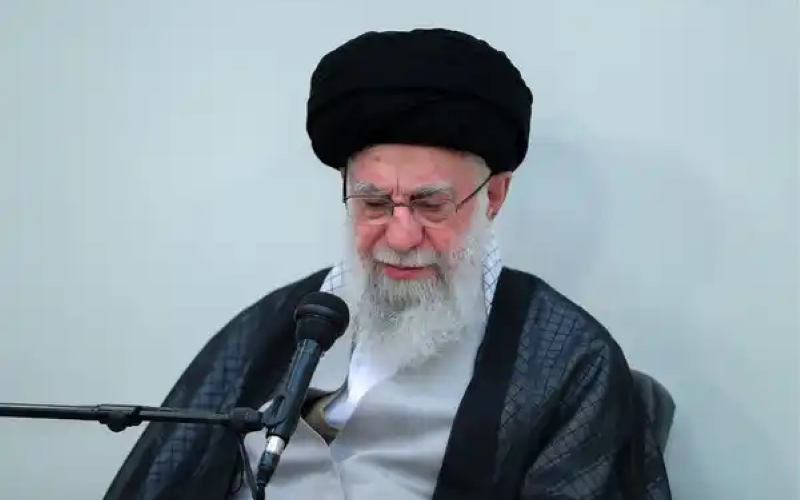
Ali Khamenei, the Supreme Leader of Iran’s clerical regime, met with the cabinet of President Masoud Pezeshkian eight days after the official “Government Week,” in a significant departure from the regime’s longstanding tradition of holding the meeting on August 30. This unusual delay reflects both heightened security concerns and Khamenei’s growing political isolation, raising questions about the erosion of his authority.
A symbolic tradition broken
For decades, the annual late-August meeting between Khamenei and the sitting government was seen as a symbolic affirmation of the regime’s cohesion. This year, however, the gathering was postponed due to “security considerations.” The delay underscores not only the regime’s fear of unrest but also Khamenei’s transformation into a reclusive and increasingly insulated figure.
Despite the country’s dire social and economic crises, Khamenei used the meeting to warn officials against speaking publicly about the regime’s weaknesses, insisting they project an image of strength. Yet his own behavior—short speeches, unannounced appearances, and carefully controlled encounters—betrays deep anxiety at the highest levels of power.
A regime in defensive posture
Iran faces mounting pressure on multiple fronts:
- Internationally, the threat of renewed UN sanctions looms.
- Domestically, the regime suffers a profound crisis of legitimacy after years of protests and brutal crackdowns.
- Politically, rival factions within the regime disagree sharply over how to navigate these challenges.
Some political figures, such as former president Hassan Rouhani and reformist allies, advocate renewed dialogue with the United States. Others, including Khamenei himself, demand continued defiance. Still others float unlikely scenarios, such as a direct meeting between Pezeshkian and Donald Trump. Khamenei’s categorical rejection of any negotiations with Washington signals a refusal to break with failed policies, leaving the regime trapped in paralysis.
Loss of control in the streets
Perhaps the clearest sign of the regime’s decline is its inability to control the streets. Prior to 2017, the authorities could mobilize loyalist demonstrations. But successive uprisings—January 2018, November 2019, and the nationwide protests of 2022 after the death of Mahsa Amini—have stripped the regime of this capacity. Today, youth dominate public spaces while the state increasingly relies on mass executions to project authority.
On September 6, Reuters reported that the regime executed a man accused of killing a security agent during the 2022 uprising. According to Amnesty International, at least ten people linked to the protests have been executed since then, many after coerced confessions extracted under torture, solitary confinement, and threats against families.
Human rights groups also warn that Fazel Bahramian, the brother of recently executed protester Mehran Bahramian, faces a death sentence on similar charges, while their relative Morad Bahramian was killed by security forces during the 2022 protests.
Cracks across all fronts
The regime’s repressive machinery is failing to secure full control in other domains as well. Heavy internet censorship and filtering have not prevented Iranians from maintaining contact with the outside world, highlighting the futility of these measures. In effect, the regime is in retreat on every front—from the streets to cyberspace.
The scent of collapse
The sense of looming collapse is no longer confined to opposition circles. Even within the regime, officials acknowledge the pervasive atmosphere of uncertainty. Some seek only to safeguard their families’ futures, while others openly debate strategies for survival in a post-Khamenei order.
This spreading perception of inevitable downfall marks a decisive stage: both the people and many regime insiders recognize that the system is approaching its end. The Iranian regime, once projecting strength, now resembles a failing structure whose collapse is visible to all.