


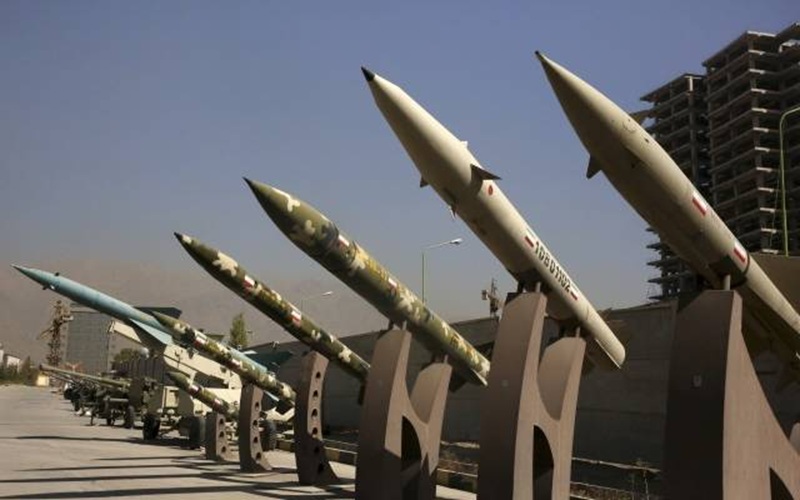

Iran’s regime continues to display its military capabilities and unleash repression, but its reliance on war, violence, and intimidation reveals a deeper crisis of legitimacy, stability, and political power.
For decades, the Iranian regime has cultivated an image of military power. Missiles, drones, threats against foreign governments, regional interventions, and the relentless repression of its own population are presented by its propaganda apparatus as evidence that the ruling system remains strong and capable of confronting its enemies.
But military capability and political power are not the same thing.
A regime may possess missiles capable of inflicting enormous damage while simultaneously suffering from deep political isolation, economic deterioration, internal divisions, and widespread popular rejection. It may retain powerful instruments of coercion while becoming increasingly dependent on those instruments to preserve its rule.
This distinction is essential to understanding the current condition of the Iranian regime.
The real question is therefore not simply why the regime has survived for nearly five decades. The more revealing question is: What has allowed it to survive, and what does its increasing reliance on war and repression reveal about the foundations of its rule?
A Regime That Fears the Cost of Not Fighting
The regime’s military posture is often presented as evidence of confidence. Yet its own officials have offered a revealingly different explanation.
In a recent interview, Foreign Minister Abbas Araghchi defended the regime’s decision to fight by arguing that the cost of not fighting would have been greater than the cost of war. His formulation is significant because it raises a question that goes beyond the battlefield: What does the regime fear so much that it considers war preferable to restraint?
The answer becomes clearer when the regime’s military behavior is considered alongside its domestic situation.
War carries enormous costs. Senior commanders and officials can be killed. Military infrastructure can be damaged. The economy can suffer further disruption. Political and diplomatic isolation can deepen. Yet the regime may still calculate that avoiding confrontation poses an even greater threat to its survival.
That threat is not necessarily an external enemy.
It is the possibility of renewed internal upheaval.
This helps explain the paradox at the heart of the regime’s behavior: a government that feels secure does not normally need to make permanent use of war, executions, intimidation, and militarized propaganda to demonstrate its authority.
The more fundamental the crisis beneath the surface, the more important the appearance of strength can become.
War Can Conceal a Crisis—but Cannot Resolve It
External conflict can temporarily change the political environment inside a dictatorship.
During wartime, domestic grievances can be pushed into the background. Political disputes can be portrayed as disloyalty. Security measures can be justified as necessary for national defense. Economic failures can be blamed on external conditions. The regime can demand greater obedience in the name of security.
In this sense, war can function as a political shield.
But a shield is not a solution.
When the immediate pressure of conflict subsides, the underlying contradictions return. Internal rivalries re-emerge. Economic grievances become visible again. Social protests resume. Questions about political legitimacy return to the center of public debate.
Recent developments inside Iran have illustrated precisely this problem. As the immediate intensity of the conflict receded, disputes among officials and political factions became more visible, while criticism of the government and disagreements over the conduct of the war exposed the regime’s internal fractures.
The result is a striking contradiction: the cessation of fighting did not necessarily produce political stability. Instead, it allowed problems that had been temporarily concealed by the war to surface again.
This is precisely why the regime’s fear of what comes after the war may be greater than its fear of the war itself.
An Explosive Society Beneath the Surface
The second element of the regime’s vulnerability is society itself.
Years of economic hardship, unemployment, inflation, deteriorating infrastructure, water and energy shortages, environmental destruction, corruption, and systematic repression have accumulated into a vast reservoir of public anger.
The regime can suppress individual demonstrations. It can arrest protesters. It can execute political prisoners and protesters. It can deploy security forces and intensify surveillance.
But repression does not eliminate the grievances that generate protest.
The regime’s problem is therefore not simply that individual protests occur. Its deeper problem is that the social conditions producing those protests remain unresolved.
This explains the regime’s persistent fear of another nationwide uprising.
At the same time, the crisis is not confined to the streets. It extends into the political structure of the ruling system itself.
The succession crisis following the death of Ali Khamenei, the emergence of Mojtaba Khamenei, struggles among political and military factions, and disputes over the direction of the regime have exposed the fragility of a system that has long depended on centralized authority.
Maryam Rajavi addressed this broader crisis during her July 17, 2026 speech at the Luigi Einaudi Foundation in Rome, arguing that the regime is deeply fractured and that its survival depends increasingly on repression, war, and violence. She also argued that the organized resistance and its Resistance Units are becoming increasingly important to the trajectory of popular uprisings.
Whether one accepts every element of that political assessment or not, the central contradiction is difficult to ignore: a regime that claims overwhelming strength remains deeply preoccupied with preventing another uprising.
Economic and Social Crisis Behind the Military Display
The military spectacle also obscures a much broader structural crisis.
Iran possesses some of the world’s largest oil and gas resources, yet the country has repeatedly struggled with electricity shortages, gas shortages, water scarcity, deteriorating infrastructure, and an economy incapable of providing adequate opportunities for its rapidly frustrated population.
The problem is not simply a temporary shortage of money.
The deeper problem is the regime’s allocation of national resources.
A political system that prioritizes military programs, security institutions, regional intervention, and the preservation of its coercive apparatus cannot easily redirect resources toward rebuilding the economy and restoring public infrastructure.
Even an increase in oil revenues would not automatically resolve these structural problems if a substantial portion of additional resources continues to be absorbed by the regime’s security and military priorities.
This is why the missile program itself should be viewed in a broader context.
Missiles are tangible. Economic stability is less visible. A missile launch produces dramatic television images; a collapsing water system does not. Military propaganda can therefore create an impression of power even while the foundations of everyday life continue to deteriorate.
The contrast is increasingly stark: a state capable of launching missiles can simultaneously struggle to provide reliable electricity, water, employment, and economic security for its population.
Military Capability Is Not the Same as Political Power
This distinction is at the heart of the issue.
The Iranian regime undeniably possesses destructive capabilities. It has missiles, drones, security forces, intelligence networks, and an extensive coercive apparatus.
But these capabilities answer a different question.
They demonstrate the regime’s capacity to inflict damage.
They do not by themselves demonstrate political legitimacy, societal consent, or long-term stability.
Political theorist Hannah Arendt made a fundamental distinction between power and violence. In On Violence, she argued that political power depends on people acting collectively, while violence is instrumental and can destroy power without creating it. She explicitly warned against treating the two concepts as interchangeable.
This distinction is highly relevant to authoritarian systems.
A government may have the ability to imprison thousands of people. It may have the ability to execute dissidents. It may have the ability to fire missiles at distant targets.
But none of these capabilities, by themselves, demonstrates that society accepts the government’s authority.
Indeed, excessive dependence on coercion can indicate the opposite.
When a government increasingly relies on violence because voluntary political support has eroded, its coercive capacity may remain formidable while its political foundations become increasingly fragile.
Arendt put the relationship even more sharply: violence can appear when power is in jeopardy, but violence cannot itself create political power.
This does not mean that a regime without legitimacy is necessarily about to collapse. Dictatorships can survive for long periods through coercion, institutional control, economic resources, and organized security forces.
But it does mean that military strength should not be mistaken for political stability.
History Has Seen “Invincible” Regimes Collapse
History repeatedly demonstrates that authoritarian regimes can appear immovable shortly before their political foundations begin to crumble.
The important lesson is not that every dictatorship follows the same timetable or that the collapse of one regime automatically predicts the collapse of another.
The lesson is more fundamental.
Political systems are not permanent simply because they have existed for a long time.
Longevity can create a dangerous psychological illusion. When a political order survives for decades, observers may begin to treat its survival as evidence that it is somehow permanent. But duration is not the same thing as durability.
The Soviet bloc, European fascist regimes, and numerous military dictatorships once appeared capable of continuing indefinitely. Their security structures, armies, propaganda systems, and political institutions seemed formidable.
Yet once their underlying political foundations weakened sufficiently, the apparent permanence of those systems proved illusory.
This is particularly important when assessing a regime whose public image is heavily dependent on demonstrations of coercive strength.
The Regime’s Instruments of Survival Are Also Evidence of Its Vulnerability
The Iranian regime still possesses substantial instruments of repression.
It can arrest protesters. It can impose censorship. It can deploy security forces. It can conduct executions. It can use military threats and external confrontation to dominate the political narrative.
These instruments should not be underestimated.
But neither should their political meaning be misunderstood.
If a regime must repeatedly resort to executions to intimidate society, military confrontation to divert attention from internal problems, and increasingly aggressive propaganda to project strength, the existence of these instruments may reveal as much about its insecurity as about its power.
The question is therefore not whether the regime can still cause enormous harm.
It clearly can.
The question is whether it can transform that destructive capacity into a durable political foundation.
There is no evidence that missiles can create legitimacy.
There is no evidence that executions can produce popular consent.
There is no evidence that military threats can repair a collapsing economy.
And there is no evidence that repression can permanently eliminate the grievances driving successive waves of unrest.
The Real Measure of Strength
The Iranian regime wants its missiles, military threats, and security apparatus to be read as symbols of strength.
But there is another way to read them.
They can also be understood as instruments increasingly deployed by a system struggling to compensate for its political weaknesses.
That does not make the regime harmless. On the contrary, a politically vulnerable dictatorship with substantial military and coercive capabilities can be extremely dangerous.
But danger and strength are not synonymous.
A regime can be dangerous precisely because it is insecure.
The decisive question, therefore, is not how many missiles the regime possesses, how loudly its commanders threaten its adversaries, or how brutally its security forces suppress dissent.
The deeper question is whether the regime retains the political and social foundations necessary to govern a country whose population has repeatedly demonstrated its rejection of the ruling system.
The evidence points to an increasingly contradictory reality: the regime remains armed and dangerous, but its dependence on violence, repression, and confrontation increasingly exposes the depth of the crisis it is trying to conceal.
Its missiles can destroy.
Its security forces can suppress.
Its propaganda can intimidate.
But none of these can manufacture the political power that comes from genuine public support.
And that is the fundamental distinction between a regime that possesses the means to fight for its survival and a regime that possesses the political strength to secure its future.