


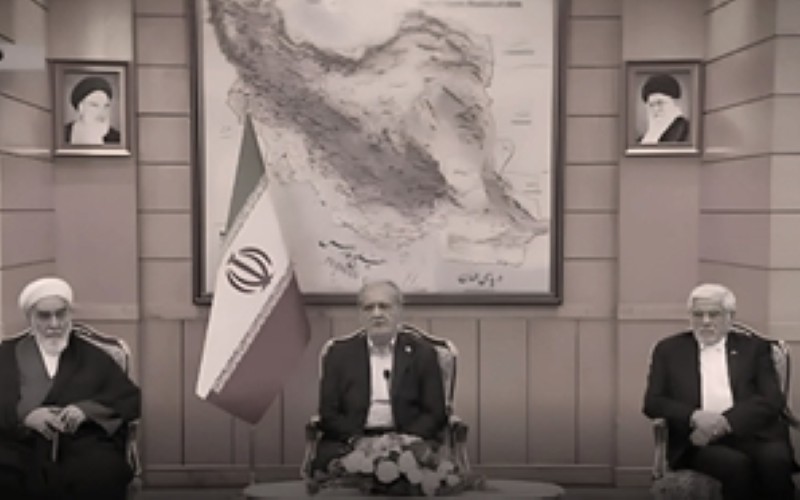

As factional infighting escalates and sanctions return, the clerical regime relies on executions to mask its failures and contain social unrest.
The reimposition of UN and EU sanctions on Tehran has struck the regime like a double blow, inflicting wounds that grow deeper by the day. What once appeared as hidden rivalries within the ruling elite has now evolved into an open and irreparable power struggle. Even regime insiders acknowledge that the conflict has reached a point where the very survival of the system is in jeopardy.
Both major factions within the ruling establishment outwardly claim to seek stability, yet in practice they only intensify each other’s crises, pushing the regime further into turmoil.
Executions as the Regime’s Lifeline
Amid this noisy power struggle, the regime’s judiciary continues to play its long-standing role as the backbone of repression: executions. Since the end of the recent 12-day war, executions have surged dramatically, becoming one of the most pressing human rights crises in Iran today.
Unable to cope with the devastating impact of war on its domestic and international standing, the regime has resorted to vengeance against prisoners. Once again, bloodshed is being used as the price of political survival.
The timing is significant. As rival factions fight over power and wealth, ordinary Iranians shoulder the unbearable weight of economic hardship and insecurity. No factional rivalry offers relief for the people’s suffering. Instead, the deeper the regime’s internal fissures, the harsher the official policy of repression and executions becomes.
Covering Factional Strife With the Gallows
Even state-run media outlets acknowledge the severity of the internal split. Yet for the regime, these conflicts serve another purpose: to deflect attention away from the wave of executions and daily protests across the country.
Executions, particularly in the fragile post-war climate, serve both as a psychological weapon against society and as a smokescreen for the regime’s multiplying crises.
The extent of this reality is confirmed by regime-affiliated newspapers themselves. On September 29, Ham-Mihan admitted: “The country is on the verge of a terrifying super-crisis.” On the same day, Jahan-e Sanat acknowledged that hardliners within the regime “celebrated the return of sanctions.”
These admissions reveal a deliberate strategy: to bury economic collapse, labor unrest, and international isolation beneath the shadow of the gallows and the spectacle of factional rivalries.
A Regime Racing Toward Implosion
Iran’s ruling establishment today faces an accelerating convergence of crises:
- The impact of the 12-day war, which exposed the regime’s vulnerability at home and abroad.
- The snapback sanctions, which have compounded economic collapse and international isolation.
- An execution campaign, which seeks to terrorize society into silence.
- Factional warfare, which drains the system from within.
- Mounting social unrest, as workers, retirees, and the poor take to the streets.
Together, these dynamics act as accelerants, hastening the erosion of the regime’s already fragile foundations. Even its own newspapers and officials are forced to admit what is increasingly undeniable: the regime is standing on the brink of an explosion it may not survive.