



Controversial visit sparks backlash over legitimizing monarchy-linked figure amid Iran’s anti-authoritarian protests
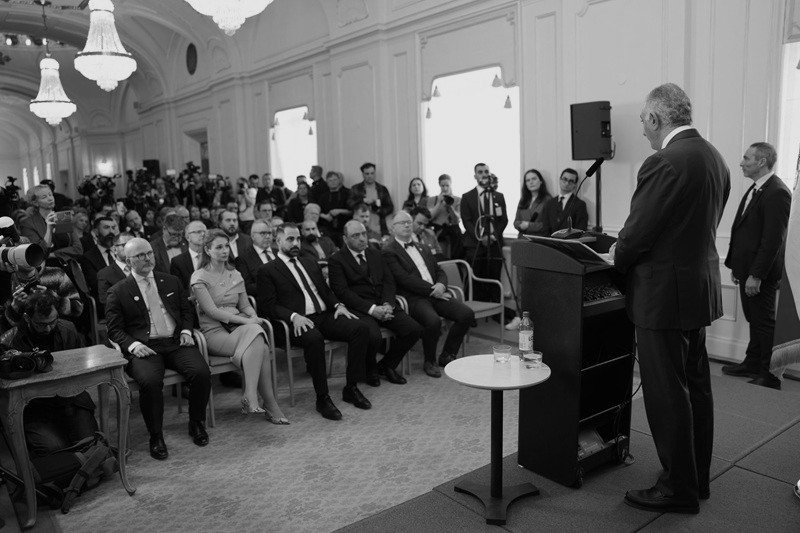
The recent visit of Reza Pahlavi to the Swedish Parliament on Monday, April 13, has triggered widespread criticism from lawmakers, media outlets, and Iranian expatriates, highlighting deep concerns about legitimizing a figure associated with Iran’s monarchical past.
The invitation—reportedly extended by far-right members of the Swedish Parliament—has been described as inappropriate, politically naïve, and disconnected from the core demands of Iran’s ongoing anti-regime protests.
Lawmaker: Invitation Was “Inappropriate and Naïve”
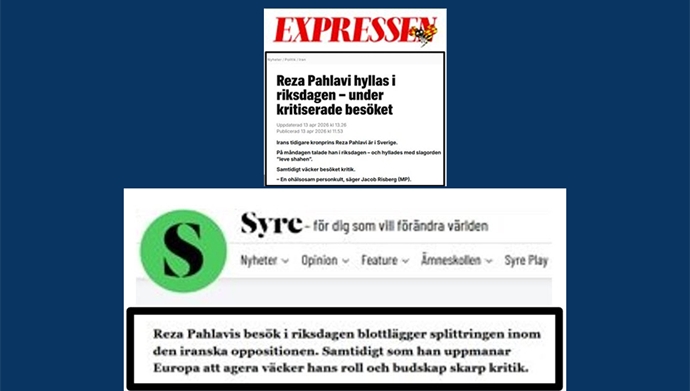
Jakob Risberg, a member of Sweden’s parliament from the Green Party, strongly condemned the invitation, calling it “very brazen and inappropriate.”
He further criticized the personality cult surrounding Pahlavi, noting that slogans such as “Long live the Shah” reflect “an unhealthy form of personal worship.”
In comments cited by Syre, Risberg warned against portraying Pahlavi as a unifying figure for Iran’s opposition. He stated that believing Pahlavi could unite opposition forces is “extremely naïve” and emphasized that the invitation risks granting him undue legitimacy as a “natural leader” of the opposition.
Protests Reflect Deep Opposition
According to Syre, protests accompanied Pahlavi’s visit, with demonstrators symbolically hanging effigies of Jimmie Åkesson and Ebba Busch alongside Pahlavi, labeling them “killers, executioners, and servants.”
An Iranian protester quoted in the report articulated a sentiment widely echoed among demonstrators: opposition to both the current regime and the restoration of monarchy. The protester emphasized the desire for a free country where people determine their own political system, rejecting foreign intervention and describing calls for external military action as betrayal.
Swedish Broadcaster Highlights Democratic Concerns
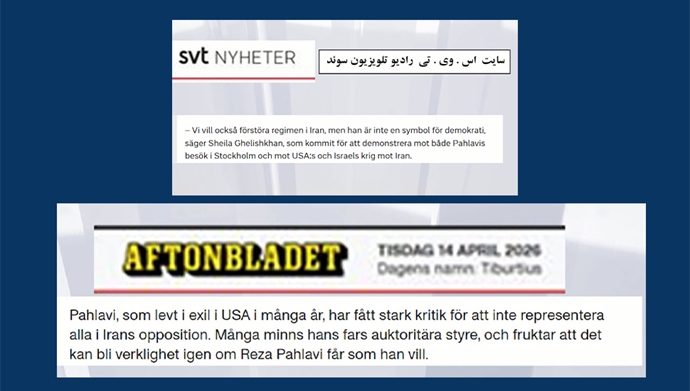
Coverage by SVT also reflected critical public sentiment. Protesters interviewed during the visit stressed that while they seek regime change in Iran, they do not view Pahlavi as a symbol of democracy.
SVT further reported that during his speech, Pahlavi faced direct questioning regarding his failure to clearly distance himself from the repressive policies of his father’s rule. His response—referencing continued public admiration for his father—did little to alleviate these concerns.
Aftonbladet: Fear of Repeating Authoritarian History
Sweden’s major daily Aftonbladet underscored the broader skepticism toward Pahlavi among Iranians. The paper noted that many do not consider him a legitimate representative of the opposition and remain wary of the authoritarian legacy associated with his father’s reign.
It highlighted that Pahlavi did not offer a clear break from that past when pressed by Risberg, instead pointing to ongoing support among some Iranians, including symbolic gestures such as tattoos of his father’s name.
Dagens Nyheter: “The Absurdity Becomes Clear”
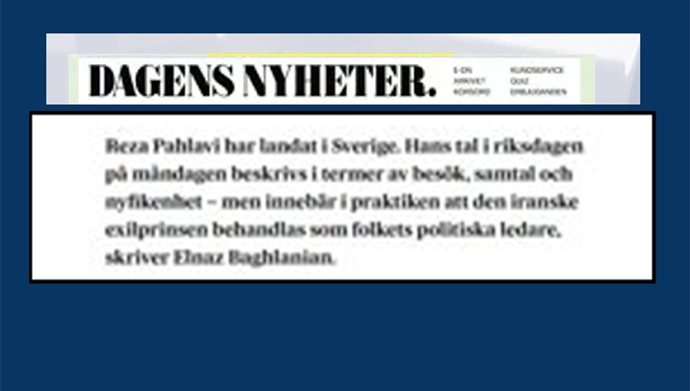
In a sharply critical analysis, Dagens Nyheter described the invitation as fundamentally misguided. The paper argued that while Iran’s protest movement is inherently anti-authoritarian, inviting Pahlavi grants legitimacy to a political project rooted in authoritarian heritage.
The editorial stressed that recent protests in Iran—particularly those in early 2026—were not calls for a return to monarchy but demands for freedom, an end to repression, and autonomy from state control.
Drawing historical parallels, Dagens Nyheter compared the situation to externally backed figures such as Ahmed Chalabi in Iraq and Hamid Karzai in Afghanistan, noting that international legitimacy does not necessarily translate into domestic political stability.
The paper also revisited the authoritarian nature of the former Shah’s regime—marked by political prisoners, censorship, and systematic repression—emphasizing that the 1979 revolution was fundamentally a revolt against such conditions. Attempting to reintroduce monarchy as a viable alternative in 2026, it concluded, reflects a troubling reinterpretation of history.
Broader Implications
The backlash in Sweden illustrates a broader tension within international discourse on Iran: whether external actors should elevate specific opposition figures, particularly those tied to controversial historical legacies.
Critics argue that such moves risk distorting the fundamentally grassroots and anti-authoritarian nature of Iran’s protest movement—while inadvertently repeating past policy failures rooted in Western appeasement and miscalculated alliances.
As debates continue, the central question remains whether international engagement with Iranian opposition figures aligns with the aspirations of the Iranian people—or undermines them.