


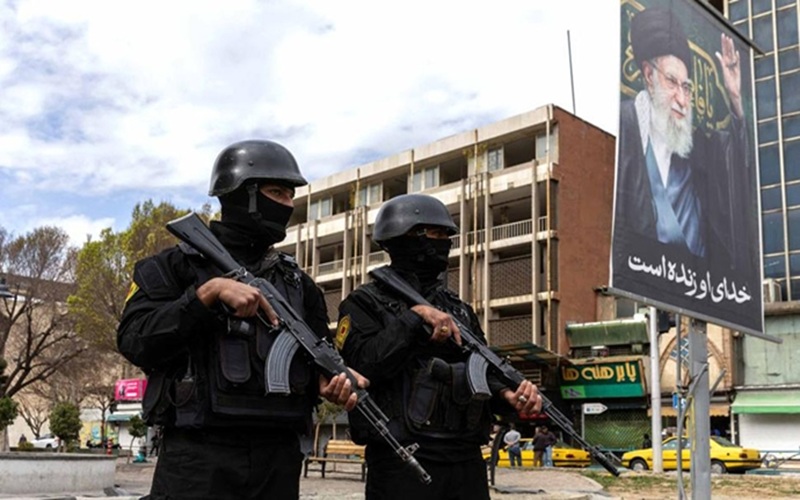

From the January 2026 uprising to thousands of labor and social protests, economic collapse and political repression fueled nationwide resistance
Despite severe repression, war, and intensified state control, Iran in 2025–2026 witnessed one of the most sustained waves of protest in its recent history. Beneath the surface of military confrontation and political crisis, a deeper reality persisted: a society under economic pressure, continuously mobilizing for basic rights.
The January 2026 Uprising: A Nationwide Explosion
The most significant turning point came with the nationwide uprising that began on December 28, 2025 (7 Dey 1404) and continued for nearly three weeks until January 17, 2026 (27 Dey 1404).
Triggered by the collapse of the national currency—when the U.S. dollar reportedly surged to around 145,000 tomans—the protests initially began with strikes by shopkeepers in Tehran’s commercial districts. Within days, the unrest expanded into a broad-based uprising involving youth, workers, and diverse social groups.
According to compiled reports:
- Protests and strikes were recorded in over 350 cities across all 31 provinces
- More than 1,700 protest-related incidents were documented during the uprising alone
Key Characteristics
The uprising displayed several defining features:
- Rapid expansion nationwide, particularly into smaller cities
- Cross-class participation, including youth, women, and workers
- Escalation from protest to confrontation, as security forces used live ammunition, tear gas, and batons
- Targeting of state institutions, including security centers and regime buildings
- A prominent role of youth networks, some of which briefly challenged state control in certain areas
Women and young people played a particularly visible role, highlighting the generational and social depth of the movement.
State Response
Regime authorities responded with overwhelming force. Reports described:
- Direct live fire against demonstrators
- Widespread arrests
- Intense pressure on families of victims
- Attacks on injured protesters, including arrests in medical facilities
In early January 2026, the crackdown reached its peak, drawing international condemnation, including from the United Nations Human Rights Council.
Ongoing Resistance After the Uprising
Although large-scale street protests subsided after mid-January, resistance did not disappear. Instead, it shifted form:
- Localized clashes and acts of defiance continued
- Attacks on symbols of state authority were intermittently reported
- Protest networks remained active, indicating that the movement had not been fully suppressed
A Year of Widespread Social Protests
Beyond the uprising, Iran experienced thousands of sectoral protests throughout the year. In total, more than 4,000 protest actions were recorded when combining the uprising and labor/sectoral demonstrations.
Major Groups Involved
- Workers: The largest share of protests, driven by unpaid wages, layoffs, and unsafe conditions across oil, industrial, and infrastructure sectors
- Retirees: Frequent weekly gatherings over pensions, healthcare costs, and declining living standards
- Truck drivers: Nationwide strikes over fuel quotas, rising costs, and low freight rates
- Teachers and public employees: Protests over wages, benefits, and employment insecurity
- Farmers: Demonstrations over water shortages, mismanagement, and agricultural policies
- Students: Campus protests over repression, arrests, and deteriorating conditions
These protests reflected a systemic economic crisis, affecting nearly every segment of society.
Economic Drivers of Unrest
At the core of these mobilizations was a severe economic downturn characterized by:
- Rapid currency devaluation
- High inflation and rising living costs
- Energy shortages and infrastructure failures
- Growing unemployment and job insecurity
For many Iranians, protests were no longer political in the traditional sense—they were about survival and access to basic rights.
A Society That Continues to Mobilize
What distinguishes the 2025–2026 protest wave is not only its scale but its persistence. Even after mass repression and the shock of war, collective action continued across sectors and regions.
This indicates a structural shift: protests are no longer isolated events but part of an ongoing cycle of social mobilization.
An Unresolved Crisis
The events of 2025–2026 demonstrate that repression and external conflict have not resolved Iran’s internal crisis. Instead, they have intensified underlying tensions.
The January 2026 uprising, followed by thousands of protests across society, points to a fundamental reality:
Iran is experiencing not a temporary wave of unrest, but a prolonged and systemic crisis—one that continues to generate resistance despite significant costs.
The trajectory suggests that, unless core economic and political grievances are addressed, cycles of protest are likely to re-emerge—potentially with greater intensity in the future.