Why the January 2026 uprising was not a protest over hardship, but a direct rebellion against Iran regime’s ruling system and its ideology of repression
The January 2026 uprising in Iran did not erupt in a vacuum. It emerged from an explosive convergence of two long-standing structural crises: a collapsing economy and a closed, authoritarian political system. Together, these crises produced an unbearable social reality defined by extreme inequality, widespread poverty, and the concentration of wealth and power in the hands of a small elite loyal to Iran’s ruling clerical establishment.
Over decades, this inequality was not only left unresolved but deliberately intensified. Under the system known as Velayat-e Faqih—the doctrine that grants absolute authority to a Supreme Leader and the clerical hierarchy—state resources were systematically diverted toward security forces, ideological institutions, and regime-linked networks. For the majority of Iranians, this meant economic exclusion, loss of livelihood, and the erosion of basic dignity. By early 2026, living within the existing order was no longer merely difficult; it had become an insult to human worth.
In this context, the January uprising was not simply a reaction to poverty or repression. It was a revolt of life itself against a system built around control, exclusion, and fear. Protesters were not only rejecting current conditions; they were rejecting an entire governing philosophy that denies freedom, democratic choice, pluralism, and a future worth living. The uprising represented a collective demand for the right to live—against a political order that has normalized death, erasure, and the dehumanization of society as instruments of rule.
A defining feature of this uprising was the realization that organization could no longer be postponed. Given the speed of events, the scale of protests, and the intensity of repression, waiting to “organize later” was no longer viable. Organization became an immediate necessity within the struggle itself. This shift did not come from abstract theory, but from lived experience on the streets, where protesters understood that survival and progress required coordination, communication, and collective discipline in real time.
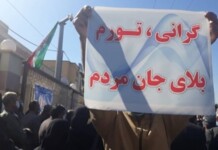
The central focus of the uprising was unmistakable. Protest slogans, symbols, and actions directly targeted the core of power: the clerical ruling system and its supreme leadership. The demand was not reform, adjustment, or negotiation, but rejection of the structure itself. At the same time, attempts were made—often with indirect support from regime-aligned actors—to inject diversionary or backward-looking slogans tied to past forms of dictatorship. These efforts aimed to blur the uprising’s clear boundary with all authoritarian alternatives, past or present. However, they remained marginal and failed to redefine the movement’s direction.
By the third day, the uprising took on a clustered, network-based character and spread with explosive speed across the country. Ultimately, protests reached approximately 190 cities, a scale that reflected not spontaneity but years of accumulated anger, resistance, and political awareness. This nationwide spread demonstrated the organic connection between the uprising and diverse social groups—from workers and students to marginalized communities long excluded from power and resources.
Political clarity played a decisive role throughout this process. The dominance of slogans such as “Death to the Dictator” and “Death to the Principle of Velayat-e Faqih” established a firm line against any form of dictatorship in Iran’s past or future. This clarity limited the ability of reactionary or opportunistic forces to hijack the uprising and reinforced its fundamentally democratic and anti-authoritarian character.
The uprising also confirmed a deeply rooted national principle: Iranians themselves must be the agents of their own liberation. Conscious reliance on internal social power—rather than external saviors—released enormous collective energy and strengthened belief in the possibility of ending clerical rule. This sense of ownership transformed despair into determination and localized protests into a shared national struggle.
Even at this stage, the January 2026 uprising has produced lasting strategic effects. Its irreversibility and clear orientation toward regime change are now firmly established. At the international level, the uprising sent a message of authenticity and legitimacy to governments, institutions, and global public opinion. The breadth of international solidarity that followed is itself evidence of how clearly the nature and goals of the uprising were communicated beyond Iran’s borders.
In response, the ruling establishment—under the direct authority of Supreme Leader Ali Khamenei—escalated repression to unprecedented levels. Yet this extreme violence did not force retreat. Instead, it hardened a collective resolve to end clerical rule altogether. Today, that resolve runs deeper and wider than during the days of open protest, embedded in the social fabric of Iran and shaping the country’s political future in ways the regime can no longer control.