


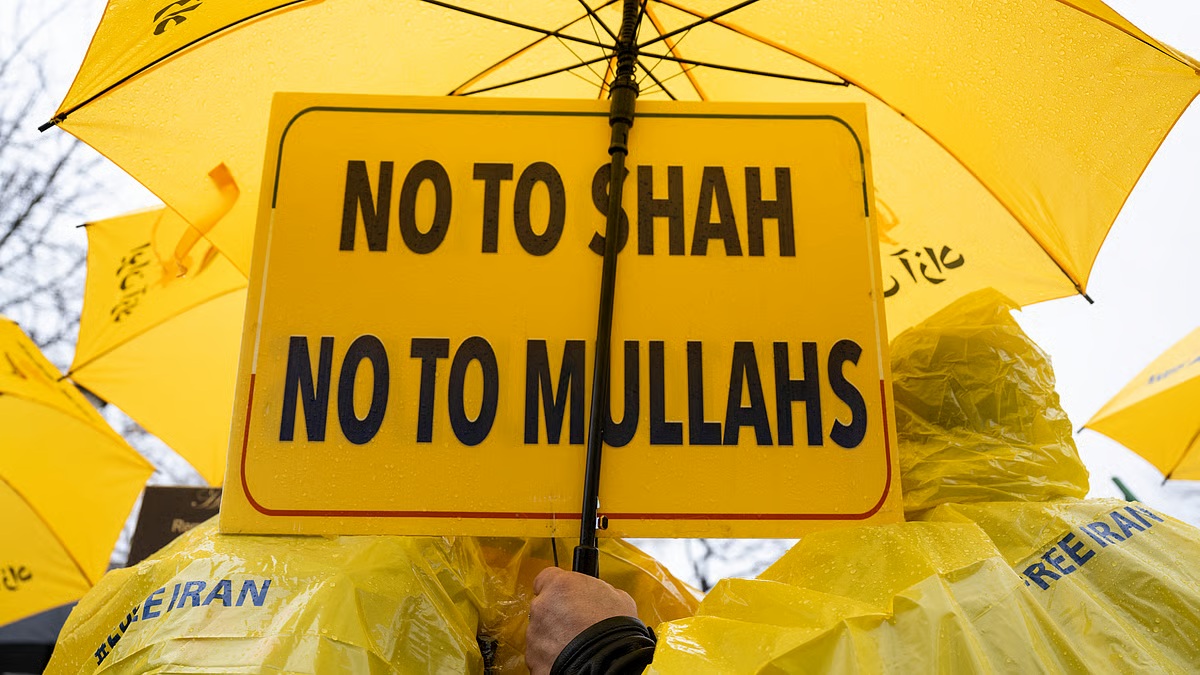

From constitutional revolution to 1979, Iran’s history shows how popular uprisings were repeatedly hijacked—today’s movement faces the same danger at a decisive moment.
“We did not make a revolution to overthrow one tyranny and replace it with another.”
These words were spoken nearly a century ago, on November 7, 1925, by Malek al-Sho‘ara Bahar in Iran’s parliament. Two days later, the Qajar dynasty was formally abolished. Within weeks, the Pahlavi monarchy was installed as Iran’s new ruling system.
What followed was not freedom, but another hundred years of repression, poverty, and broken promises. A century marked by the killing of freedom-seekers, the suppression of democracy, and the systematic plundering of a nation rich in human and natural resources—while monarchs and clerics, at different times and often together, ruled through coercion.
Today, Iran once again stands at a historic crossroads. And once again, a hard truth must be stated clearly:
Death to the oppressor—whether Shah or Supreme Leader.
A Repeated Pattern of Betrayal
Iran’s modern political history reveals a bitter and recurring pattern. Each time young Iranians rose up for freedom, forces hostile to the people intervened behind the scenes to seize the outcome.
From the Constitutional Revolution, to the democratically elected government of Dr. Mohammad Mossadegh, to the anti-monarchical uprising of 1979, the result was strikingly similar. With access to propaganda networks, financial power, internal collaborators, and foreign backing, authoritarian factions maneuvered at critical moments to derail popular movements. The true architects of these uprisings were arrested, tortured, executed, or disappeared into prisons.
These power seizures were not spontaneous. They relied on well-established tools: controlled media outlets, hired mobs, criminal enforcers, and intimidation squads tasked with attacking demonstrators—particularly women—creating chaos that justified repression, coups, and mass arrests. Time and again, the absence of sufficient political vigilance allowed opportunists to rewrite the outcome of history.
The Same Forces, Once Again
Today, the danger has returned in familiar form. As Iran enters the most advanced stage of resistance in over four decades, the same networks—monarchist remnants, regime-linked operatives, and media platforms with opaque funding—are attempting to appropriate the result of 47 years of resistance.
That resistance has been paid for with thousands of executions, decades of imprisonment, and relentless persecution of Iran’s most committed activists.
The signs are visible across social media and monopolized news platforms: selective amplification, fabricated narratives, manipulation of protest slogans, and systematic smear campaigns against political, civic, and cultural figures. The aim is not unity, but exclusion—pushing principled and socially rooted citizens out of the public space through vulgarity, intimidation, and political distortion.
A Qualitative Difference This Time
Yet this moment is not merely a repetition of the past.
Behind today’s nationwide protests stand organized resistance units and networks with decades of experience. The People’s Mojahedin Organization of Iran (PMOI/MEK), with over sixty years of political, organizational, and resistance experience, has openly positioned itself alongside the people. Since June 20, 1981, it has prepared precisely for moments like this—and has made clear that it will neither compromise nor negotiate with the remnants of monarchy or clerical rule.
History demonstrates that Shah and Mullah, despite occasional rivalry over power-sharing, have consistently aligned when it came to suppressing the people. The alliance of Ayatollah Kashani with royalist forces against Mossadegh, and the Western-backed deal with Khomeini at the Guadeloupe Conference that paved the way for the theft of the 1979 revolution, stand as unmistakable examples.
They are two faces of the same coin.
Manufacturing Alternatives, Stealing Revolutions
Repression today no longer relies solely on batons, bullets, and prisons. The clerical regime increasingly deploys more sophisticated tactics: narrative engineering, psychological operations, and the promotion of fabricated alternatives designed to dilute and marginalize the democratic alternative represented by the National Council of Resistance of Iran (NCRI).
Manipulating protest slogans, artificially promoting monarchist symbolism, and amplifying divisive voices are not organic developments—they are components of a systematic effort to redirect a revolution before it reaches its conclusion.
Iranians have lived through this deception before. The collective memory remains sharp.
From Protest to Political Confrontation
The uprising has now moved beyond universities, bazaars, and labor sectors. It has become nationwide, binding together a wounded but resolute society across class, gender, and geography.
Iran has passed the stage of scattered protests and purely economic demands. It has entered a phase of direct political confrontation. If the achievements of this uprising are safeguarded, its trajectory leads unmistakably toward revolution and regime change.
No power, no propaganda, and no authority can erase the courage and truth of a generation that has already crossed the threshold of fear.
Revolution, Not Replacement
The collapse of clerical rule will lead to genuine revolution only if it is guided by an organized, independent, and experienced democratic force—one forged through decades of sacrifice and struggle. Without that, the fall of one dictatorship risks giving rise to another, cloaked in different symbols but reproducing the same corruption, inequality, and repression.
Iran’s future must not be a recycled past.
The overthrow of the clerical regime must lead to a real revolution—one with neither Shah nor Mullah.