Strikes, Street Battles, and Live Fire Mark Two Weeks of Escalating Protests
The northern Iranian city of Rasht has become one of the most active centers of unrest during the January 2026 uprising. What began as economic demonstrations and merchant strikes rapidly transformed into prolonged street confrontations, acts of civil resistance, and direct clashes with security forces.
From Economic Protests to Open Confrontation
Protests in Rasht began on Sunday, December 28, 2025, sparked by strikes among bazaar merchants and street gatherings along Bisotun and Moallem streets. Initially focused on economic grievances, the demonstrations quickly escalated into confrontations with security forces and plainclothes agents.
On Wednesday, December 31, 2025, protests expanded into the city center, where clashes erupted with special units. During these confrontations, protesters seized a motorcycle belonging to the special forces and set it on fire.
The following day, Thursday, January 1, 2026, demonstrations began in Sabzeh Meydan and again devolved into violent encounters, as security forces reportedly opened fire toward crowds.
Citywide Strikes and Anti-Government Slogans
By Friday, January 2, 2026, Rasht witnessed a near-total shutdown. The city’s covered bazaar fully closed, joined by most shops across the city. Simultaneously, street protests spread with openly anti-government slogans, including chants emphasizing collective unity and resistance.
After a brief lull, protests intensified again on Tuesday, January 7, 2026. Demonstrators clashed with security forces, using Molotov cocktails in street battles. In one reported incident, protesters disarmed a member of the Islamic Revolutionary Guard Corps, seizing a stun gun and handgun. In Sabzeh Meydan, chants of “Death to Khamenei” were heard as demonstrations expanded into multiple neighborhoods.
Arson, Attacks on Regime Symbols, and Live Ammunition
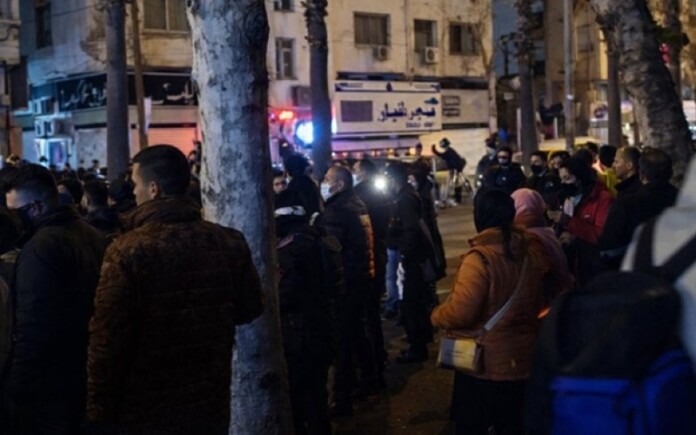
On Wednesday, January 8, 2026, protests and gatherings spread across Rasht. Chants of “Freedom, Freedom” and “People, join us” echoed through the streets. Protesters blocked roads by setting tires on fire and targeted multiple regime-linked sites, including a traffic police outpost, an electricity office, a Basij base in Khojasteh, Bank Maskan, and a minibus used by security forces.
That same day, demonstrators set fire to government banners and billboards in Toshiba Square, damaged branches of Bank Sepah and Bank Tejarat, and attacked an regime building of the National Iranian Oil Company on Khomeini Street. The local office of a sitting member of parliament was also targeted, with signage and banners torn down.
By nightfall, security forces reportedly fired sniper shots from rooftops and used live ammunition near the governorate building. Despite the violence, protests resumed the following day, with young demonstrators chanting “Death to the dictator” in scattered, mobile gatherings marked by repeated clashes and pursuits. Reports indicate casualties, with several protesters killed or injured.
Continued Resistance Despite De Facto Martial Law
On Friday, January 10, 2026, crowds gathered near the municipality building, facing sustained gunfire aimed at dispersing them. The next day, Saturday, January 11, 2026, authorities effectively imposed de facto martial law, yet nighttime protests continued, leading to further street clashes.
On January 11, Rasht’s main bazaar and most shops remained closed amid a heavy security presence. Despite efforts to prevent any public assembly, confrontations between protesters and security forces continued into Monday and Tuesday, underscoring the persistence of resistance in the city.
The events in Rasht illustrate how localized economic protests have evolved into sustained urban unrest, marked by strikes, organized resistance, and repeated use of lethal force by authorities—further challenging official claims that the uprising has been contained.