Eyewitness accounts from PMOI sources describe widespread clashes, state violence, and temporary popular control in Rasht during January 8–9, 2026.
Rasht, Iran – According to detailed field reports received by the People’s Mojahedin Organization of Iran (PMOI), the northern city of Rasht witnessed one of the most intense episodes of the January 2026 nationwide uprising during January 8 and 9. The reports, compiled from on-the-ground observers and participants, describe large-scale confrontations, the destruction of regime infrastructure, and periods in which significant parts of the city fell outside effective state control.
What follows is a consolidated account of these reports, reflecting eyewitness observations and local assessments of events over the two-day period.
January 8: Large Sections of Rasht Under Popular Control
Field reports indicate that by Thursday, January 8, large areas of Rasht—particularly around Gas Square (Falakeh-ye Gaz)—were effectively controlled by protesters.
According to the reports:
- Government and regime-affiliated sites were systematically targeted, vandalized, or set on fire.
- The Electricity Department building near Gas Square, traffic police installations, and multiple bank branches—including Bank Maskan, Bank Saderat, Bank Sepah, and Bank Tejarat—were damaged or destroyed.
- Surveillance cameras, billboards, and regime propaganda banners throughout the area were torn down and burned.
- The central Basij base in Rasht, known as “Martyr Khojasteh Basij Base,” was reportedly completely set ablaze.
- A minibus belonging to security forces stationed near the base was overturned and burned.
- Roadblocks were deliberately established to prevent reinforcements from entering the area.
By nightfall, witnesses report that Gas Square remained engulfed in flames, with no visible presence of security forces in the immediate vicinity.
Expansion of Clashes Across the City
Following the events at Gas Square, groups of protesters reportedly advanced toward other parts of the city, including Mosalla Square (Toshiba) and Bahonar Street.
Reported actions included:
- Burning of regime banners and billboards across Mosalla Square.
- Attacks on the Mosalla complex using incendiary devices, resulting in broken windows and partial fires.
- Arson attacks on mosques identified by locals as recurrent gathering points for security forces.
- The complete burning of Imam Sajjad Clinic, reportedly affiliated with the IRGC. According to reports, the facility had previously been used to transfer detainees to interrogation and torture sites.
- Attacks on the local office of a regime-affiliated parliamentary figure, with signage and promotional materials destroyed.
- Damage to government buildings, including the Oil Company office on Khomeini Street and adjacent insurance and banking facilities.
- Arson attacks on government vehicles parked near these buildings.
In Chaleh Khaneh neighborhood, protesters reportedly attacked the Family Court building, destroying its entrance and windows. In “Sacred Defense Square,” a statue symbolizing war mobilization was dismantled by demonstrators.
Widespread Destruction of Regime Symbols
Field reports further describe:
- The burning of the Education Department building in Farhang Square.
- Systematic destruction of all banks along Lakani Street.
- Arson attacks on mosques in Sabzeh Meydan and Motahari Street, described as holding and interrogation sites during previous uprisings.
- Attacks on multiple branches of the state-linked Ofogh Kourosh retail chain across the city.
By the morning of Friday, January 9, residents reportedly encountered burned-out buildings and debris across central Rasht. Witnesses describe widespread expressions of relief and defiance, with car horns sounding across the city.
January 9: Escalation of State Violence
Reports indicate that by Friday afternoon, the security response intensified sharply. Eyewitnesses state that uniformed police were largely absent earlier in the day, with traffic police being the only visible officials until approximately 4:00 p.m.
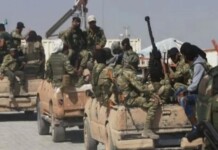
Later accounts describe the deployment of heavily armed personnel, including senior officers and plainclothes forces equipped with automatic weapons. According to these reports:
- Live ammunition was used against civilians in several areas.
- Protesters were shot in public streets, including near schools.
- Bodies were reportedly transported to Bagh-e Rezvan cemetery using dump trucks.
- Families were allegedly pressured to pay large sums to retrieve the bodies of victims.
One eyewitness account cited in the report states that neither the police nor the military showed signs of siding with protesters, contradicting circulating rumors to that effect.
A Turning Point in the Uprising
According to the PMOI-received reports, many residents initially believed that other cities had also fallen out of government control, leading to brief moments of celebration and solidarity among the population.
Observers describe the events in Rasht as a historic rupture, comparing them to defining moments taught in history books—symbolizing a clear break between society and the ruling system.
While independent verification remains difficult due to internet restrictions and media censorship, the consistency and breadth of these field reports suggest that Rasht was one of the most active and confrontational urban centers during the January 2026 uprising.