

EU lawmakers call for IRGC terrorist designation, expanded sanctions, and accountability for systematic human rights abuses
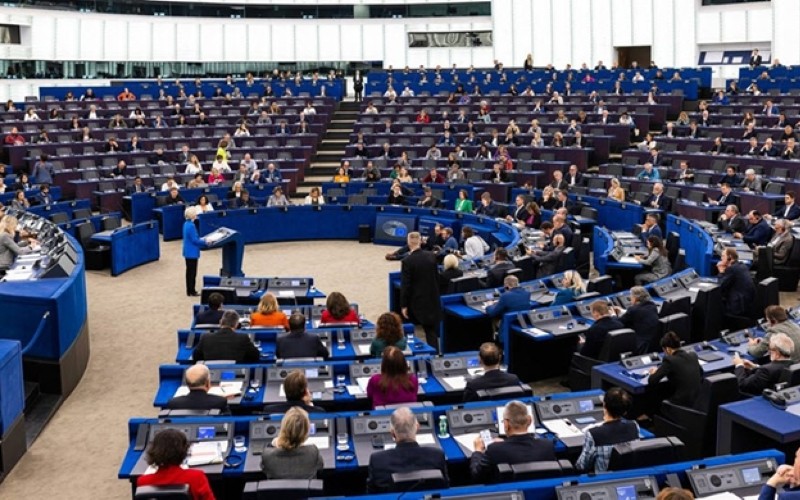
In a landmark resolution adopted on January 22, 2026, the European Parliament formally condemned what it described as the “brutal repression against protesters in Iran.” The resolution, registered as P10_TA(2026)0023, followed a violent nationwide crackdown earlier in the month that drew sharp criticism from senior European Union officials, including European Commission President Ursula von der Leyen and EU High Representative Kaja Kallas.
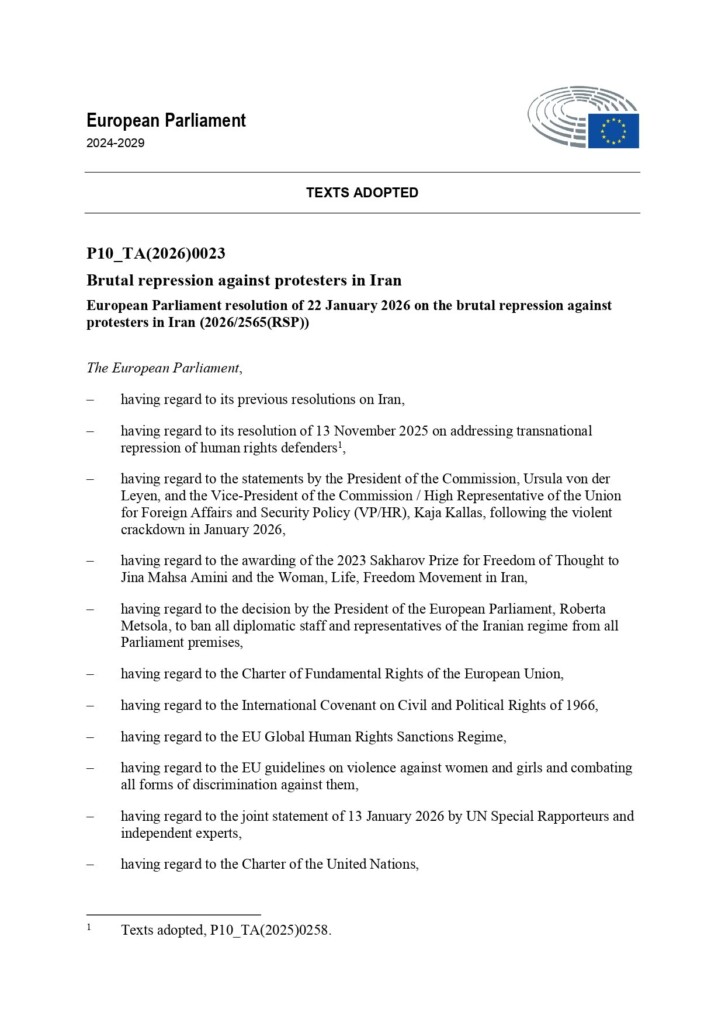
The resolution is grounded in established international legal frameworks, including the Charter of Fundamental Rights of the European Union and the International Covenant on Civil and Political Rights of 1966, underscoring the EU’s assessment that Iran’s actions constitute serious and systematic violations of international law.
A Pattern of Systematic Repression
According to the resolution and accompanying parliamentary sources, Iran’s human rights situation has reached an alarming level. Lawmakers expressed “profound indignation” at the high number of fatalities among protesters and the widespread use of arbitrary detention. The document highlights not only the violence deployed in public spaces but also the expansion of repression beyond the streets.
Of particular concern is what the Parliament described as an “abhorrent practice” by Iranian authorities: pressuring families of slain protesters to pay large sums of money in exchange for the return of their loved ones’ bodies. This practice, lawmakers noted, represents a form of collective punishment and psychological coercion aimed at silencing dissent even after death.
Demands for Terrorist Designation and Accountability
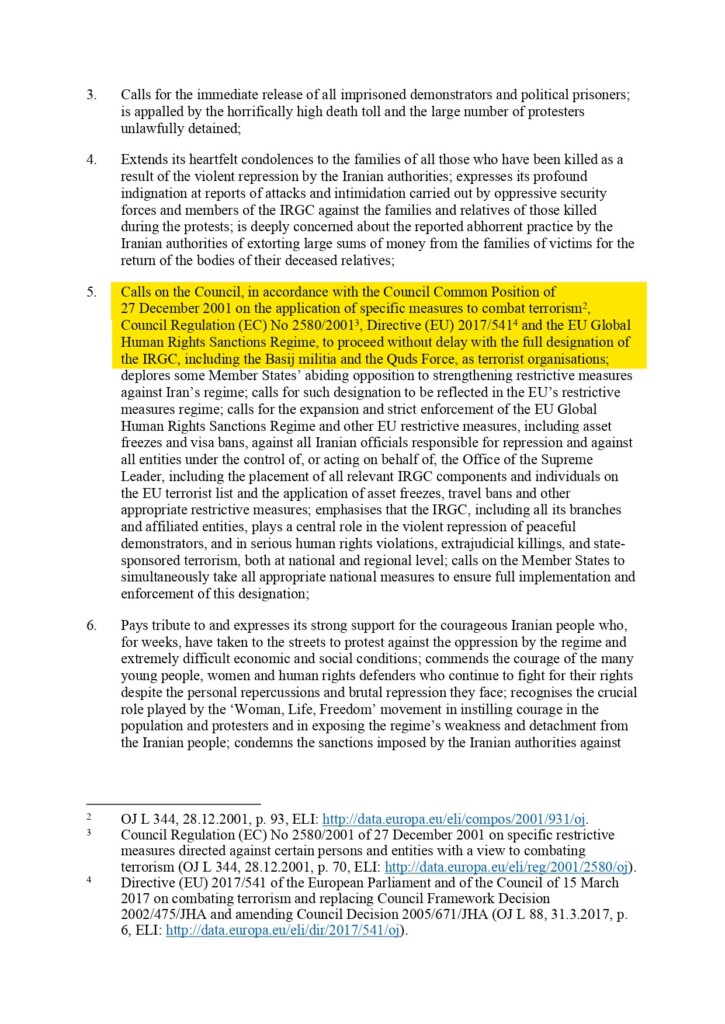
A central element of the resolution is the call for the Council of the European Union to significantly escalate its response. The Parliament urges the full designation of the Islamic Revolutionary Guard Corps (IRGC)—including the Basij militia and the Quds Force—as terrorist organizations.
This demand is based on the IRGC’s documented role in:
- Violent suppression of peaceful demonstrations
- Serious human rights violations and extrajudicial killings
- State-sponsored terrorism at both domestic and regional levels
To reinforce accountability, the resolution calls for the expansion of targeted sanctions, including visa bans and asset freezes against Iranian officials responsible for repression and entities operating under the authority of the Supreme Leader’s office. In parallel, European Parliament President Roberta Metsola has already imposed a ban preventing Iranian regime representatives and staff from accessing Parliament premises.
Continued Recognition of Iran’s Protest Movement Since 2022
Despite the scale of repression, the European Parliament reaffirmed its solidarity with the Iranian people, recognizing a protest movement that has persisted since the nationwide demonstrations that erupted in 2022 following the death of Jina Mahsa Amini. Those protests marked a decisive turning point, transforming scattered social grievances into a sustained challenge against authoritarian rule, gender-based discrimination, and systemic injustice.
The resolution emphasizes that the current unrest is not an isolated episode but part of a broader and ongoing cycle of resistance driven by demands for fundamental freedoms, social dignity, and political accountability. It highlights the continued prominence of women, youth, and civil society activists, whose participation has remained central despite escalating risks, mass arrests, and severe reprisals.
Calls for Release of Political Prisoners
The resolution concludes with a demand for the immediate and unconditional release of all detained protesters and political prisoners. Lawmakers commended the resilience of Iranian citizens who continue to assert their rights in the face of intimidation, surveillance, and violence, stressing that sustained international pressure remains essential to counter the regime’s entrenched culture of impunity.
For the European Parliament, the message is explicit: the situation in Iran is no longer a matter of internal unrest, but a persistent human rights crisis requiring decisive and coordinated international action.