From Zahedan to Tehran, rebellious youth and PMOI Resistance Units intensify their actions against the clerical regime, demanding accountability for decades of crimes and recognition of the Iranian people’s struggle for democracy.
A Growing Wave of Defiance Across Iran
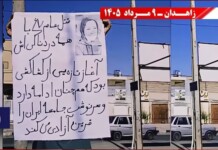
On October 3, 2025, the People’s Mojahedin Organization of Iran (PMOI/MEK) Resistance Units in Zahedan resumed their weekly activities with a powerful message of defiance. In the face of severe repression, activists took to the streets to reaffirm their commitment to the Iranian people’s decades-long struggle for freedom and democracy. Their placards and chants echoed a resolute warning to both the ruling theocracy and remnants of the former monarchy: “Death to the oppressor, be it the shah or the supreme leader.”
October 3—Zahedan, southeast Iran
PMOI Resistance Units resumed their weekly activities, stressing the continuation of the struggle against the mullahs' regime and their commitment to establishing a democratic republic that rejects all forms of tyranny. pic.twitter.com/l3wieW3OQn— People's Mojahedin Organization of Iran (PMOI/MEK) (@Mojahedineng) October 4, 2025
Rejecting any form of dictatorship, the activists declared, “We will not go back to the past and we have rebelled against the current theocratical dictatorship.” Their slogans underscored a consistent principle that has guided Iran’s resistance for over four decades—true freedom will not come by replacing one tyrant with another.
"Snapback sanctions are a major blow to the regime of executions and massacres" pic.twitter.com/Du6VH9tNe8
— People's Mojahedin Organization of Iran (PMOI/MEK) (@Mojahedineng) October 4, 2025
Among the many messages on display were calls to reject both the monarchy and the religious despotism of the current regime. Slogans like “Monarchy and mullahs have committed 100 years of crime” and “No to monarchy, no to the supreme leader, yes to democracy and equality” reflected the people’s determination to forge a democratic republic free of tyranny.
"It is time for the world to recognize the struggle and resistance of the Iranian people for regime change in Iran" pic.twitter.com/A6ZjRcxj9C
— People's Mojahedin Organization of Iran (PMOI/MEK) (@Mojahedineng) October 4, 2025
Mourning and Resistance: The Murder of Somayeh Rashidi
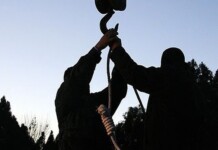
The recent martyrdom of political prisoner Somayeh Rashidi has become a rallying cry for Iran’s rebellious youth. Somayeh, a political activist with ties to the PMOI, was arrested multiple times for her involvement in anti-regime activities. After months of mistreatment, psychological torture, and medical neglect, she was murdered in Qarchak Prison in September 2025.
The regime’s judiciary attempted to conceal her death under the guise of “addiction,” but the truth quickly surfaced. Political prisoners inside Iran exposed the regime’s lies, revealing that Somayeh had been tortured and denied medical treatment. According to a letter written by several political inmates, “Somayeh and others like her are not condemned to death because of addiction, but because of their fighting spirit and refusal to submit.”
In the wake of her death, prisoners in Qarchak and Evin prisons held vigils, chanting, “Death to the dictator, death to Khamenei, damned be Khomeini,” and “Somayeh was sick, but she too was killed.” Their defiance highlighted how her martyrdom has reignited a broader resistance movement against the regime’s apparatus of repression.
Nationwide Operations by Iran’s Rebellious Youth
In direct response to Somayeh Rashidi’s killing and the broader wave of repression, Iran’s rebellious youth carried out a series of coordinated anti-regime operations across the country. These included acts of civil disobedience and targeted attacks against symbols and institutions of tyranny in cities such as Tehran, Karaj, Mashhad, Isfahan, Rasht, Kermanshah, Qazvin, Khorramabad, Iranshahr, and Dorud.
The operations included:
- Setting fire to regime buildings and IRGC Basij bases in multiple cities, including Isfahan, Mashhad, and Iranshahr.
- Burning government propaganda posters and images of Khomeini and Khamenei in Karaj, Rasht, and Shahriar.
- Incendiary attacks on regime municipality offices in Parand and espionage headquarters linked to the IRGC and Ministry of Intelligence in Tehran and Qazvin.
These symbolic yet daring operations demonstrated that the spirit of resistance remains strong despite the regime’s brutal tactics. They also sent a clear message: the youth of Iran will not allow fear or repression to silence their fight for freedom.
A Call for Justice and International Recognition
The PMOI Resistance Units and NCRI (National Council of Resistance of Iran) have emphasized that the regime’s crimes—ranging from political executions to the murder of prisoners like Somayeh Rashidi—must be investigated and prosecuted in international courts. Their demands include referring the regime’s dossier of genocide and crimes against humanity to the UN Security Council and ensuring that Khamenei and senior officials are held accountable.
Resistance Units in Zahedan also addressed the regime’s nuclear ambitions, declaring, “The mullahs’ regime sees atomic bombs as its only strategic guarantee for survival.” They welcomed renewed international sanctions and the reactivation of UN measures, noting, “Snapback sanctions are a major blow to the regime of executions and massacres.”
Beyond accountability, their central appeal was moral clarity: “It is time for the world to recognize the struggle and resistance of the Iranian people for regime change in Iran.” This call is not for foreign intervention but for acknowledgment of the Iranian people’s right to self-determination and democratic governance.
Conclusion
From Zahedan’s Resistance Units to the rebellious youth in Tehran, a powerful movement is uniting Iranians against decades of dictatorship and repression. The martyrdom of Somayeh Rashidi has become both a symbol of the regime’s brutality and a spark of renewed determination.
As the Iranian people rise in defiance, their message to the world is unmistakable: Stand with the people of Iran, not their oppressors.