


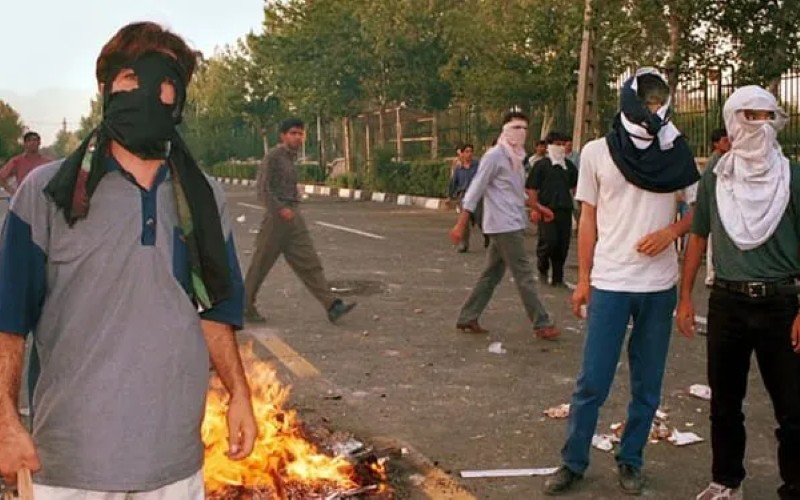

From its origins in the 1953 protests against dictatorship to its renewed force in the 2022 uprising, Student Day remains a symbol of Iran’s unbroken struggle for freedom.
Every year on 16 Azar, Iran’s Student Day, the country reaches a conceptual and historical crossroads where the university once again asserts its role as the “conscience of society.” Since its inception, this day has symbolized structural resistance against the two dominant forms of authoritarian rule in modern Iran: Shah dictatorship and religious despotism. Contemporary Iran marks 16 Azar not as a ritual of memory but as an echo of an emerging future shaped by students who have repeatedly stood against state power and forced it to face the limits of its own authority.
The significance of 16 Azar in Iran goes back to December 7, 1953, when three students at the University of Tehran were killed during protests against the Shah’s regime, shortly after the CIA-backed coup that toppled Iran’s elected government. Their deaths transformed the day into a symbol of student resistance and structural defiance against authoritarian rule, a legacy that continues to inspire campus activism today.
In today’s Iran, Student Day no longer functions merely as an annual commemoration of that earlier struggle. It operates as a projection of a future in motion, a future powered by the same student body that has confronted, disrupted, and at times reshaped the machinery of authoritarianism. The university remains a fortress of independent thought, and every attempt by the Iranian regime to silence it has been met with more resilient, creative, and organized forms of resistance.
After years of systematic repression, the universities regained their historic identity with the nationwide uprising of 2022. During that pivotal moment, campuses once again became spaces of freedom-seeking, innovation, and open challenge to reactionary rule. No longer confined to the role of an academic institution, the university reemerged as a site of meaning-making and as a generator of radical social energy.
The regime’s fear of the university within the system of absolute clerical rule is neither accidental nor irrational. A university is not simply a collection of classrooms; it is a symbolic arena where ideas are born, critiques sharpen, and networks of protest take shape. Precisely for this reason, the regime has deployed both brute repression and subtle engineering to suffocate this vital force. The physical sieges of campuses by security forces, the violent raid on Sharif University, and the assaults on peaceful student gatherings during the 2022 uprising were moments when the state’s fear of student power expressed itself most visibly. These attacks, far from extinguishing the flame of dissent, generated new momentum.
The kidnapping of students, nighttime arrests, fabricated security cases, and severe disciplinary rulings have all served as tools of a governance model built on fear. Yet the harsher the repression, the more tightly student resistance networks have organized, drawing on experience and collective memory to outmaneuver the state.
In parallel, the regime has tried to deploy softer tactics: staged “dialogue sessions” and so-called “free-thinking chairs” designed to dilute political clarity and convert student radicalism into hollow, symbolic debate. But after the lived experience of the 2022 uprising, the university recognizes these efforts as techniques of consent manufacturing aimed at neutralizing dissent. Students have already signaled that such attempts cannot succeed.
The regime’s deepest concern is that the university will remain organically tied to a society that is itself on the brink of political rupture. History has shown that whenever Iranian society enters an explosive phase, the university becomes one of the first institutions to take center stage. Student action has repeatedly shaped, inspired, and accelerated national movements.
In this context, retreat in the face of tyranny only intensifies repression. The university’s language must be unity, organization, and conscious resistance. Whenever the campus becomes a “bastion of freedom,” society follows. This understanding is what now drives a new generation of students who, facing deception, violence, and political engineering, have delivered a clear response: determination, radicalism, and loyalty to truth.
With this interpretation, Student Day is no longer a ceremonial anniversary. It is the renewal of a shared covenant between the university and a society ready for upheaval, forged by those willing to risk everything for freedom. Students today understand more clearly than ever that liberty is not granted; it is chosen, and its cost must be paid by every generation that seeks it. If tyranny tries to isolate the university, it must deepen its connection with the people. If the regime seeks fragmentation, students must reinforce solidarity, organization, and collective action.
The question is no longer whether the university can play a historic role. The real question is how long it will persist in fulfilling that role. And Student Day offers its own unmistakable answer: the Iranian university, as a bastion of freedom, has entered the field and will not retreat until a democratic transformation is achieved.