



The unprecedented surge in the US dollar’s exchange rate to over 80,000 tomans, coupled with frequent power outages and deepening market stagnation, has severely impacted Iranians from small business owners to marketers. These compounding issues, resulting from the Iranian regime’s internal and external policies, have driven public dissatisfaction to a boiling point.
Even individuals close to the regime have voiced concerns about the potential re-emergence of nationwide protests and the possibility of systemic collapse if current trends persist. Events in Tehran’s bazaars on Sunday, December 29, and subsequent protests in other cities, including Mashhad’s Atlas market on Monday, December 30, underscore the gravity of the situation.
Protests Spread Across Tehran and Beyond
Videos shared on social media on Monday showed Atlas market businesses protesting against complete market stagnation, power outages, and the soaring dollar rate. Similarly, on Sunday, social media posts captured marketers and guild members in Tehran striking over the skyrocketing dollar and continued blackouts.
Reports indicate that Sunday’s protests spread to several key markets in Tehran, including Abbas Abad, Chaharsoo, Kafashan, Sepahsalar, and the Grand Bazaar. In videos of these events, large crowds of marketers could be heard chanting: “You can’t do business with the dollar at 80,000 tomans!”
Images from Sepahsalar Bagh showed bag and shoe marketers protesting against high costs, shortages of raw materials, lack of liquidity, loss of producers’ capital, and the steep rise in exchange rates. In some videos, shopkeepers in Tehran’s Grand Bazaar were seen closing their stores, chanting slogans like “Don’t be afraid, close” and “Brave marketer! Support, support,” urging others to join the strike.
The Regime’s Response: Threats and Intimidation
While regime supporters attempt to downplay these livelihood-driven protests, Iranian authorities have explicitly or implicitly expressed concerns over the potential resurgence of nationwide demonstrations. In response, they have resorted to threats and intimidation.
On December 23, Chief Justice Gholam-Hossein Mohseni-Eje’i instructed intelligence, security, and law enforcement agencies to prevent any insecurity during this “special period.” Supreme Leader Ali Khamenei also issued warnings to protesters, threatening them with being “trampled under the feet of the Islamic Republic.”
The Revolutionary Guards marked the anniversary of the regime’s December 30, 2009, rally with a statement pledging readiness to counter “chaos, insecurity, and sedition” in the country.
An Economy on the Brink
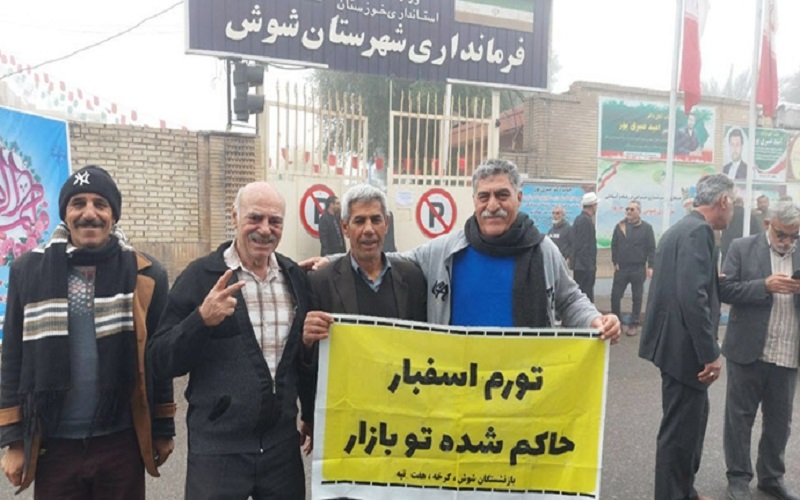
Iran’s economic crisis has reached a critical point where many citizens view regime change as the only solution. This crisis is not confined to marketers and private business owners but spans various sectors of society. In recent days, alongside the marketers’ protests, educators, retirees, workers, and medical staff have also held rallies.
Economic experts warn that the regime faces an imminent collapse. Widespread poverty, inflation, skyrocketing prices, and intensified repression create fertile ground for a nationwide uprising. Despite a slight decline in the dollar’s value on Monday, with it trading at over 80,000 tomans, the euro surpassed 84,000 tomans. Just six months ago, before the administration of Masoud Pezeshkian, the dollar was trading at 60,000 to 61,000 tomans.
Lotf Allah Siyahkeli, a member of parliament, recently admitted in a video interview that if the dollar’s exchange rate reaches 90,000 tomans, economic collapse will be inevitable, and the regime will lose control.
A Tipping Point for Change
The combination of economic hardship, power outages, and public discontent underscores the fragility of the current regime. As protests continue to grow across various sectors and regions, the Iranian regime faces mounting pressure to address the grievances of its people or risk further unrest and instability.