


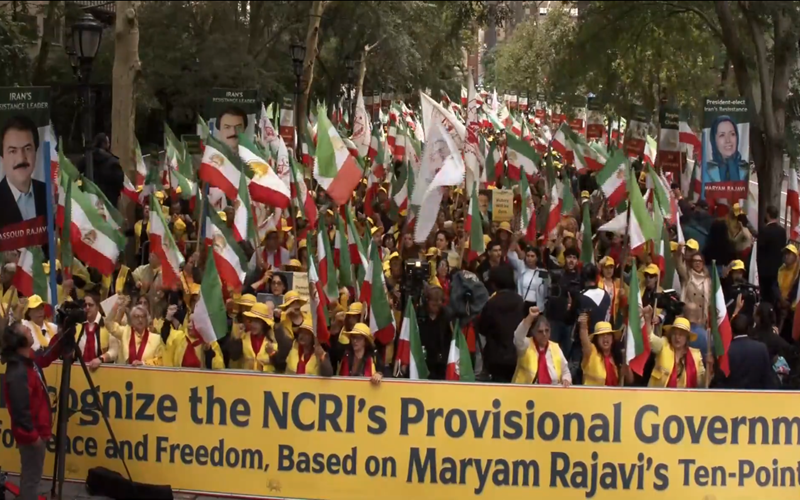

Iranian communities and supporters of the National Council of Resistance of Iran (NCRI) gathered outside the United Nations in New York, highlighting political repression, executions, and demands for democratic change in Iran.
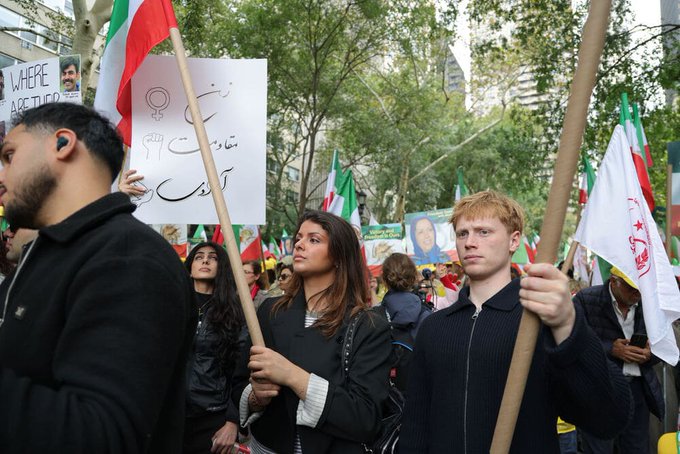
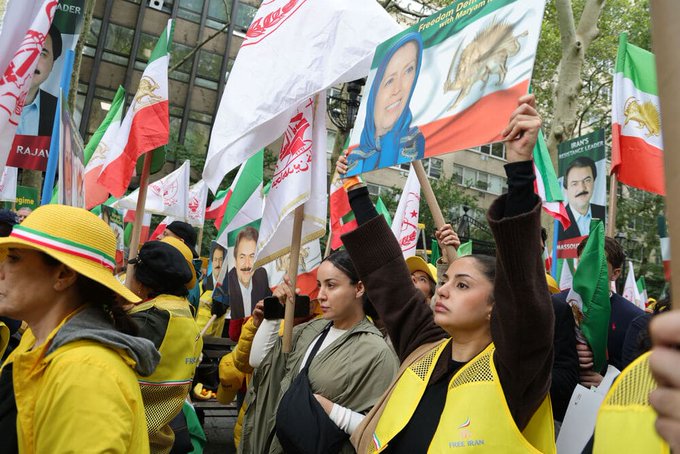
As world leaders gathered in New York for the 81st session of the United Nations General Assembly, thousands of Iranian-Americans and supporters of the National Council of Resistance of Iran (NCRI) gathered outside the UN headquarters on September 22 to protest executions and political repression in Iran and call attention to demands for democratic change.
The gathering at Dag Hammarskjöld Plaza brought together participants from across the United States as well as Iranian supporters who traveled from Europe and other countries. The event featured Iranian speakers, young people, human-rights advocates, faith leaders, and former U.S. officials, including retired Gen. Wesley Clark, retired Lt. Gen. Keith Kellogg, and former U.S. Ambassador Carla Sands.
For participants who had traveled from abroad, the gathering was also an opportunity to amplify voices from inside Iran.
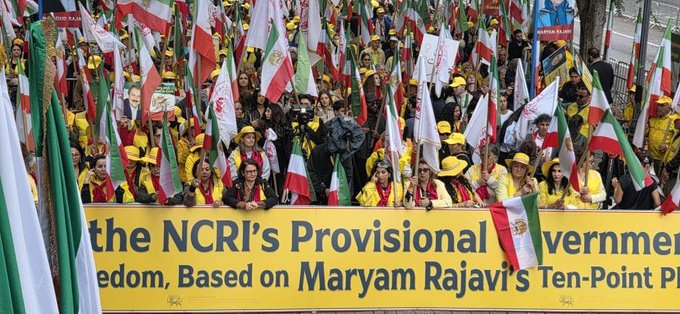
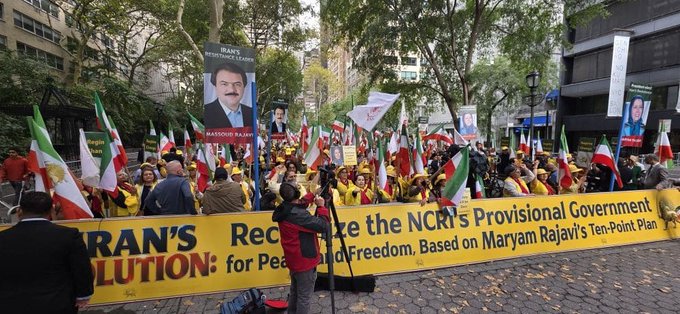
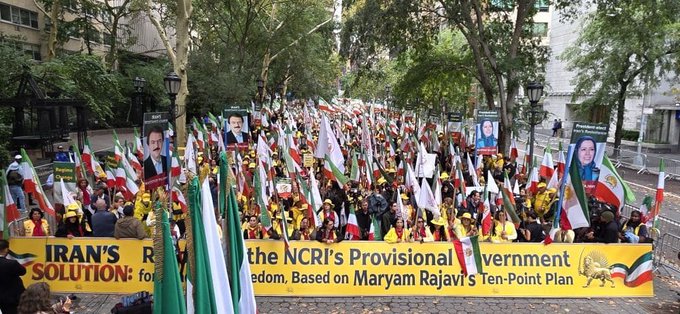
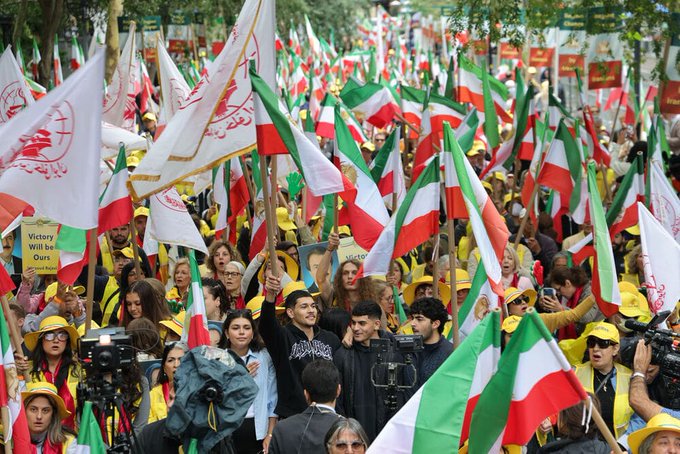
Iranians from different countries gather outside the UN
Azadeh Alami, who traveled from Paris to New York to participate in the demonstration, described the gathering as a broad presence of Iranians from different countries and generations.
She highlighted the participation of young people, teenagers, and children, saying they were seeking to convey the demands of people inside Iran to the international community.
The central message expressed by participants, according to Alami, was that Iranian officials attending the UN General Assembly should not be viewed as representing the aspirations of the Iranian people. Demonstrators instead called for greater international attention to Iran’s organized opposition and its proposed political alternative.
The September 22 rally was part of a broader week of activities in New York focused on executions, torture, arbitrary detention, and political repression in Iran. Organizers scheduled additional demonstrations for September 23 as the Iranian regime’s president, Masoud Pezeshkian, was due to address the General Assembly.
Political change and a proposed democratic alternative
Speakers at the gathering addressed both the current situation in Iran and competing proposals for the country’s political future.
According to the event’s organizers, speakers including Gen. Wesley Clark, Lt. Gen. Keith Kellogg, and Carla Sands expressed support for an Iranian-led process of political change and pointed to the NCRI and its proposed program as an organized alternative.
The Ten-Point Plan presented by Maryam Rajavi was also highlighted during the event. Its stated principles include free elections, separation of religion and state, equality, minority rights, and a non-nuclear Iran.
In her message to the gathering, Rajavi argued that Iran’s UN seat should represent the Iranian people and their pursuit of freedom and a democratic republic. She also called for international legal action over human-rights violations and rejected foreign military intervention as a solution to Iran’s political crisis.
The political message was therefore linked by speakers to two issues: the demand for fundamental political change inside Iran and the question of what political system should replace the existing order.
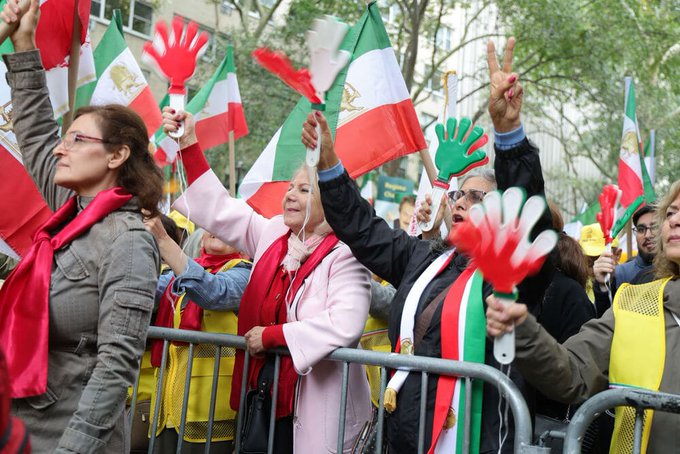
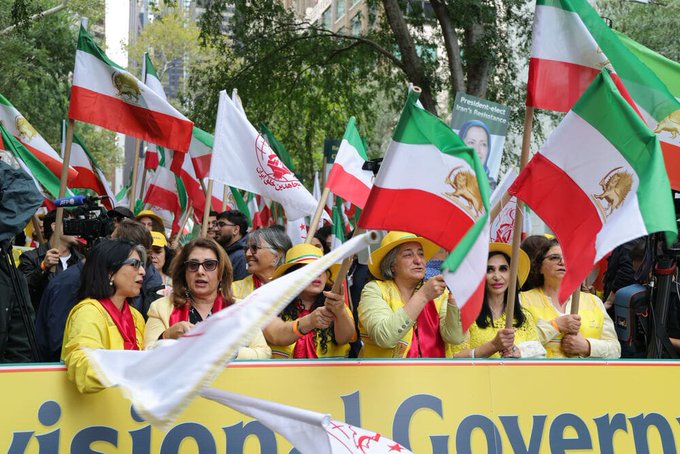
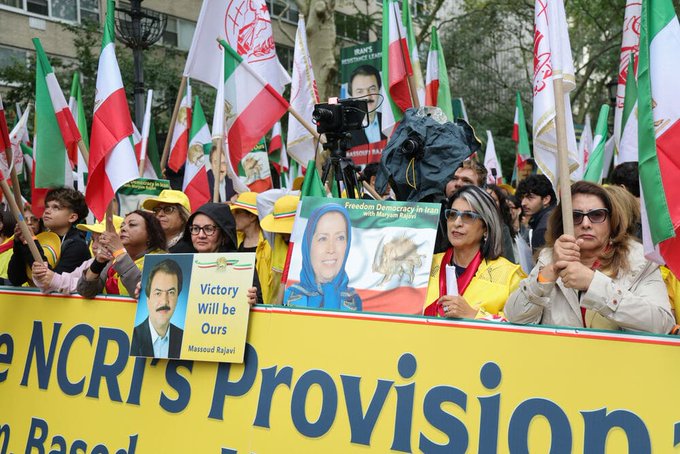
Political prisoners and executions take center stage
The second major theme of the New York gathering was the situation of political prisoners and the continuing use of the death penalty in Iran.
The demonstration coincided with the 139th consecutive week of the No to Executions Tuesdays campaign, a prison-based hunger strike opposing executions. According to the campaign’s September 22 statement, participation had expanded to 64 prisons, with inmates at Bandar Abbas Prison and Ziabar Prison in Sowme’eh Sara joining the campaign that week.
Mina Entezari, speaking from the New York gathering, emphasized the effort by participants to make the voices of prisoners heard outside Iran. She described the demonstration as a way of linking the campaign inside Iranian prisons with the international gathering taking place outside the UN.
The campaign’s latest statement said the participating prisoners continued their hunger strikes despite security pressure, threats, restrictions on communication, and punitive measures. It also cited at least 448 recorded executions since the beginning of the current Iranian calendar year in late March 2026.
For demonstrators in New York, the coincidence of the prison campaign with the UN General Assembly provided an opportunity to place executions and political imprisonment at the center of their international appeal.
A message directed at the international community
Entezari said participants were calling on governments dealing with Tehran to take human-rights concerns into account, particularly the continuing use of executions.
She also described the gathering as an effort to challenge the international community to hear the demands of people inside Iran rather than limiting its engagement to the authorities in Tehran.
This theme was reflected in the broader New York campaign. Organizers described the week-long series of events as focusing on executions, torture, arbitrary detention, and political repression, while calling for international action and support for democratic change.
The issue of political representation was similarly prominent. Demonstrators questioned whether officials of a government accused of widespread repression should be presented internationally as representatives of the Iranian people. At the same time, speakers promoted the NCRI and its Ten-Point Plan as a proposed alternative.
A gathering linking diaspora activism with resistance inside Iran
The two interviews from New York presented the demonstration as a connection between Iranian communities abroad and political prisoners, protesters, and resistance activists inside Iran.
Alami emphasized the participation of Iranians who traveled long distances to attend the gathering and the presence of younger generations. Entezari focused on prisoners and the campaign against executions, particularly the continuing participation of inmates across dozens of Iranian prisons.
Together, the accounts portrayed the September 22 gathering as having two closely connected messages: opposition to political repression and executions, and support among participants for fundamental political change in Iran.
With demonstrations continuing around the UN General Assembly on September 23, the New York gatherings have placed the issues of executions, political prisoners, and Iran’s political future directly before an international audience during one of the year’s most prominent diplomatic gatherings.