


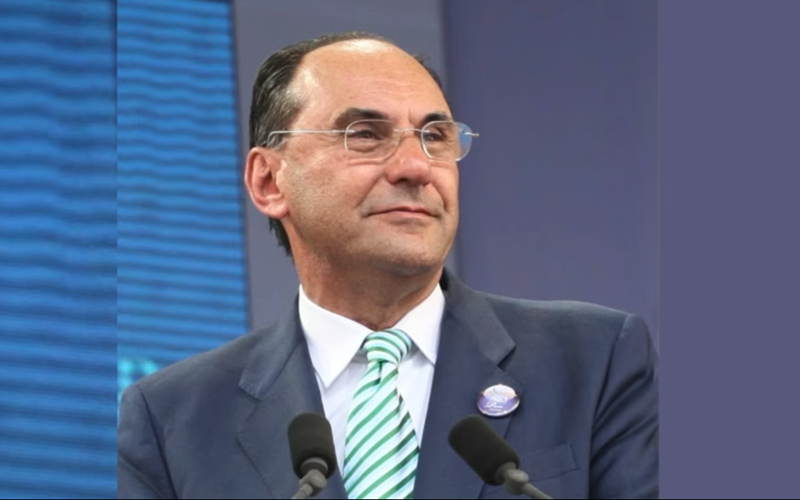

Spain’s National Court prosecution seeks prison sentences of up to 27 years for seven defendants in the Madrid shooting, linking the attack to Tehran’s campaign against opponents abroad and highlighting the victim’s support for the Iranian opposition.
The case, being handled by Spain’s National Court, has placed renewed scrutiny on the Iranian regime’s alleged use of covert operations to target political opponents and dissidents outside Iran. The prosecution argues that the shooting in Madrid formed part of a broader pattern of intimidation and assassination plots attributed to Tehran in Europe and elsewhere.
According to El País, which reported on the prosecution’s conclusions on October 23, 2026, the public prosecutor’s office stated that Iran had been involved in covert operations intended to persecute, intimidate, and even assassinate opponents, dissidents, and critical voices beyond its borders.
The prosecution’s position reinforces the theory advanced by investigating judge Santiago Pedraz, who concluded the investigation in 2025 and indicted eight suspects.
Up to 27 Years in Prison Sought for Seven Defendants
The prosecution has requested different sentences according to the alleged roles of the defendants.
Mehrez Ayari, identified by prosecutors as the suspected gunman, faces a request for 27 years in prison. Naraya Gómez, accused of participating in surveillance of Vidal-Quadras, faces a requested sentence of 23 years.
Four other defendants—Chahinez Kadid, Larbi Ayari, Greg Oliver Higuera, and Nafis Din Allouch Ahmed—face requests for 20 years each for their alleged involvement in the operation. Adrián Ruiz Blanco faces a request for 10 years on charges related to helping conceal evidence.
An eighth suspect, Sami Bekal Bounouare, known as Pacho and described as the alleged coordinator of the attack, remains at large. Investigators believe he fled to Iran.
These figures represent the prosecution’s sentencing requests, not final convictions or sentences imposed by the court.
A Shooting That Nearly Killed a European Parliament Vice-President
The attack took place on November 9, 2023, when Vidal-Quadras was returning home after walking in Madrid’s Retiro Park. A gunman approached him and shot him in the face.
Vidal-Quadras later described hearing someone greet him before turning around and being shot. He lost consciousness, and his memories of the immediate aftermath were incomplete.
The swift response of emergency services saved his life, according to Judge Pedraz.
Vidal-Quadras is a prominent Spanish conservative politician who previously led the People’s Party in Catalonia, served as vice-president of the European Parliament, and helped found Vox. His political profile in Europe and his support for the Iranian opposition became central to the prosecution’s explanation of the motive for the attack.
The prosecution argues that the attempted assassination was connected to his position as a leading European opponent of Iran’s regime.
Tehran’s Hostility Toward the Iranian Opposition
The prosecution specifically links the attack to Vidal-Quadras’s support for the People’s Mojahedin Organization of Iran (PMOI/MEK), a principal Iranian opposition movement.
According to the prosecution, Vidal-Quadras played a fundamental role in protecting thousands of PMOI members who had been attacked by the Iranian regime. His advocacy placed him at odds with Tehran, which had publicly targeted him through its own political and sanctions mechanisms.
The prosecution notes that Iran’s Foreign Ministry included Vidal-Quadras on an official sanctions list in 2022, accusing him of supporting terrorism and terrorist groups.
Spanish prosecutors cite this designation as relevant evidence of the hostility directed at the politician by Tehran. They argue that the shooting should be understood in the context of the regime’s efforts to intimidate those who support organized opposition to its rule.
The case highlights the risks faced by Iranian dissidents and their international supporters, including individuals who have publicly advocated for the PMOI and challenged the regime’s treatment of its opponents.
European Assassination Plots Cited by Prosecutors
The prosecution’s submission places the Madrid attack within a wider pattern of alleged Iranian operations targeting opponents abroad.
It refers to attacks in the Netherlands in 2015 and 2017, the planning of an assassination in Denmark in 2018, and the arrest of a couple in Paris that year after authorities discovered approximately 500 grams of explosives and a detonator.
The document also refers to at least 10 Iranian plots detected in the United Kingdom involving plans to kidnap or assassinate people residing there who were considered enemies of the regime.
These examples form part of the prosecution’s argument that the attempted assassination of Vidal-Quadras was not an isolated criminal act but an operation consistent with a broader pattern of targeting perceived opponents outside Iran.
Ayari, the alleged gunman in the Madrid case, was arrested in 2024 in Haarlem, a Dutch town near Amsterdam, while reportedly involved in planning another attack against a different dissident, according to the prosecution’s account.
This alleged connection to another planned attack is significant to the prosecution’s broader theory about the operation and the networks involved. The ultimate responsibility of each defendant, however, remains a matter for the judicial proceedings.
A Threatening Message Days After the Attack
The prosecution also highlights a statement published by Iran’s official news agency just five days after the shooting.
The statement warned Spain against becoming involved in what it described as a PMOI scenario and cautioned that hosting the organization or allowing it to operate on Spanish territory would have serious consequences.
The prosecution cites this statement as part of the context surrounding the attack, arguing that it reflected Tehran’s hostility toward Spain’s support for the Iranian opposition and its presence on Spanish soil.
The timing of the statement is particularly notable because it came shortly after an attempt on the life of a politician known for his support of the PMOI. The prosecution connects the message to the broader political context in which Vidal-Quadras was targeted.
While the statement does not, on its own, establish responsibility for the shooting, prosecutors consider it relevant to their assessment of the regime’s attitude toward the victim and the Iranian opposition.
Accountability for Transnational Repression
The Spanish case underscores the challenge European governments face when alleged acts of politically motivated violence intersect with foreign-state interests and opposition movements operating across borders.
For Iranian dissidents, the issue extends beyond the repression they face inside Iran. Alleged plots against opponents abroad raise concerns about whether political activism, advocacy, and support for democratic change can be pursued safely in European countries.
The prosecution’s conclusions also place renewed emphasis on the relationship between Tehran’s public hostility toward opposition figures and the alleged use of covert operations against them.
The proceedings have not yet established final criminal liability for all those accused, and the prosecution’s claims must be distinguished from a final judicial determination. Nevertheless, the sentencing requests and the prosecution’s stated conclusions represent a significant development in a case involving an attack on a senior former European parliamentarian.
As the case advances, its outcome will be important not only for determining the responsibility of the accused but also for clarifying how Spain’s courts assess alleged transnational assassination operations and the evidence linking them to foreign actors.
The attempted assassination of Vidal-Quadras has brought the dangers confronting the Iranian opposition in Europe into sharp focus. The prosecution’s central argument is that the attack was connected to his support for the Iranian resistance and formed part of a wider campaign attributed to Tehran against those challenging its rule beyond Iran’s borders.