



Why Organization — Not Spontaneity or Foreign Engineering — Is the Only Viable Path Forward
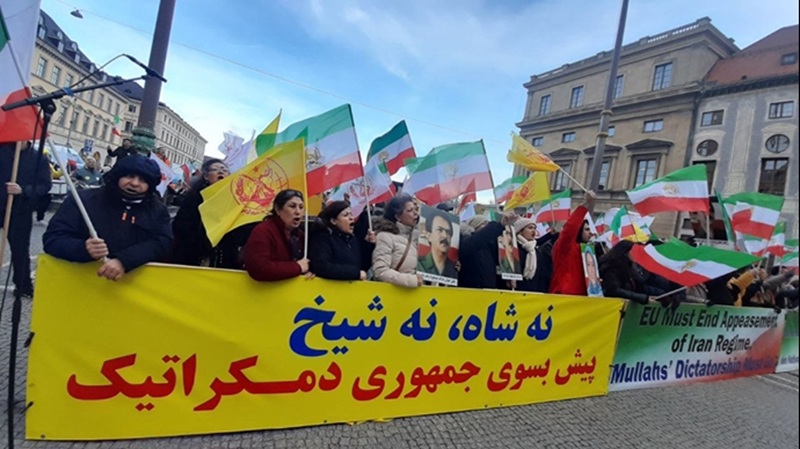
Iran stands at the edge of a historic rupture. Yet what distinguishes the current moment from 1906 or 1979 is not merely the depth of public anger. It is the existence of a codified democratic alternative and an organized field structure capable of channeling social rage toward systemic transformation rather than episodic revolt.
“Zero hour” is inherently ambivalent. It carries the promise of change, but also the risk of fragmentation, elite hijacking, or external intervention. Political history demonstrates that spontaneous uprisings lacking cohesive leadership often succumb either to replacement authoritarianism or to top-down “managed transitions” engineered in diplomatic corridors. Revolutions are rarely defeated at their peak; they are diverted in their aftermath.
In this strategic landscape, the role of the National Council of Resistance of Iran (NCRI) becomes central. As the longest-standing organized political coalition opposing the current regime, it presents not simply opposition rhetoric but an institutional alternative.
Its president-elect, Maryam Rajavi, through her Ten-Point Plan, has articulated a concrete roadmap for post-theocratic governance: separation of religion and state, abolition of the death penalty, gender equality, an independent judiciary, and a non-nuclear foreign policy rooted in peaceful coexistence. Whether one supports or critiques the movement, one cannot dismiss the structural clarity of its program. It defines the end state of transition — a democratic republic based on popular sovereignty — thereby reducing the probability that Iran’s future will be decided by foreign capitals or nostalgic restorationist fantasies.
The central political illusion confronting Iran today is the belief that regime collapse alone guarantees freedom. It does not. Power vacuums invite parallel networks, opportunistic elites, and external actors. Without an organized alternative, the “zero hour” becomes fertile ground for hybrid outcomes: partial reform masquerading as change, securitized continuity under new branding, or geopolitical bargaining that trades national agency for stability.
If the NCRI functions as the political head of this proposed transformation, the People’s Mojahedin Organization of Iran (PMOI/MEK) “Resistance Units” inside the country operate as its field mechanism. In an environment where classical mass gatherings are suppressed, decentralized activism aims to erode the regime’s monopoly over fear. The strategic objective is not reform within the system but dismantling the structure itself. This distinction is decisive. Reformist narratives, historically, have prolonged authoritarian life cycles rather than ended them.
Two functions define the operational logic at zero hour. First, converting dispersed protests into coordinated national mobilization with a clear objective: systemic change. Second, preventing deviation of the uprising by actors seeking to preserve elements of the existing power architecture under cosmetic adjustments.
Iran’s zero hour thus becomes a contest of wills. On one side stands a ruling establishment prepared to leverage regional escalation, infrastructural pressure, and coercive apparatuses to survive. On the other stands an organized resistance claiming five decades of continuity and institutional discipline. The difference between this moment and prior upheavals lies in the presence of structured organization aimed explicitly at preventing the “theft” of a revolution.
From Zahedan to Kurdistan, from Tehran to Khuzestan, protesters confronting repression communicate a clear message: Iran’s destiny will not be determined in Western think tanks or diplomatic salons. Durable legitimacy must emerge from domestic agency. External alignment may influence outcomes, but it cannot substitute for internal organization.
Successful passage through zero hour requires abandoning the psychology of miraculous expectation. Political transformation is not a spontaneous combustion event; it is an engineered process requiring coordination, leadership, and institutional design. The alternative to organization is not purity — it is chaos.
The proposed endgame is a provisional government tasked solely with organizing free elections for a constituent assembly, thereby transferring permanent authority to the electorate. In republican theory, this is the only durable foundation for sovereignty: no hereditary privilege, no clerical supremacy, no ideological guardianship over citizenship.
Iran is approaching an inflection point. Social pressure is cumulative and volatile. Yet political explosions do not inherently produce destruction; they produce outcomes proportional to their structure. If the energy of society is channeled through a defined democratic alternative, zero hour can mark the end of authoritarian rule and the beginning of a pluralistic republic. If not, illusions — whether of foreign salvation, spontaneous purity, or cosmetic reform — will prove far more dangerous than repression itself.
History rarely offers second chances at foundational moments. The decisive question is not whether change is coming. It is whether that change will be organized, sovereign, and democratic — or improvised, fragmented, and externally mediated.