


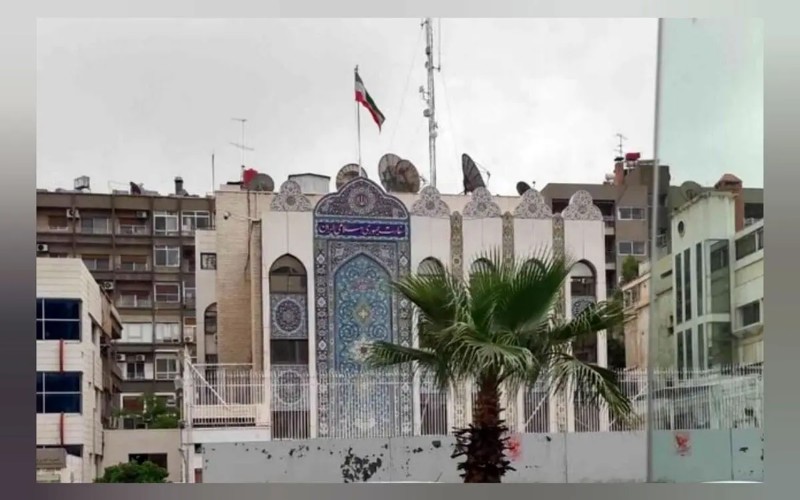

The collapse of Bashar al-Assad ended Iran’s most strategic foothold in the Middle East, redrawing regional alignments and exposing Tehran’s geopolitical losses.
One year has passed since the collapse of the Assad family’s decades-long rule in Syria. On December 8, 2024, armed opposition forces entered Damascus, forcing Bashar al-Assad and members of his inner circle to flee to Russia. The fall of Assad—Iran regime’s closest regional ally and the central artery of Tehran’s regional power projection—marked the end of a twelve-year campaign in which Iran’s regime fought relentlessly to keep Assad’s regime in power.
For more than a decade, Tehran had invested billions of dollars and deployed thousands of military personnel and proxy fighters to suppress dissent, crush protests, and later support Assad’s forces in the civil war. The regime considered the survival of Assad essential to sustaining the so-called “Axis of Resistance,” an alignment of state and non-state actors backed by Iran.
A Swift Opposition Campaign That Ended Assad’s Rule
Assad ultimately fell in a rapid military operation launched by a coalition of armed opposition groups on November 27, 2024. Within only twelve days, they overtook Damascus. Ahmad al-Sharaa—emerged as the leader of the victorious coalition and now heads Syria’s transitional government.
“This victory inaugurates a new chapter in the region’s history,” al-Sharaa declared during a speech at the Umayyad Mosque in Damascus on December 8, 2024.
Collapse of Iran’s Strategic Corridor
Syria had long served as the critical conduit between Iran’s regime and Hezbollah in Lebanon. Tehran relied on Syrian territory to transfer arms, funds, and personnel to Hezbollah, whose military wing is designated as a terrorist organization by the United States. The European Union lists only its military wing, but the group remains central to Iran’s regional strategy.
Before Assad’s fall, Hezbollah had already suffered devastating losses in its war with Israel. The killing of key commanders—including Secretary-General Hassan Nasrallah—further weakened the organization. With the Syrian route now severed, Iran regime’s logistical lifeline to Hezbollah has been deeply disrupted.
The loss of Syria also stripped Iran’s regime of its most advanced Mediterranean outpost and key military installations for which Tehran spent billions of dollars and significant human resources. In practical terms, Iran’s regional expansion has been forced back to its own borders.
Tehran’s Contradictory Narratives
Three days after Assad’s fall, Ali Khamenei, Iran regime’s supreme leader, described the events in Syria as an American-Israeli plot. He claimed Iran could not intervene because “all routes were blocked.”
However, Iran regime’s Foreign Minister Abbas Araghchi later offered a conflicting explanation. In a televised interview, he said: “No request for assistance was made to us. The primary responsibility belonged to the Syrian Army, and neither we nor they considered it our duty to intervene.”
The Financial and Human Cost for Iran
The Iran Open Data Center estimates that Tehran spent between $30 and $50 billion supporting Assad from 2011 to 2020. A 2018 UN assessment put the annual figure at roughly $6 billion. These costs came alongside the deaths of hundreds of Iranian military personnel—officers, soldiers, and fighters that Tehran described as “volunteers.”
All of these investments evaporated on December 8, 2024. The Iranian Embassy in Damascus was the only diplomatic mission attacked after Assad’s fall, despite Russia’s direct involvement and Iraq’s support through Iran-backed militias. Syria has since barred both Iranian and Israeli citizens from entering the country.
Documentation of Iran’s Role in Atrocities
Since Iran’s regime entered the Syrian conflict in 2011, numerous reports have documented its forces’ participation in the bombing and siege of cities such as Homs, Aleppo, and Daraa. These operations starved civilian populations and were openly praised by some Iranian commanders. Additional reports accused Iranian regime forces of detaining and torturing protesters. Since the opposition’s rise to power, more such accounts have surfaced, consistently highlighting Iran’s role.
Khamenei’s New Threats and Tehran’s Attempted Comeback
In a December 11, 2024 speech dedicated to Syria, Khamenei warned that “the situation will change,” predicting that young Syrians would rise up again and “overcome the current circumstances”—a statement widely interpreted as signaling Tehran’s intent to destabilize Syria.
While no confirmed evidence of Iranian regime operations has surfaced, multiple media outlets report attempts by Tehran to reorganize loyalist networks inside Syria. At times, Iran’s regime has tried to align itself with factions opposed to al-Sharaa or amplify their voices, raising concerns about potential meddling.
However, Rami Abdel Rahman, director of the Syrian Observatory for Human Rights, insists that Iran has no path back into Syria. “There is no possibility—neither politically nor socially, even among the Alawites—for Iran to return,” he said. “Among the Alawites, Iran is one of the most criticized countries.”
What the Loss of Syria Means for Iran’s Regional Network
Despite Khamenei’s claims that the fall of Assad would not weaken the “Axis of Resistance,” recent events show Tehran focusing heavily on consolidating its influence in Iraq. Efforts to dismantle or integrate the Popular Mobilization Forces (PMF) into the Iraqi Army have stalled, and Israeli intelligence reports indicate multiple intercepted weapons shipments allegedly sent by Iran to Hezbollah.
Meanwhile, Damascus maintains no diplomatic relations with either Iran or Israel, although security talks are reportedly underway between Syria and Israel.
Rami Abdel Rahman argues that normalized ties between Damascus and Tehran are unlikely for now: “The Syrian government knows that renewing relations with Iran would expose it to Western threats, just as it begins rebuilding international ties.”
Syria Sets Conditions for Any Future Relations with Tehran
In a recent interview on state television, Ahmad al-Sharaa addressed the future of Syria-Iran relations: “A deep wound was inflicted on us by Iran. But we do not say that the break is permanent. If one day Iran respects Syria, refrains from interference in our internal affairs, and stops fueling sectarian tensions, relations could be restored.”
Syria’s political realignment, the restoration of ties with Western countries, and the reopening of foreign investment channels have all incentivized the transitional government to distance itself from Tehran.
Conclusion: A Return to Normalcy Requires Change in Tehran
The restoration of normal relations between Iran’s regime and Syria will not be simple. Above all, it requires profound political change in Iran—change that is unattainable under the current leadership in Tehran and, according to many observers, achievable only with the fall of the ruling regime.
Iran regime’s loss of Syria represents the most significant strategic setback Tehran has experienced in decades. And it is a setback from which recovery appears increasingly unlikely.