



The head of Iran’s Nursing System Organization, Ahmad Nejatian, recently shared alarming statistics regarding the increasing migration of nurses from the country, describing the trend as “growing.” According to Najatian, the average rate of nurse migration doubled each year from 2021 to 2023.
Nejatian clarified that while many nurses request a “good standing” certificate—a confirmation of their work qualifications—before migrating, not all who leave the country obtain this document. As a result, the available statistics may not fully capture the true extent of nurse migration. However, based on the doubling of requests for work qualification confirmation alone, Najatian estimates that nurse migration has at least doubled over the past few years.
“This trend is increasing, and our concern is that it will continue to escalate next year,” Nejatian warned.
He went on to highlight the severity of the situation, noting that current statistics are already troubling. “Approximately 20% of the annual educational capacity of universities of medical sciences and nursing schools across the country are applying for immigration. This is a very large number,” he stated.
Recently, the Vice Chairman of the Supreme Council of the Nursing System also addressed the issue, revealing that in virtually every hospital, “a group of nurses are learning a foreign language” in preparation for leaving the country. He attributed this mass exodus to widespread “discrimination and injustice” within Iran’s healthcare system.
“Injustice in the health system is causing nurses to express their discontent with the current situation,” he added.
Nejatian emphasized that the government must move beyond merely denying the reality of nurse migration and instead engage in what he termed “active intervention” in the field. “This does not mean prevention,” he clarified. “Active intervention means that we must accept that migration is happening. It is an international issue, not merely a domestic one. The government can actively intervene to organize and facilitate this migration. Furthermore, if someone wishes to return to the country, they should be given the opportunity to do so.”
Nejatian also pointed out that Germany and Denmark have been particularly successful in recruiting Iranian nurses, largely due to their efforts to ease the conditions for recruitment. “These two countries have significantly lowered their requirements for Iranian nurses. Following the COVID-19 pandemic, they recognized the global shortage of nurses and reduced their recruitment conditions to attract more nurses,” he explained.
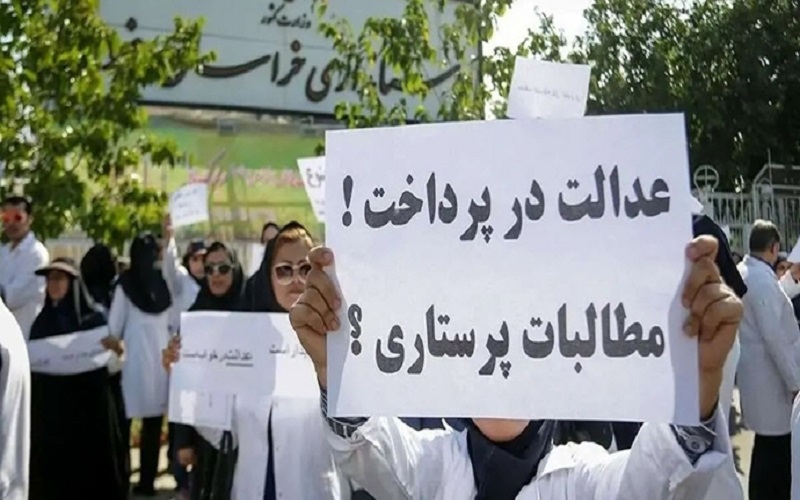
The growing migration of nurses comes against the backdrop of ongoing nationwide protests and strikes by nurses and medical staff in various cities across Iran, a wave of unrest that has persisted for over a month. Despite the regime’s efforts to suppress these protests, the discontent within the healthcare sector shows no signs of abating.
A report published last Friday by the state-run website Eghtesad-24 highlighted the spread of nurses’ protests across Iran. The report noted that in early August, the streets of Tehran and other major cities witnessed the impassioned demonstrations of nurses demanding better working conditions. For the first time in the hundred-year history of Iran’s health system, hundreds of nurses decided to stop working and staged mass protests to make their voices heard.
The protests, which began with small, scattered gatherings in front of the Ministry of Health, soon escalated into several days of strikes in cities such as Shiraz, Mashhad, Arak, and Kermanshah. This wave of dissatisfaction, which quickly spread throughout the country, underscores the deepening crisis within Iran’s nursing community.
According to the report, the nurses’ protests are not merely a reflection of union grievances, but rather a symptom of a deeper crisis that, if left unaddressed, could have severe and lasting consequences for Iran’s healthcare system.
The protesting nurses are demanding several key reforms, including salary adjustments in line with the actual rate of inflation, the implementation of the law on the pricing of nursing services, the resolution of issues related to forced overtime, the elimination of workforce shortages and harsh working conditions, and the reinstatement of expelled nurses. Despite these demands, the regime has so far ignored the nurses’ calls for change.