


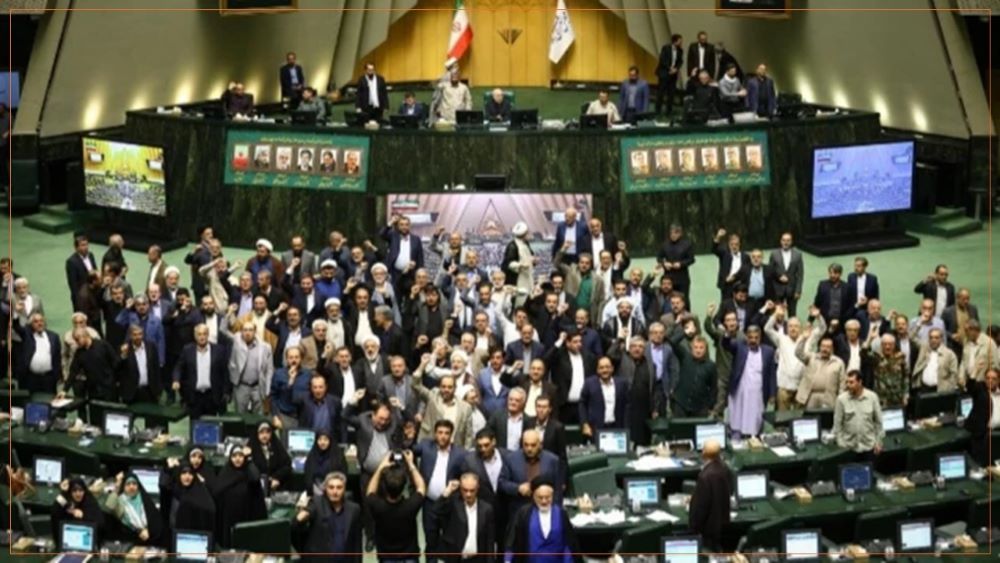

In a sweeping move aimed at consolidating control and projecting force, the Iranian regime’s parliament on July 13 approved the final version of a law titled the “Intensification of Punishment for Espionage and Cooperation with Hostile States”—a bill that imposes the death penalty and asset seizure for a broad range of perceived “collaborations” with foreign entities, including the United States and Israel.
The law, passed with overwhelming votes in multiple articles, declares any intelligence or operational activity for Israel, the U.S., or any “hostile state or group” punishable by execution. “From now on,” as Tasnim News reported, “any direct or indirect assistance that strengthens or legitimizes the Zionist regime will be met with capital punishment.”
Iran’s state media emphasized that this law is part of an urgent effort to “safeguard national security,” but analysts say its true aim lies elsewhere: a regime bruised by strategic defeat abroad and instability at home is now using extreme repression to deter dissent, intimidate the public, and boost the morale of its own security forces.
Just weeks ago, the clerical dictatorship faced a major blow in the region following a military confrontation with Israel and the U.S., which exposed vulnerabilities in Tehran’s defense networks and led to the arrest of over 700 Iranians accused of aiding foreign intelligence services. Internally, the regime has also been grappling with growing unrest, economic decline, and a legitimacy crisis after widespread protests and electoral boycotts.
The new law goes beyond espionage: it criminalizes a wide range of activities — including technological assistance, economic cooperation, drone or cyber activities, and even sharing images or videos with foreign media if deemed damaging to “national morale or unity.” Article 4 targets citizens who send footage to opposition media, punishing them with permanent bans from public service and prison terms. Even personal use of unlicensed satellite internet tools like Starlink can now result in criminal charges.
State media, including Tasnim and IRIB, framed the legislation as a “national security shield,” while clerics close to the regime hailed it as a deterrent against infiltration and sabotage. The parliament passed the amendments after the Guardian Council demanded revisions to ensure legal alignment with Islamic Penal Code provisions.
Crucially, the law’s definition of “hostile entities” is expansive — the United States and Israel are explicitly named, and the Supreme National Security Council is given authority to define or revoke the ‘hostile’ status of any foreign entity at any time, granting the regime sweeping legal discretion.
The context behind the law’s urgency is clear: facing growing isolation and internal fragility, Tehran is escalating its authoritarian posture to consolidate power, stifle dissent, and reinforce loyalty within its fractured ruling apparatus. Behind the legal language lies a broader political message: the regime feels threatened — and is lashing out preemptively.