


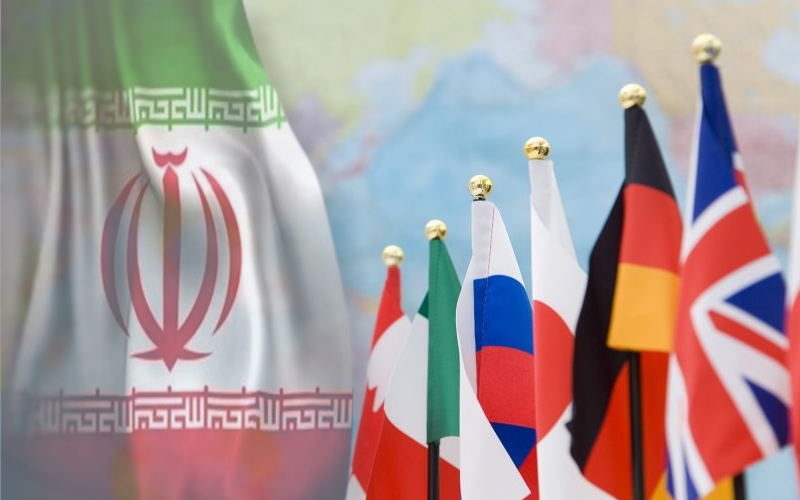

On Friday, the leaders of the Group of Seven (G7) issued a warning to Iran regarding its nuclear enrichment activities and indicated they were prepared to implement new measures if Tehran transfers ballistic missiles to Russia, according to a draft communique.
“We urge Tehran to cease and reverse nuclear escalations, and stop the continuing uranium enrichment activities that have no credible civilian justifications,” the statement seen by Reuters declared.
A report from a U.N. nuclear watchdog on Thursday highlighted that Iran has rapidly installed additional uranium-enriching centrifuges at its Fordow site and begun setting up more.
Iran is now enriching uranium to up to 60% purity, which is close to the 90% required for weapons-grade uranium. According to an IAEA yardstick, Iran has enough material enriched to that level to create three nuclear weapons if it were further enriched.
The IAEA informed its members that Tehran was installing more centrifuge cascades at the Natanz and Fordow enrichment facilities. A cascade is a series of centrifuges used in the process of enriching uranium. A diplomatic source described this development as “moderate.”
Tehran has not immediately acknowledged this decision, which follows Iran’s threats to take action after a vote earlier this month by the IAEA’s board of governors that censured the country for inadequate cooperation with the agency. The decision drew immediate criticism from U.S. State Department spokesman Matthew Miller.
“Iran aims to continue expanding its nuclear program in ways that have no credible peaceful purpose,” Mr. Miller said.
“These planned actions further undermine Iran’s claims to the contrary. If Iran implements these plans, we will respond accordingly.”
Mr. Miller did not specify the actions the U.S. and its allies might take. However, Iran already faces significant economic sanctions from Washington and others, which have severely impacted its economy and caused its currency, the rial, to tumble in recent years.
The Islamic republic has gradually reneged on its commitments under the 2015 nuclear deal with world powers.
“Iran must engage in serious dialogue and provide convincing assurances that its nuclear program is exclusively peaceful, in full cooperation and compliance with the IAEA’s monitoring and verification mechanism, including the Board of Governors’ resolution of June 5,” the G7 stated.
Iran maintains that its nuclear program is solely for peaceful purposes.
The G7 leaders also cautioned Iran against finalizing a deal to send ballistic missiles to Russia for use in the war against Ukraine, stating they were ready to respond with significant measures if such a deal occurred.
“We call on Iran to stop assisting Russia’s war in Ukraine and not to transfer ballistic missiles and related technology, as this would represent a substantive material escalation and a direct threat to European security,” they said.