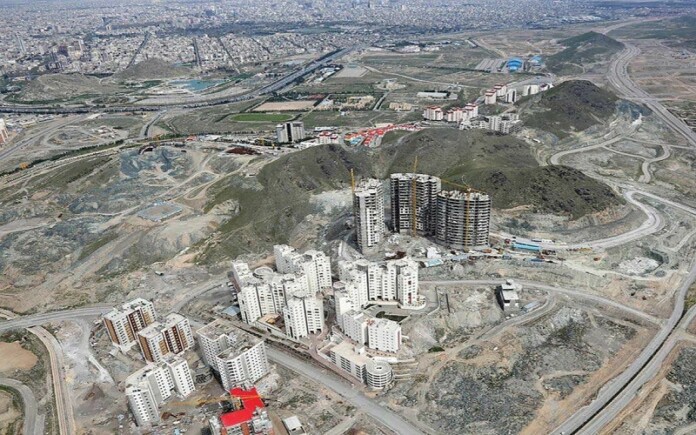
Farhad Baizaei, a prominent researcher in mountain encroachment and housing economics in Iran, recently highlighted significant concerns regarding environmental degradation in the Lavasan area of Tehran. In an interview with Rokna news agency, Baizaei pointed to the regime’s endowments and charities organization, which operates under the direct supervision of Ali Khamenei, the regime’s supreme leader, as the primary driver behind the rampant change in land use and mountain encroachment.
Major Land Use Changes in Lavasanat
Baizaei noted that in recent years, the most significant land use changes in Lavasanat have occurred at the behest of the endowments organization and the municipality. He explained that mountain encroachment and the destruction of gardens in Tehran and its surrounding areas peaked approximately three decades ago. This phenomenon, he asserted, is primarily due to the legal deficiencies in Article 5 and Article 10 commissions, as well as the prioritization of relationships over legal regulations within municipalities.
Impact of Policy Changes
“The policies enacted in Tehran since the 2000s have led to widespread destruction of gardens,” Baizaei stated. “From 2001 onwards, many green spaces and gardens in Tehran were obliterated, leaving the city with almost no green spaces.” He specifically referenced the 14-year administration of Mahmoud Ahmadinejad and Mohammad Bagher Ghalibaf over Tehran Municipality. During their tenure, significant reductions in per capita green space were recorded, with numerous gardens repurposed for residential towers.
Government Institutions and Legal Entities
Baizaei emphasized that many gardens have been destroyed by government institutions and legal entities. He explained, “The financing of municipalities and the numerous benefits that accrue to urban administrations in this manner serve as the primary motivations intensifying this destructive process.” He further highlighted the weakness of laws and the manipulation of public institutions as additional factors exacerbating mountain encroachment and land misuse.
The ‘Seebland’ Project
One of the most egregious examples of land and mountain encroachment is the ‘Seebland’ project. The Agiq Parsian Investment Company, owned by the Javadzadeh family, has been implicated in acquiring 530 hectares of pristine national and forest lands through legal loopholes and rent-seeking. This area, located in the Alborz mountain range, is one of the world’s cleanest and healthiest regions, housing over 300 plant species. Despite being declared a protected area by Iran’s environmental organizations, it has been targeted for development.
Environmental Activism and Floods
Environmental activists in Iran attribute the recent devastating flood in Mashhad, which resulted in numerous casualties and extensive damage, to the destruction of southern Mashhad’s mountains for construction purposes. Reports dating back to the early 2000s documented the cutting of mountains in Mashhad’s southern areas to make way for buildings. For instance, in February 2020, the ‘Young Journalists Club’ (YJC) published pictures showcasing the extent of mountain encroachment in southern Mashhad, particularly in Torghabeh and Shandiz.
Broader Environmental Concerns
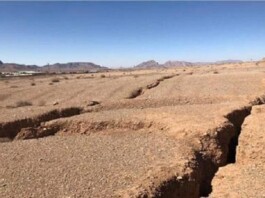
Hojjat Mianabadi, a member of the academic staff at Tarbiat Modares University, echoed Baizaei’s concerns. “In Mashhad, we face issues of drought, subsidence, sudden and severe floods, air pollution, and dust storms,” Mianabadi explained. He also detailed other regional environmental threats, such as the regression of the Caspian Sea, landfill crises, and dust storms originating from Turkmenistan and Central Asia.
“In the western cities, we grapple with water shortages, air and water pollution, and dust. In Isfahan, social disputes over water, severe air pollution, and worrying land subsidence are prevalent. Sistan and Baluchistan provinces suffer from severe water shortages and widespread dust crises. Practically, we have destabilized every region of the country due to a general neglect of biosecurity and urban biosecurity,” Mianabadi warned.