



Indirect U.S.–Iran Negotiations Highlight Strategic Deadlock Over Enrichment and Missile Programs
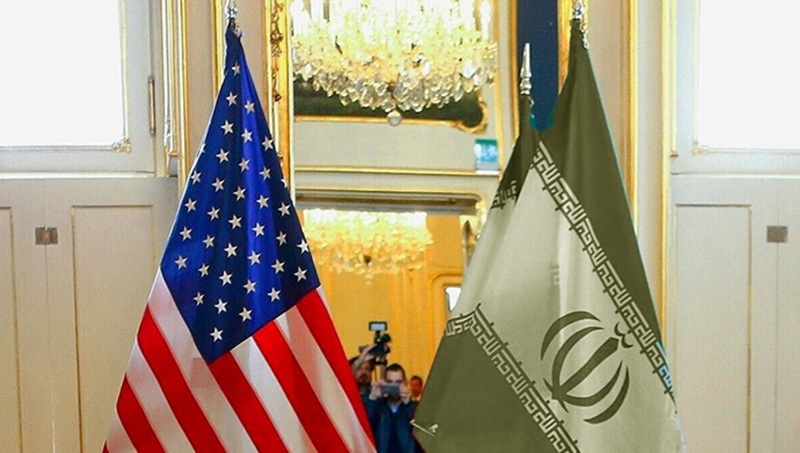
The second round of negotiations between the Iranian regime and the United States concluded Tuesday in Geneva, mediated by Oman, underscoring both the regime’s urgent need for sanctions relief and the persistent strategic deadlock over its nuclear and missile programs.
The talks, held at the Omani ambassador’s residence to the United Nations in Geneva, lasted approximately three and a half hours. According to Reuters, the U.S. delegation included Special Envoy Steve Witkoff and Jared Kushner, while the regime side was led by Foreign Minister Abbas Araghchi.
Despite official language describing “constructive discussions,” key divisions remain unresolved—particularly over uranium enrichment and the regime’s missile arsenal.
Tehran’s Red Lines: Sanctions Relief Without Strategic Concessions
Washington has reportedly sought to broaden the scope of negotiations beyond the nuclear file to include Iran’s missile stockpiles and regional security concerns. Tehran, however, has made clear it is willing to discuss only limitations on its nuclear program—and only in exchange for meaningful sanctions relief.
Iranian officials have reiterated that:
- Uranium enrichment will not be fully abandoned.
- The missile program is not open for negotiation.
- Sanctions relief must accompany any nuclear limitations.
Following the talks, Araghchi stated that the two sides had reached a “general understanding on guiding principles,” but acknowledged that drafting a formal agreement would be considerably more difficult. No date has been set for a third round.
His remarks reveal a familiar pattern: broad political signaling without substantive breakthroughs.
Talks Under Military Pressure
The negotiations unfold under clear military pressure from Washington.
US President Donald Trump commented that he would be indirectly involved in the discussions and emphasized their importance. Referring to previous tensions, he stated that the United States had been forced to deploy B-2 bombers to neutralize Iran’s nuclear potential—adding that he hoped Tehran would behave “more reasonably” this time.
Trump also suggested that Iran wants a deal and is unlikely to desire the consequences of failure.
The message is unmistakable: diplomacy is proceeding in the shadow of deterrence. Tehran is negotiating not from a position of strength, but under sustained economic sanctions and implicit military threat.
Economic Pressures Driving Tehran to the Table
The timing of the Geneva talks coincides with mounting domestic pressures inside Iran:
- Negative investment growth reaching approximately 15 percent.
- Accelerating capital depreciation and stalled industrial expansion.
- Persistent inflation eroding household purchasing power.
- Ongoing social discontent and class destabilization.
Under such conditions, sanctions relief is not merely a diplomatic objective—it is an economic necessity.
The regime faces shrinking fiscal space, currency instability, and declining investor confidence. Access to frozen assets and relief from financial restrictions would provide short-term stabilization. However, Tehran appears unwilling to alter core components of its security doctrine to obtain that relief.
Strategic Impasse Remains
The central contradiction persists:
- The United States seeks broader constraints, including missile capabilities.
- Iran insists on limiting discussions strictly to nuclear parameters.
- Tehran refuses to fully dismantle enrichment capacity.
While officials speak of “clearer pathways” and “guiding principles,” the absence of a timeline for further talks reflects the fragility of the process.
A “general agreement on principles” does not equate to a negotiated settlement. Drafting technical language on enrichment levels, inspection mechanisms, and sanctions sequencing remains highly complex—and politically sensitive on both sides.
Negotiation as Tactical Survival
The Geneva talks appear less a breakthrough than a tactical maneuver within a broader strategic confrontation.
For Tehran, negotiations offer the possibility of economic breathing space without fundamental policy change. For Washington, diplomacy remains a tool to prevent escalation while preserving leverage.
Whether this process leads to a durable agreement or another cycle of stalled diplomacy will depend on whether the regime is prepared to make verifiable concessions—something it has so far resisted.
Until then, the Geneva talks reflect not normalization, but managed tension in a landscape defined by economic strain, military deterrence, and deep mutual distrust.