



On the anniversary of former Iranian regime president Ebrahim Raisi’s death, Supreme Leader Ali Khamenei praised Raisi’s legacy and emphasized that he had firmly resisted any negotiations with the United States. While presented as a tribute, Khamenei’s statement also served as an indirect signal: the ongoing nuclear negotiations with Washington are likely to fail—an implicit admission of the regime’s strategic deadlock.
A Familiar Strategy: Shifting Blame
Khamenei’s remarks appear to be part of a calculated strategy to preemptively distance himself from the potential collapse of the talks. By reinforcing the idea that he has always opposed negotiations with the U.S., he seeks to absolve himself of responsibility if diplomacy fails. This tactic is not new. During the administrations of former presidents Hassan Rouhani and Mohammad Khatami, Khamenei positioned himself similarly—claiming credit when agreements were reached, but blaming elected officials and pointing to American “untrustworthiness” when negotiations fell apart.
Rising Tensions and Clashing Red Lines
Tensions between Tehran and Washington have escalated in recent weeks. U.S. Special Envoy to the Middle East, Steve Witkoff, recently announced that Washington would not permit Iran to enrich uranium at any level. In response, Iran’s regime reiterated its commitment to continue enrichment below four percent, prompting a sharp rebuke from Khamenei, who accused the United States of “talking nonsense” and vowed not to retreat.
These opposing stances underscore a fundamental impasse: the U.S. sees any uranium enrichment by Iran’s regime as a red line due to the weaponization risk, which is being proven due to the regime’s past actions, while Khamenei views enrichment not just as a sovereign right but as a matter of regime pride and regime survival.
Enrichment as a Strategic Lifeline
Beyond regime pride, enrichment serves a critical strategic function for the regime. For Khamenei, maintaining uranium enrichment capabilities is not merely symbolic—it is a crucial deterrent. With proxy forces weakened and Iran regime’s missile arsenal proving less effective than anticipated, the possibility of developing nuclear weapons remains the regime’s ultimate bargaining chip in a region fraught with hostility.
Iran has significantly advanced its enrichment capabilities in recent years, shortening the theoretical “breakout time” needed to develop a nuclear weapon. Khamenei fears that dismantling this capacity would leave the regime vulnerable, both internationally and domestically, especially as public discontent and internal crises deepen.
Rome Talks in Jeopardy
Efforts to revive diplomacy have also stumbled. Oman, often a neutral intermediary, has proposed hosting a fifth round of negotiations in Rome. However, Iran regime’s chief negotiator, Abbas Araghchi, reportedly declined to attend, due to the expectation that Tehran would have to respond to a concrete U.S. proposal—one that reportedly demands a complete halt to enrichment. Unable or unwilling to meet this condition, the regime has opted to delay talks rather than face an ultimatum it cannot accept.
Domestic Dissent and Economic Toll
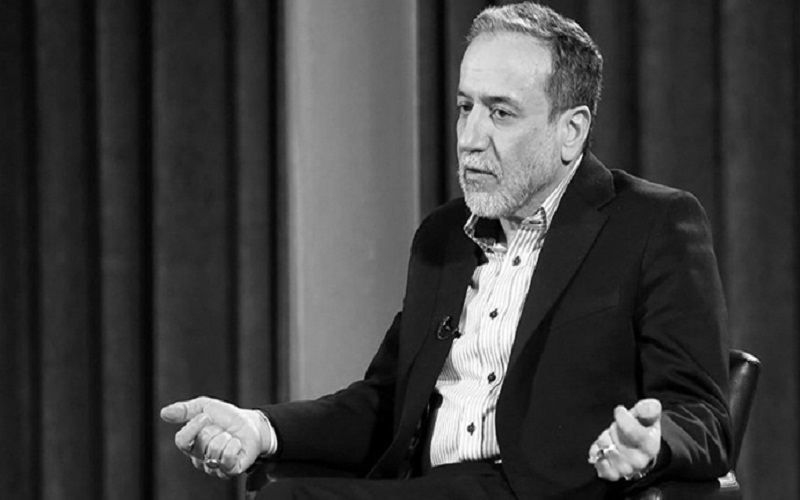
Even within the regime’s own ranks, dissent over enrichment is beginning to surface. Former Director General for the Middle East at the Ministry of Foreign Affairs, Qasem Mohebali, recently broke ranks by publicly stating that Iran can no longer maintain its “no war, no negotiations” posture. “We are no longer in a situation of ‘neither war nor peace,’” he warned, suggesting that the regime must now make a definitive choice.
Mohebali further criticized the staggering economic cost of the nuclear program, estimating that enrichment has drained over $2 trillion from the economy while contributing only about one percent of Iran’s electricity via the Bushehr power plant. His remarks reflect growing unease, even among regime insiders, over the wisdom of persisting with a policy that has brought more pain than progress.
Market Reactions Reflect Growing Instability
The financial markets have echoed these concerns. Following Khamenei’s recent speech, the Iranian rial tumbled, with the dollar climbing by 2,000 tomans to reach 84,000. While regime-affiliated media like Kayhan tried to spin the depreciation as a sign of Khamenei’s strong stance, the reality is that investors are bracing for the collapse of diplomacy and the likely resurgence of sanctions.
Conclusion: A Regime Cornered
The regime finds itself at a crossroads. It cannot back down from its entrenched positions without appearing weak, nor can it continue on its current path without risking further isolation and economic deterioration. With the U.S. demanding a full stop to enrichment and Khamenei refusing to compromise, the window for a diplomatic solution is closing rapidly. The shadow of war, once pushed aside by tentative negotiations, now looms large once again.