


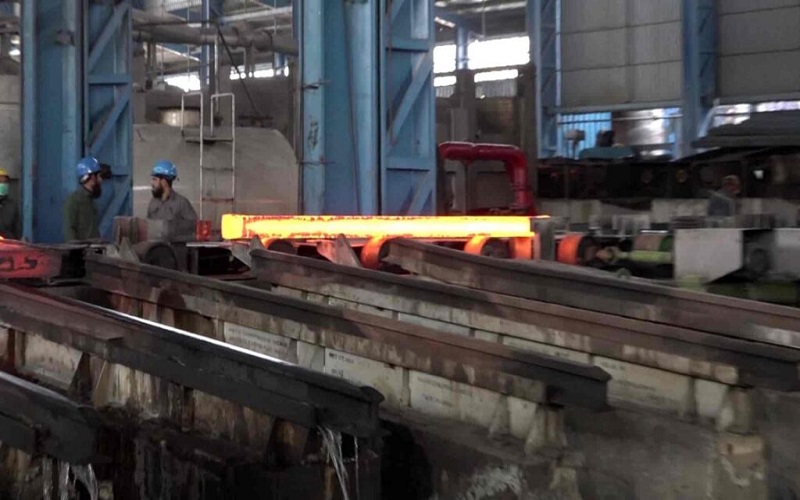

In a year designated by Iran regime’s Supreme Leader Ali Khamenei as one of “investment for production,” the country’s industrial and manufacturing sectors are facing a severe and worsening crisis.
Dozens of large and small factories have either shut down or are on the brink of bankruptcy due to chronic power outages.
Thousands of minimum-wage workers have lost their jobs, and many more are facing an escalating livelihood crisis. Despite mounting concerns about rising unemployment across Iran, statements from officials suggest the situation is likely to deteriorate further this summer.
Forced Shutdowns Across Key Industries
A stark example of the regime’s mismanagement came when the Interior Ministry issued a 15-day ultimatum for steel and cement factories to halt production due to electricity shortages. According to official announcements, these shutdowns are to take place daily from dawn to dusk, forcing many production furnaces to reduce output or shut down completely.
Recent reports confirm that numerous steel factories in Khuzestan, Kerman, and Yazd, as well as cement plants in Isfahan, Kurdistan, and Ilam, have been effectively paralyzed by these directives. The closures have cascaded beyond primary industries, affecting smaller workshops and service units—deepening the damage to national production and putting thousands of additional jobs at risk.
Legal Protections Ignored
The decision to prioritize factory shutdowns violates Iran’s own legislation. Article 25 of the Law on Continuous Improvement of the Business Environment mandates that industrial, manufacturing, and agricultural units should not be the first to lose access to electricity or gas during shortages. Yet, in addressing what officials call an “energy imbalance,” the regime continues to cut power to production units as its primary response.
Ali Asghar Ahaniha, an employers’ representative on the Supreme Labor Council, told the IRGC-affiliated Tasnim News Agency that only 50 percent of the capacity in Iran’s industrial estates remains active due to the outages.
Economic Consequences Mount
The impact is already visible. The price of cement has nearly doubled in just one month—from 115,000 tomans per bag to 230,000—according to the state-run Fararu website. The Concrete Producers Association has linked the shortage directly to reduced production caused by power outages.
Layoffs are accelerating. In Ardestan, the Aria Steel Factory recently dismissed 40 workers due to power restrictions. The factory’s manager, Abbasali Ebrahimi, told ISNA that the electricity authority warned that consumption above five megawatts would result in automatic disconnection. The factory’s standard consumption is 22 megawatts, forcing major operational cutbacks and job losses.
Similar scenes are unfolding nationwide. In Arak, aluminum factory workers gathered to protest frequent outages and the potential collapse of production lines. In Kashan’s Ravand Industrial Park, production is on the verge of a complete shutdown. In Nazarabad, power cuts have pushed many workers into critical circumstances, with no pay and no alternatives.
A Systemic Breakdown
Manufacturers are scrambling for stopgap solutions, such as electric motors and diesel generators. But diesel is in short supply, and these alternatives are costly and unsustainable. Many workers have been forced to leave their jobs without receiving wages.
These power outages are not simply technical or seasonal disruptions; they represent a systemic and structural failure. As Ehsan Ghazizadeh Hashemi, a member of Parliament’s Industries and Mines Commission, noted in an interview with state media: “If power outages continue long-term, they will definitely harm production. The final price of goods will increase, the competitiveness of Iranian products will decline, exports and foreign exchange earnings will fall—and the entire working-class community will be deeply affected.”
A Deepening Electricity Deficit
Data from Iran Open Data confirms that Iran’s electricity crisis is not new but has worsened significantly since 2018. The country now experiences a power deficit of around 25% during summer and 15% in winter. While Iran’s electricity production grew at over 20% annually before the 1979 revolution, that growth has slowed to just 2% in recent years.
Despite official plans dating back to 2011 to increase generation capacity by at least 7% annually, the goal was never met, and the gap between supply and demand has continued to widen.
More than 90% of Iran’s electricity is generated by thermal power plants. Renewable energy sources—solar and wind—account for just 1% each. Nuclear energy makes up another 1%, while hydroelectric power supplies the remainder. With gas shortages, long-term drought, and declining dam water levels, the electricity shortfall has become a year-round problem.
Iran is currently estimated to be short by 25,000 megawatts. Even importing electricity from all neighboring countries—Azerbaijan, Armenia, Turkmenistan—would not be enough to close this gap.
Long-Term Recovery Now a Distant Goal
According to current projections, even if Iran increases its electricity production growth rate fivefold, it would still take a decade to eliminate the shortfall. Without immediate and structural reforms, the economic and social damage will only intensify.
What Iran faces today is not a temporary disruption, but a profound infrastructural and economic crisis—one that threatens both national production and the livelihoods of millions of Iranian workers.