


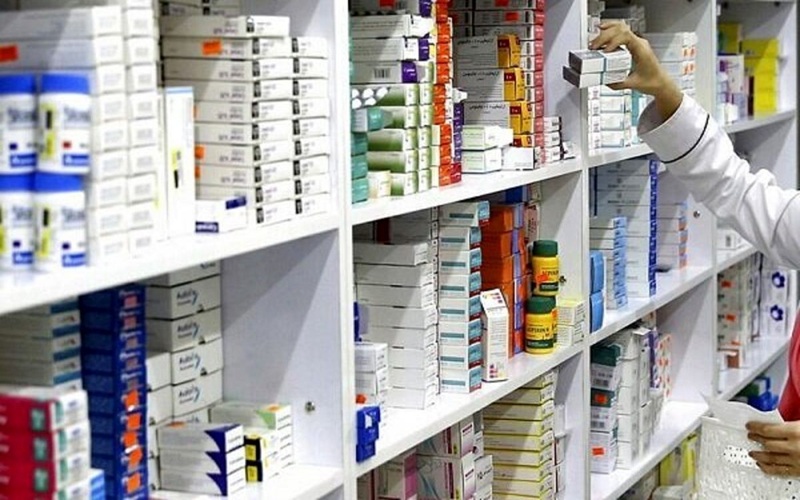

Exploding medicine prices, shortages of life-saving drugs, and a broken healthcare system reveal how years of corruption, economic instability, and structural decay have pushed Iran into a full-scale pharmaceutical crisis.
Iran’s pharmaceutical crisis in 2026 is akin to a doomed voyage adrift on a tempestuous sea. For years, the warning signs were visible: currency instability, corruption, sanctions, shrinking public support systems, collapsing purchasing power, and growing dependence on fragile supply chains. Yet instead of structural reform, the regime responded with denial, propaganda, and temporary fixes. Today, the result is no longer merely an economic problem or a healthcare challenge. It is the gradual collapse of pharmaceutical security for millions of Iranians.
When Medicine Becomes a Class Privilege
The medicine crisis in Iran has evolved far beyond the healthcare sector. It now symbolizes the broader breakdown of economic and social infrastructure under the Iranian regime.
The sudden surge in prices for essential drugs, the disappearance of critical medications from pharmacies, disruptions in supply chains, and the inability of insurance systems to absorb rising costs have pushed millions of patients into desperation. Treatment itself is increasingly becoming a class privilege rather than a public right.
Official rhetoric still speaks of “strategic reserves” and “effective management.” But the reality is visible in the endless lines outside pharmacies and in Tehran’s black-market drug networks around Naser Khosrow Street. Patients searching for insulin, warfarin, cancer medication, psychiatric drugs, or treatments for rare diseases now spend hours — sometimes days — attempting to secure medicines that were once routinely available.
These pharmacy queues have become one of the clearest reflections of the country’s economic collapse.
The Roots of the Crisis: Structural Decay, Not Temporary Disruption
The pharmaceutical disaster unfolding in Iran is not simply the result of war or short-term instability. It is the cumulative outcome of years of rent-seeking policies, systemic corruption, elimination of social protections, and deep dependence on an unstable currency system.
Iran’s pharmaceutical industry relies heavily on imported raw materials, chemical compounds, packaging equipment, and production inputs. Even domestic manufacturers cannot survive without access to foreign currency and imports.
Once preferential exchange rates were removed and the national currency plunged in value, production costs exploded almost overnight. The prices of many medications increased between threefold and seventeenfold within only a few months.
Meanwhile, regime authorities attempted to maintain the appearance of control through price fixing and state intervention. But the consequences were predictable: declining production, hoarding, rationed distribution, shrinking inventories, and a rapidly expanding black market.
Manufacturers forced to purchase raw materials at market exchange rates while selling products at government-imposed prices faced an impossible equation. Many reduced production, while others compromised on quality or halted operations entirely.
At the same time, mounting debts owed by insurance companies and the Social Security Organization to pharmacies and distribution firms paralyzed the entire supply chain. Pharmacies increasingly preferred direct cash sales because insurance reimbursements often arrived months late — long after inflation had eroded the value of the payments.
The burden of this collapse has ultimately fallen on ordinary citizens.
Millions of Iranians are now forced to choose between buying medication, paying rent, or feeding their families.
Pharmacy Lines as a Portrait of National Collapse
To understand the depth of Iran’s medicine crisis, one only needs to spend a few hours outside Tehran’s 13 Aban Pharmacy or the Red Crescent pharmacies. There, the crisis ceases to be an economic statistic and becomes a human tragedy visible in exhausted faces, unanswered prescriptions, and desperate patients.
Cancer patients, individuals with rare diseases, and cardiac patients have been among the hardest hit. Medications such as eculizumab, warfarin, rifampin, and various chemotherapy drugs have either become scarce or are now sold at astronomical prices.
Diabetic patients have emerged as some of the primary victims of the crisis. The reported seventeenfold increase in insulin prices represents more than inflation — it marks the collapse of the principle of universal access to healthcare. When a patient must spend millions of tomans simply to obtain two months of medication, healthcare ceases to function as a public service and instead becomes a commodity reserved for the financially privileged.
The shortage of psychiatric medications presents an equally alarming dimension. Iranian society is already under immense pressure from poverty, repression, insecurity, and economic instability. Now, even access to medications used to manage anxiety, depression, and other mental health conditions has become unstable and unreliable.
The medicine crisis has therefore evolved into a broader social and psychological crisis.
War, Sanctions, and a Fragile Economy
Recent attacks affecting some pharmaceutical facilities and disruptions in transportation networks have intensified the situation further. Damage to production centers and logistical infrastructure exposed how dependent Iran’s pharmaceutical sector remains on external supply routes and regional stability.
Yet the deeper reality is that even without war, the country’s exhausted economic structure was already approaching this point of collapse.
For years, the Iranian regime promoted an exaggerated image of pharmaceutical self-sufficiency. Officials repeatedly claimed that domestic production had insulated the country from international pressure. But the current crisis has revealed the fragility beneath that narrative. Without imported raw materials, access to foreign currency, and stable trade channels, the system cannot sustain itself.
At the same time, corruption within pharmaceutical imports and distribution networks has magnified the suffering. Medications that vanish from official pharmacies often reappear in black markets at several times the regulated price, exposing a system in which networks of profiteering feed directly off the desperation of patients.
Healthcare Sacrificed to Survival Politics
Iran’s medicine crisis in 2026 must ultimately be understood as part of a much larger failure: the collapse of an economy designed around regime survival rather than public welfare.
In a political system where enormous resources are directed toward repression, regional conflicts, and preservation of power, healthcare inevitably becomes a secondary concern. Public health is sacrificed to the logic of a permanent crisis economy.
What is unfolding today is therefore not merely a shortage of medicine. It is the slow destruction of the idea of treatment security itself.
Millions of people wake up every day uncertain whether the medications they need to survive will still be available tomorrow. That permanent anxiety is not accidental; it is the direct consequence of a system built on corruption, monopoly, instability, and chronic economic mismanagement.
The medicine crisis of 2026 has demonstrated that under such a structure, even the most basic human necessity can become a national catastrophe.
Today, Iran’s pharmacies have become mirrors reflecting the true condition of society: places where people no longer stand in line for treatment, but for survival.