Structural neglect, government debt, and the accelerating rise in the elderly population have pushed Iran’s pension and healthcare systems to the brink.
Iran is entering one of the most severe demographic and financial crises in its modern history. The rapid rise in the elderly population, driven by declining fertility and increasing life expectancy, has collided with the government’s long-standing failure to meet its obligations to pension funds, creating a systemic breakdown that now deprives millions of retirees of vital insurance services.
The growth of the elderly population in Iran is an unavoidable demographic shift. As fertility rates fall to historic lows and life expectancy rises, the country is experiencing a profound transformation that began as a social issue but has now become a deep financial and economic challenge. Managing these long-term risks requires a comprehensive strategy that the ruling establishment has consistently failed to deliver.
Aging itself is not a disease, yet older age often brings chronic health conditions that dramatically increase the demand for medical care. Iran’s demographic transition is unfolding under conditions fundamentally different from those in developed countries, where such shifts occurred gradually over decades. Official data show that the share of citizens aged 65 and above rose from about 6 percent in 2016 to roughly 8 percent in 2025. Projections indicate that by 2051, more than 30 percent of Iran’s population will be 60 or older. This means the elderly population is expected to double within the next two decades, a pace that leaves no room for gradual financial adjustments.
This rapid demographic shift has eliminated the buffer needed to reform the pension and insurance system. The core driver is the drastic collapse in fertility, with the crude birth rate falling to just 11 births per 1,000 people in 2024—representing a 76 percent decline over six decades. As births plummet and the median age rises toward an estimated 45 by 2050, the financial pressure on pension systems intensifies. Simultaneously, the traditional family-based caregiving network weakens, increasing demand for costly formal long-term care services.
The sustainability of Iran’s public finances is now threatened through multiple channels, most visibly in the widening deficits—what officials call “imbalances”—of major pension funds. These funds operate largely on a pay-as-you-go basis. With fewer workers contributing and more retirees drawing benefits, the support ratio continues to shrink. This dynamic has pushed pension funds into an unprecedented fiscal crisis.
The severity of the situation is reflected in the mounting share of government subsidies to the Civil Service and Military Pension Funds, which rose from about 11 percent of public spending in 2013 to nearly 19 percent by 2021. Pension deficits have effectively become a major quasi-tax burden on the state. As the active labor force shrinks, economic growth slows, and the possibility of establishing a publicly funded long-term care system becomes increasingly remote.
Long-term care in Iran is now largely financed out of pocket. Families hire caregivers or nurses privately, often at crushing cost. Estimates show that round-the-clock home care for a fully dependent elderly person costs between 20 and 25 million tomans per month. Even institutional care in nursing homes can range from 5 to 15 million tomans or more. Because these services are continuous and long-term, and because they lack meaningful insurance coverage, they rapidly drain household savings and push middle-class families into severe financial distress.
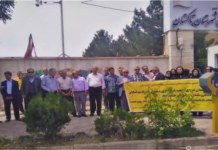
Amid this escalating crisis, Ali Dehghan-Kia, head of the Tehran Social Security Retirees Association, announced that supplemental insurance for Social Security retirees was cut as of November 22, 2025. Retirees are now restricted to treatment only in Social Security–owned or affiliated facilities. Negotiations between the Social Security Organization and the insurer Atieh Sazan have stalled, and the organization’s failure to pay premiums on time led to the suspension of supplemental coverage. Ahmad Panjaki, a board member of the Retirees Association, explained that the previous monthly premium of 300,000 tomans was shared equally between the organization and retirees, noting that 60 percent of retirees receive only minimum pensions and already struggle to meet basic needs.
The core of the crisis lies in the state’s persistent refusal to meet its financial obligations. The government’s chronic non-payment of debts to pension funds, coupled with continuous withdrawals from their assets and systemic mismanagement, has crippled institutions like the Social Security Organization and Shasta. What should have been reliable financial and social safety nets for millions of retirees have instead been hollowed out by decades of irresponsible governance and corruption.
The result is a structural and deeply entrenched deficit that now directly translates into the loss of essential insurance services, such as supplemental coverage, and into worsening poverty for Iran’s elderly. As the aging population accelerates, the regime’s failure to address this demographic and financial time bomb threatens not only retirees’ livelihoods but the economic stability of the entire country.