


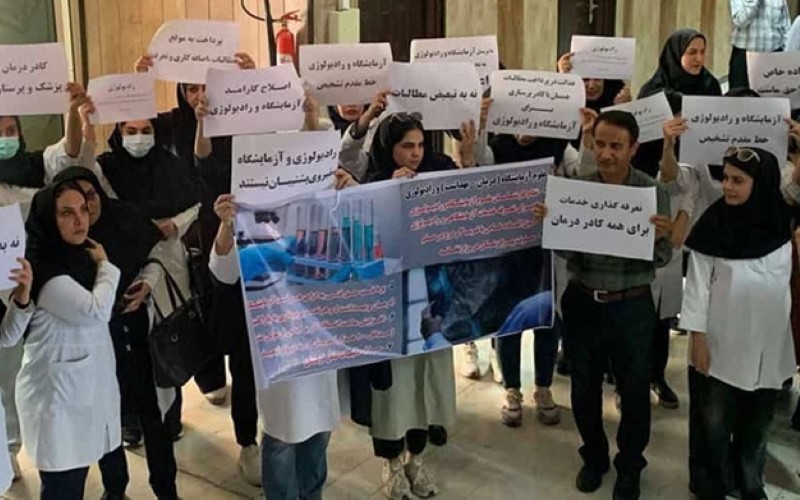

Suicides among nurses reveal the crushing human cost of systemic exploitation, neglect, and repression under Iran’s ruling establishment.
The reported suicide of two nurses in Kermanshah is not an isolated tragedy. It is a stark and painful symptom of a deeper, systemic crisis engineered by decades of misrule, exploitation, and institutional indifference under Iran’s clerical regime.
In response to the incident, the Kermanshah Nurses’ Association issued a statement describing the crushing conditions faced by nurses in recent years: relentless workloads, forced and exhausting overtime, chronic staff shortages, unpaid wages, and severe livelihood insecurity. The association warned that continued neglect of these realities has “irreparable consequences for the individual and social well-being of this devoted profession.”
What becomes visible in moments like this is only the surface of a much darker reality. Human catastrophes within Iran’s healthcare system are far more widespread than official narratives admit. As even semi-official sources acknowledge, cases of suicide attempts occur inside Iranian hospitals, but many never reach the media. Silence, censorship, and institutional fear ensure that most of these tragedies remain buried.
A System Sustained by Human Sacrifice
There is little doubt that without the immense physical, psychological, and emotional toll borne by nurses and medical staff, Iran’s state-run healthcare system would already have collapsed. It is the unpaid price extracted from exhausted nurses that has kept hospitals functioning at all.
Years of protests by nurses have highlighted the same core grievances: overwhelming workloads with minimal compensation, mandatory overtime, rising living costs, disciplinary pressure, and routine humiliation. These protests have been met not with reform, but with empty promises and delay tactics. The result is a vicious cycle in which working conditions steadily deteriorate, pushing healthcare workers closer to physical and mental collapse.
As one report bluntly put it, worn-down bodies labor under extreme pressure for jobs that offer neither security nor dignity. The continuation of this broken system has made nursing in Iran increasingly unbearable.
Organized Neglect, Predictable Outcomes
The clerical state’s governing logic—built on coercion, corruption, and extraction—feeds directly off the emotional, physical, and psychological exhaustion of Iranian society. Davoud Khosravi, Secretary General of the Kermanshah Nurses’ Association, described another dimension of this organized neglect, noting that some nurses in Shiraz have suffered strokes before reaching retirement age, while another nurse in Khalkhal recently took their own life.
“The pressure of work and livelihood cannot be ignored in the emergence of these tragedies,” he said.
These are not personal failures. They are predictable outcomes of a system that treats healthcare workers as expendable resources rather than human beings.
Between Endurance and Exile
For nearly 47 years, generations of Iranians have been forced into a grim choice: endure a life of constant pressure, deprivation, and humiliation inside a cleric-dominated system—or leave the country altogether. Nurses are no exception.
One nurse, speaking anonymously, summed up a sentiment shared by countless professionals across Iran:
“The pressure of work and livelihood is unbearable. To protect my mental and physical health, I have made a final decision to emigrate.”
This quiet exodus of trained professionals—doctors, nurses, engineers, academics—is one of the most damaging long-term consequences of regime rule. It drains the country of expertise while leaving those who remain even more overburdened.
A National Pattern of Destruction
From water and electricity to air pollution and environmental collapse; from students and universities to workers, retirees, doctors, and nurses—every serious investigation into Iran’s condition ends with the same unresolved question: What is to be done?
The answer increasingly emerges from the shared pulse of society itself. Across professions and social classes, Iranians are reaching the same conclusion: that no technical fix, temporary reform, or managerial adjustment can resolve a crisis rooted in authoritarian rule and systemic exploitation.
As the deaths of nurses in Kermanshah painfully demonstrate, the regime’s policies do not merely mismanage resources—they slowly suffocate human lives. For many Iranians, the only remaining path out of this repetitive, exhausting, and violent cycle is unity, collective resistance, and fundamental political change.
The tragedy is not that these lives were lost. The tragedy is that the system that destroyed them remains in power.