
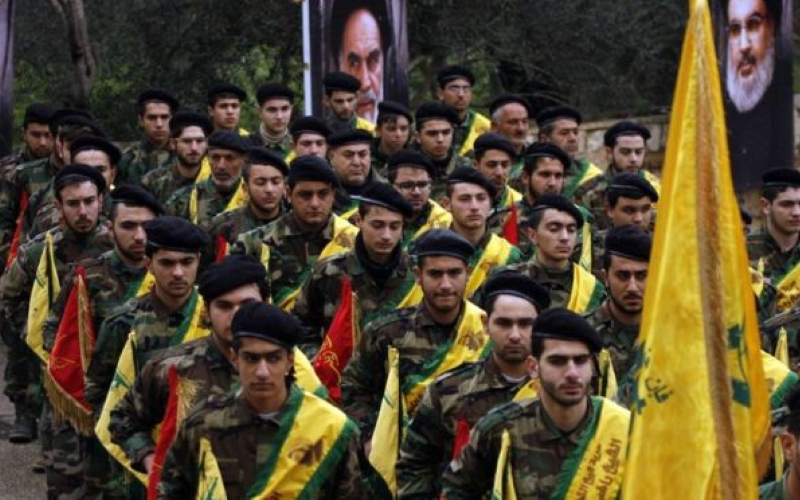

A New York Sun investigation reveals how Iran’s most powerful proxy has turned cocaine, Captagon, and global money laundering into a financial lifeline amid the regime’s deepening economic and political isolation.
An in-depth investigation published by The New York Sun on December 20 sheds new light on the criminal infrastructure sustaining Hezbollah, Iran regime’s most dangerous regional proxy. As Tehran’s economy weakens, Syria’s drug factories collapse, and Lebanon begins dismantling long-protected smuggling networks, Hezbollah has increasingly relied on global narcotics trafficking to fund its military, political, and terrorist operations—revealing the true cost of Iran’s proxy strategy.
According to the report, Hezbollah has evolved into one of the world’s most sophisticated hybrid criminal-terrorist organizations. Its revenues now flow from cocaine trafficked through Latin America, Captagon produced in the ruins of Assad-era Syria, and money-laundering networks stretching across four continents. These illicit funds bankroll precision-guided missiles, sustain Hezbollah’s fighters, finance its parallel welfare system in Lebanon, and maintain overseas cells from South America to Southeast Asia.
Tehran’s Proxy, Built on Crime
While Hezbollah often presents itself as a “resistance movement,” the New York Sun investigation makes clear that it functions as an international criminal syndicate—one that operates with the strategic backing and ideological protection of Iran’s ruling regime. With Tehran’s own finances strained and its regional allies weakened, Hezbollah’s dependence on narco-dollars has shifted from supplementary income to existential necessity.
David Daoud, a senior fellow at the Foundation for Defense of Democracies, told The New York Sun that Hezbollah is now “strapped for cash” and willing to exploit any available channel to survive. This desperation, he explained, is driving the group deeper into the global drug trade, particularly in regions where oversight is weak and corruption widespread.
Crucially, Hezbollah maintains distance from the drugs themselves. Its operational model relies on intermediaries, facilitators, and deniability—allowing the group to profit while avoiding direct exposure. This method mirrors the Islamic Republic’s own approach to proxy warfare: outsourcing violence and criminality while evading accountability.
Latin America: A Safe Haven Enabled by Iran’s Allies
The report identifies Latin America as a central pillar of Hezbollah’s current financing. Decades ago, Lebanese Shiite diaspora communities established legitimate commercial and charitable networks across the region. Hezbollah has since exploited these same networks to facilitate cocaine trafficking and launder proceeds.
According to Daoud, Hezbollah embeds itself within existing smuggling routes, offering protection, forged documents, and secure transit corridors in exchange for a cut of the profits—typically delivered in untraceable cash transfers. These funds are then funneled back to Lebanon through informal remittance systems, credit services, and money-transfer platforms.
Venezuela, ruled by Iran’s close ally Nicolás Maduro, has played a particularly critical role. The Sun reports that the Maduro regime has issued authentic Venezuelan passports to Hezbollah operatives, granted landing rights to Mahan Air—an IRGC-linked airline—and ignored suspicious “narco-flights” carrying drugs and weapons. A foiled January 2025 operation involving tons of Colombian cocaine exchanged for illicit arms was likely only a fraction of the broader trade.
Caroline Rose, director of military and national security priorities at the New Lines Institute, told the Sun that Hezbollah-linked networks are actively expanding operations to reduce reliance on Iran’s direct financial support. Latin America and West Africa, she noted, provide ideal conditions due to diaspora ties, regime-friendly governments, and entrenched criminal ecosystems.
Captagon: Assad’s Collapse, Hezbollah’s Loss
For years, the most lucrative pillar of Hezbollah’s illicit economy was Captagon. Under Bashar al-Assad, Syria became the world’s leading producer of the amphetamine pill, with factories operating under regime protection. Hezbollah worked closely with Assad’s Fourth Armored Division, commanded by Maher al-Assad, coordinating smuggling routes, border crossings, and production sites—many located along the Lebanese-Syrian border.
That revenue stream collapsed in December 2024 with the fall of the Assad regime. New Syrian authorities have since dismantled Captagon labs, arrested traffickers, and sealed smuggling routes. As Daoud told the Sun, this crackdown directly reduced Hezbollah’s share of the drug profits.
Rose added that several Assad family members involved in Captagon production, including Wassim Badia al-Assad, were given safe haven in Hezbollah-controlled areas of Lebanon—further illustrating the criminal alliance between Iran’s proxy and the former Syrian regime.
A Criminal Network Under Pressure
Lebanon itself is no longer the safe environment it once was for Hezbollah’s criminal partners. The Lebanese army has launched unprecedented crackdowns on powerful Shiite smuggling clans long shielded by Hezbollah, including the notorious Zeaiter family. Arrests and deadly raids have dismantled networks that once operated with impunity.
Similar crackdowns in Syria have forced Hezbollah-linked criminal syndicates to relocate operations beyond the Levant, accelerating the group’s pivot toward Latin America and West Africa. Yet Western countermeasures, Rose warns, remain dangerously narrow, focusing on Hezbollah’s regional footprint while neglecting its global criminal partnerships.
Iran’s Proxy Strategy Laid Bare
The New York Sun investigation exposes a fundamental truth: Hezbollah’s survival is inseparable from Iran regime’s regional strategy. When Tehran prioritizes missiles, militias, and ideological expansion over economic stability, it pushes its proxies toward organized crime. Drug trafficking, money laundering, and narco-terrorism are not deviations from the system—they are the system.
As Iran’s regime continues to funnel resources into proxy warfare while its own population sinks deeper into poverty, Hezbollah’s drug empire stands as a stark example of how Tehran exports instability, corruption, and violence far beyond the Middle East.
The report concludes with a grim assessment: Hezbollah’s next battlefield may not be southern Lebanon, but the cocaine fields of Colombia, the airstrips of Venezuela, and the shadowy financial corridors of global money transfers. Wherever untraceable cash flows, Iran’s proxy will follow.
In this sense, Hezbollah’s drug empire is not merely a criminal enterprise—it is the financial extension of the Islamic Republic’s foreign policy, built on destruction abroad and deprivation at home.