
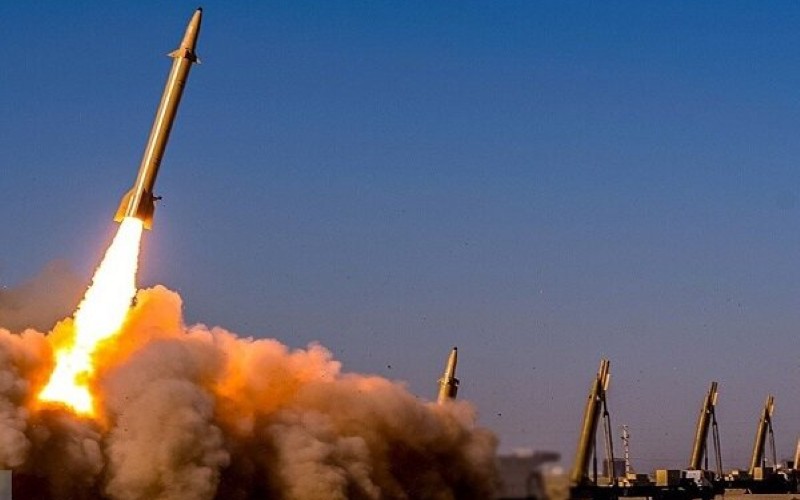

New reports reveal secret shipments of missile fuel materials from China to Iran and an accelerated push to rebuild Tehran’s missile stockpiles despite international restrictions.
Secret Shipments and Expanding Missile Capabilities
The National Interest has reported that Iran’s regime is intensifying its ballistic missile activities, despite United Nations sanctions that explicitly restrict such development. According to the publication, several shipments of sodium perchlorate, a critical ingredient in the production of solid rocket fuel, were recently transferred from China to Bandar Abbas, signaling renewed investment in missile capabilities.
The report notes that even as a temporary ceasefire between Israel and Iran’s regime remains in place, Tehran is openly pursuing the expansion of its missile production. This quiet build-up runs parallel to an increasingly assertive posture by Iranian regime officials concerning their military strength.
Statements by Senior Regime Officials
The National Interest quotes Iranian regime Foreign Minister Abbas Araghchi, who declared earlier this month that the regime’s weapons arsenal is now “far beyond the 12-day war.” He further claimed that Israel failed to achieve its objectives in the latest confrontation, saying that the “Jewish regime was defeated.”
Similarly, Defense Minister Aziz Nasirzadeh has insisted that Iran regime’s defense establishment has made significant progress in recent months, boasting of improvements in both the quality and quantity of the country’s missile stockpiles.
These statements reflect a coordinated messaging effort by the regime to publicly signal confidence in its military industries—despite economic collapse, public unrest, and tightening sanctions.
Evidence of Chinese Material Transfers
The National Interest underlines the seriousness of recent shipments of sodium perchlorate, a substance essential for solid-fuel ballistic missiles widely used by the IRGC.
Concerns about such transfers intensified earlier this year when Newsweek, citing Maritime Executive, disclosed that the cargo ship “Jeyran”, sanctioned by the United States, docked in Bandar Abbas after leaving China. The vessel—operated by Iran Shipping Lines—has previously been linked to the transport of missile-related components.
This pattern suggests a broader procurement pipeline between China and Iran, operating in defiance of UN restrictions and international monitoring efforts.
A History of Violating Restrictions
The National Interest emphasizes that Iran has a long record of breaching UN restrictions, particularly those related to ballistic missile development. The publication warns that the regime’s current focus on refilling and expanding its missile depots amounts to a direct threat against Israel, especially after the recent conflict.
During the 12-day confrontation, Iran launched some of its most advanced missile systems, including the Shahab-3 medium-range ballistic missile, the Fateh-110 short-range solid-fuel missile, and the Zolfaghar long-range ballistic missile. These launches demonstrated both range and precision, underscoring the strategic dangers posed by an unsupervised Iranian regime missile build-up.
Intensified Propaganda and Underground Missile Sites
The report also notes that in 2025 alone, the IRGC has repeatedly showcased underground missile facilities through state-produced propaganda videos. These clips—broadcast on regime-controlled media—highlight vast tunnel networks and storage sites, designed both to intimidate adversaries and reassure Iran’s internal security apparatus of its military resilience.
Support to Proxy Forces Remains Central
Beyond its domestic missile activities, the regime continues to supply weapons, financing, and military training to its regional proxies, including Hamas, Hezbollah, and the Houthis. The National Interest stresses that Iran regime’s missile capabilities and proxy warfare strategy form a single, integrated approach aimed at expanding Tehran’s influence and pressuring rival states across the Middle East.
A Path Toward Renewed Conflict
The publication concludes that Tehran’s growing prioritization of its missile arsenal—combined with clandestine material imports from China—signals a dangerous trajectory. If these efforts continue, the situation could pave the way for another confrontation with Israel, especially as the regime works to restore and expand the stockpiles depleted during the last conflict.
Iran’s accelerated missile development, persistent defiance of international restrictions, and expanding cooperation with China all point to a sharpening regional threat, one that risks undermining fragile ceasefires and destabilizing the Middle East further.